
Views: 0 Author: Site Editor Publish Time: 2026-09-28 Origin: Site


Understanding OSV deck load capacity dictates the operational versatility, safety profile, and commercial earning potential of any offshore logistics campaign. Miscalculating deck strength or misinterpreting vessel specifications leads to severe consequences on the water. Operators risk structural damage, regulatory grounding, compromised vessel stability, and massive project delays during offshore operations. We cannot simply look at square footage to evaluate a vessel properly. True evaluation requires a firm grasp of marine engineering fundamentals. You need to understand the difference between point and distributed loads. You must differentiate live from dead loads. Evaluating scantling strength, tributary areas, and classification society standards is non-negotiable before procurement. This technical evaluation prevents costly mistakes, ensures regulatory compliance, and guarantees the vessel can safely support the heavy demands of modern offshore exploration and construction.
Offshore supply vessels transport a highly diverse range of payloads, and each cargo type exerts unique forces on the vessel's structure. Drill pipes and heavy casing create massive distributed weight across large deck sections. Offshore containers, built to DNV 2.7-1 standards, concentrate their entire weight on four small corner castings. Remotely Operated Vehicle (ROV) spreads, Launch and Recovery Systems (LARS), and heavy machinery introduce severe point loads that can punch through inadequate deck plating. A vessel must possess the specific deck strength profile required for these distinct cargo types. If the deck cannot support the concentrated weight of a 50-ton anchor handling winch, the vessel cannot perform construction support. Operational success relies entirely on matching the vessel's structural capabilities to the intended payload mass and footprint.
Modern offshore operations frequently require temporary modifications to the vessel's general arrangement. Operators often install Temporary Living Quarters (TLQs) to house additional offshore workers, technicians, and client representatives. These modules drastically alter the vessel's operational profile. They consume valuable clear deck space and add significant static weight high above the waterline. More importantly, they change the load distribution across the main deck. Deck capacity calculations must account for these temporary structures. You must also factor in the weight of the personnel, their gear, the required fresh water to support them, and the necessary life-saving appliances. Failing to account for these additions leads to dangerous overloading scenarios and potential load line violations.
Procuring a vessel with inadequate deck capacity carries severe financial and operational risks. Placing heavy cargo on a weak deck causes immediate structural buckling. Deck plates warp, longitudinal stiffeners deform, and under-deck transverse frames fracture. This structural damage immediately voids marine insurance policies and invalidates the vessel's class certificate. It forces the vessel into drydock for expensive, time-consuming steel renewal and hot work. Inadequate capacity limits the vessel's operational scope. A ship unable to carry heavy drill mud skips or large subsea manifolds cannot service deep-water rigs. This misalignment results in a stranded asset that fails to generate revenue and damages the operator's reputation with charterers.
Total deck space and actual load-bearing capacity are entirely different metrics. A vessel might boast 1,000 square meters of clear deck area. If the deck is only rated for 2 tons per square meter, its utility is severely limited for heavy offshore work. A large deck does not inherently mean high cargo deadweight. Usable area only dictates volumetric capacity. Load capacity dictates mass. Procurement teams must prioritize structural strength over mere square footage. A smaller, heavily reinforced deck often provides more operational value than a massive, thinly plated one. You can stack cargo higher on a strong deck, provided stability parameters allow it, whereas a weak deck restricts you to a single, light layer of supplies.
Marine architects divide weight into two distinct categories when designing a hull. Dead load represents the static weight of the vessel itself, often referred to as the lightship weight. This includes the steel hull, permanent bulkheads, main engines, propulsion systems, and permanently affixed deck equipment. Dead load remains constant throughout the vessel's life unless major structural modifications occur. Live load represents the variable weight the deck system must safely support, forming part of the vessel's total deadweight. This includes deck cargo, temporary equipment modules, offshore personnel, and shifting supplies. Live load fluctuates constantly during offshore operations. Engineers design the vessel's structure to support the maximum anticipated live load without compromising the dead load structure or exceeding the maximum allowable draft.
Understanding how weight transfers to the deck is critical for safe loading and securing. Distributed load, or Uniformly Distributed Load (UDL), spreads weight evenly across a surface. We measure this in tons per square meter (t/m²). Standard cargo like palletized supplies, bulk bags, or neatly stacked drill pipes exert distributed loads. Point load, or concentrated load, focuses immense weight onto a very small footprint. Heavy equipment like A-frames, specialized winches, crane pedestals, or the steel feet of a heavy-lift module create severe point loads. A deck rated for a high distributed load might still fail under a severe point load if the specific footprint lacks direct under-deck support.
| Load Type | Definition | Measurement Unit | Typical Offshore Examples | Structural Requirement |
|---|---|---|---|---|
| Distributed Load (UDL) | Weight spread evenly across a large deck area. | Tons per square meter (t/m²) | Drill pipes, bulk bags, palletized supplies, timber. | Thick deck plating and robust longitudinal girders. |
| Point Load | Weight concentrated on a very small footprint. | Metric Tons (MT) or Kilonewtons (kN) | Container corners, heavy winches, A-frames, crane bases. | Direct alignment over under-deck pillars or transverse webs. |
| Dynamic Load | Forces amplified by vessel motion (heave, pitch, roll). | G-force multipliers applied to static weight | Any cargo at sea during heavy weather conditions. | Enhanced lashing points, heavy-duty securing grids. |
True deck strength lies beneath the surface plating. The main deck is supported by a complex grid of transverse web frames and longitudinal stiffeners. Marine architecture relies on the concept of tributary area. This principle defines how deck plating transfers weight loads to specific under-deck girders, pillars, and bulkheads. Each vertical pillar supports a specific tributary area of the deck above it, transferring that load down to the double bottom and hull structure. Scantlings refer to the physical dimensions of these structural steel members. The thickness of the steel plates and the material grade heavily influence maximum load ratings. Using high-tensile steel (like AH36 or DH36) allows shipbuilders to achieve higher load capacities without adding excessive dead weight to the vessel's lightship profile.
A deck's operational capacity limit is known as its Safe Working Load (SWL). This is the maximum weight you can legally and safely place on the deck under normal operating conditions. The SWL is not the point at which the steel actually yields or breaks. Engineers build significant safety factors into vessel design. The ultimate structural yield strength is much higher than the SWL. This safety margin accounts for metal fatigue, corrosion over time, and unexpected dynamic forces at sea. Operators must never exceed the SWL, even if they believe the deck can handle the extra weight. Exceeding the SWL compromises the safety margin and risks catastrophic failure during heavy weather.
Deck load capacity is inextricably linked to vessel stability. Placing heavy cargo high on the main deck raises the vessel's vertical center of gravity (VCG). A high VCG reduces the vessel's metacentric height (GM), making it less stable, top-heavy, and more prone to severe rolling. You must balance deck cargo with below-deck cargo. Fuel, fresh water, and liquid mud stored low in the hull tanks help lower the VCG and improve the righting lever. The vessel's approved intact and damage stability booklets dictate exactly how much deck cargo you can carry based on the current below-deck tank levels.
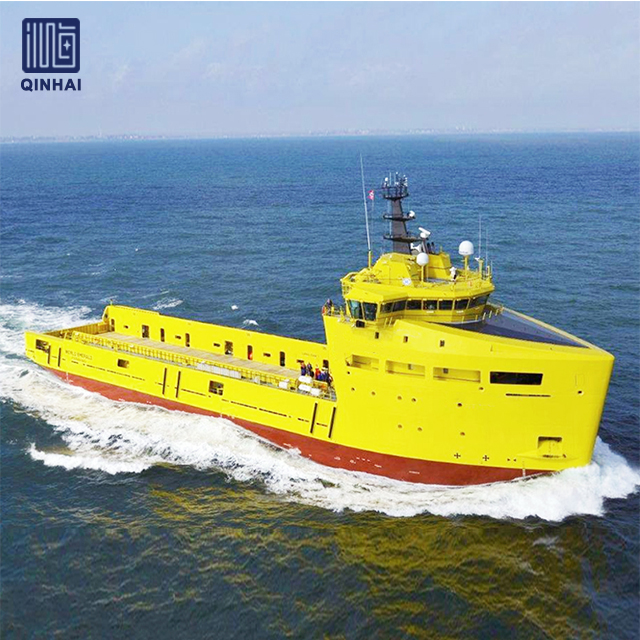
Procurement teams must verify exact figures when reviewing offshore supply vessel technical specifications. You cannot rely on marketing brochures or preliminary sales sheets. You must examine the class-approved capacity plans and the General Arrangement (GA) drawings. Look for the maximum deck cargo rating in metric tons. Verify the specific deck strength in t/m². Check the clear deck area dimensions, noting any obstructions like vent pipes or mooring bollards. Pay close attention to the deck loading plan, which highlights specific zones reinforced for heavy point loads. These certified metrics dictate exactly what the vessel can legally transport and support during offshore campaigns.
Vessels operate under a strict maximum deadweight limit dictated by their load line draft (the Plimsoll mark). You cannot simultaneously carry maximum below-deck liquids and maximum above-deck cargo. An operational balance is required. If a drilling rig requires maximum fresh water, drill water, and marine gas oil (MGO), you must reduce the deck cargo weight to avoid submerging the load line. Conversely, carrying a massive deck payload of heavy casing pipes requires running with partially empty below-deck tanks. Operators must calculate these trade-offs daily to maximize logistical efficiency while maintaining strict regulatory compliance with international load line conventions.
Consider the technical evaluation of an 85m offshore supply vessel for sale. This specific class typically offers between 800 and 1,000 square meters of clear deck area. Standard deck strength ratings range from 5 to 10 t/m². The aft section is often heavily reinforced to 10 t/m² or higher to support anchor handling operations, towing winches, or heavy subsea construction equipment. The forward deck might be rated at 5 t/m² for lighter supplies and palletized cargo. This specific structural profile makes the 85m class highly suitable for deep-water support and heavy-duty offshore construction. Evaluating these specific reinforced zones ensures the vessel meets your project's exact heavy-lift demands.
Evaluating secondhand commercial vessels for sale requires rigorous due diligence and physical inspections. You must verify historical class records to identify past structural damage, groundings, or major steel renewals. Request recent Ultrasonic Thickness Measurement (UTM) gauging reports. UTM reports reveal the exact thickness of the deck plating, highlighting areas thinned by saltwater corrosion or heavy mechanical wear. A deck originally rated for 5 t/m² may no longer support that weight if the steel has degraded beyond acceptable class limits. You must also investigate any past structural modifications. Unapproved welding, deck penetrations, or makeshift lashing points severely compromise the vessel's structural integrity and class standing.
The global market offers numerous shipbuilding options, but quality varies significantly. When vetting a China offshore supply vessel supplier, focus strictly on build quality, engineering pedigree, and classification society adherence. Top-tier shipyards build strictly to International Association of Classification Societies (IACS) standards, such as ABS, DNV, or Lloyd's Register. Demand transparency in their steel procurement process. Verify the origin, mill certificates, and grade of the high-tensile steel used in the deck construction. Inspect their welding procedures, welder qualifications, and non-destructive testing (NDT) records. A reputable supplier will provide complete documentation proving the deck structure meets all international safety and strength requirements from the keel up.
Sometimes an existing vessel almost meets your requirements but falls short on deck capacity. In these cases, evaluate the feasibility of upgrading the deck load capacity post-build. Retrofitting involves adding under-deck pillars, installing heavier transverse webs, or increasing plate thickness in specific zones through steel doubling or replacement. This is a complex engineering task. It requires naval architects to recalculate tributary areas, update the lightship weight, and revise stability metrics. The classification society must approve all structural drawings before hot work begins. While retrofitting allows you to customize a vessel for specific charter requirements, it adds significant time in drydock and capital expenditure to the procurement process.
Static load calculations change drastically the moment a vessel leaves the breakwater. The marine environment introduces severe dynamic loading. As the vessel encounters waves, it experiences heave, pitch, and roll. These motions rapidly accelerate and decelerate the deck cargo. This acceleration amplifies the forces exerted on the deck structure, known as the Dynamic Amplification Factor (DAF). A 10-ton container exerts far more than 10 tons of force when the deck pitches violently downward and then slams upward. Engineers account for these dynamic forces in the initial scantling design, but operators must secure cargo properly to prevent structural damage and cargo shifting during heavy weather.
Protecting the steel deck is crucial for maintaining load capacity over the vessel's lifespan. Operators use heavy-duty wood sheathing, typically thick pine or oak timbers, to distribute point loads and prevent steel-on-steel friction. This timber layer absorbs impacts from dropped cargo, protects the anti-corrosion paint system, and provides a high-friction surface to resist cargo sliding. Vessels also feature heavy steel crash rails along the cargo perimeter to protect piping, vents, and the bulwarks. Flush-mounted tie-down grids, D-rings, and elephant feet provide secure lashing points. Proper securing systems prevent cargo from shifting. Shifting cargo creates massive, uncontrolled dynamic point loads that can easily puncture deck plating or capsize the vessel.
Classification societies govern marine structural safety and set the rules for deck load capacities. They certify the vessel's deck strength during construction by reviewing drawings and inspecting the steelwork. Maintaining this certification requires strict adherence to their rules throughout the vessel's life. Surveyors inspect the deck structure during annual surveys and the 5-year Special Periodic Survey (SPS). They look for buckling, severe corrosion, coating failures, and unauthorized modifications. If the deck structure degrades, the classification society will issue a condition of class or revoke the vessel's Load Line certificate entirely. Without this certificate, the vessel cannot legally operate, secure insurance, or win charter contracts. Compliance is the foundation of offshore safety and commercial viability.
OSV deck load capacity requires continuous evaluation of structural engineering, live and dead load calculations, vessel stability, and dynamic marine environments. Procurement teams must look beyond square footage and evaluate the underlying structural grid. Prioritize vessels with verifiable IACS class certificates and appropriate t/m² ratings for your heaviest anticipated cargo. Robust under-deck structural integrity guarantees long-term operational success.
A: The standard deck load capacity for a mid-sized OSV typically ranges from 5 to 10 tons per square meter (t/m²). This rating depends heavily on the vessel's specific design, under-deck framing, and intended operational profile. Aft sections are often reinforced to higher capacities for heavy construction work.
A: Point load is weight concentrated on a very small footprint, like a heavy winch or container corner. It requires specific structural alignment over under-deck pillars. Distributed load spreads weight evenly across a large area, like stacked pipes, relying on the general strength of the deck plating and longitudinal girders.
A: Dead load is the fixed, static weight of the vessel's own structure, engines, and permanent bulkheads. Live load refers to the variable weight the deck must support during operations. This includes deck cargo, temporary accommodation modules, offshore personnel, and shifting equipment.
A: Yes, upgrading is possible through structural reinforcement. Shipyards can add under-deck pillaring or increase deck plate thickness. However, this requires extensive engineering analysis, mandatory classification society approval, and recalculation of the vessel's stability booklets, as added steel impacts the center of gravity.
A: Classification societies verify strength by reviewing detailed structural drawings, scantling calculations, and tributary area load paths before construction. During the build, they conduct physical inspections and non-destructive testing. Post-build, they verify ongoing integrity through regular physical inspections and ultrasonic thickness measurements during special surveys.
A: Exceeding deck capacity causes severe localized deck buckling and fractures in under-deck frames. This compromises the vessel's watertight integrity, voids marine insurance policies, and creates severe stability hazards. It forces immediate downtime for expensive drydock repairs.
A: Heavy deck cargo raises the vessel's vertical center of gravity (VCG). A higher VCG reduces the metacentric height, making the vessel top-heavy. This makes the ship significantly more susceptible to severe rolling and potential capsizing in rough weather, limiting the total cargo it can safely transport.


