
Views: 0 Author: Site Editor Publish Time: 2026-09-26 Origin: Site


Selecting a classification society permanently shapes a newbuild project. This decision dictates operational jurisdiction, insurance underwriting, and asset liquidity on the secondary market. Fleet managers face a strict cost-benefit analysis when evaluating IACS members. Choosing between ABS, BV, and CCS means balancing upfront shipyard expenses against international port acceptance and specific vessel requirements. We provide a technical and commercial evaluation framework for comparing ABS vs BV vs CCS. You will see how each class impacts construction timelines, equipment certification, and long-term fleet profitability. We strip away the marketing noise to focus on shipyard realities, surveyor availability, and engineering approval loops. You must align your classification choice with your operational profile, shipyard capabilities, and future chartering strategies to ensure a successful build.
A successful class partnership keeps the shipyard schedule intact. You want zero Port State Control (PSC) detentions across major jurisdictions like the Paris and Tokyo MoUs. You need seamless insurance underwriting from premium P&I clubs. Owners must evaluate how quickly surveyors respond to technical engineering queries. Rapid drawing approvals keep the steel-cutting and block-assembly schedules moving. If the class society takes three weeks to approve a minor piping modification, the entire block erection sequence stalls. Success means the Inspection and Test Plan (ITP) integrates flawlessly with the shipyard's daily workflow. Surveyors must show up on time for hold point inspections, ensuring the yard does not waste man-hours waiting for a signature.
Class notation heavily influences baseline valuation. It dictates how the global maritime market perceives the physical asset. This matters immensely when listing commercial vessels for sale on the secondary market. Top-tier IACS members provide immediate confidence to secondary buyers and maritime financing banks. They ensure easier flag state transfers during a change of ownership. A highly recognized class notation increases resale liquidity. Buyers know the vessel meets rigorous structural and safety benchmarks. They do not have to guess about the quality of the steel or the integrity of the welding. The class certificate acts as a universal passport for the asset, proving it was built to exact international standards.
Class societies act as the ultimate inspectors of the sea. They verify continuous compliance with IMO regulations, MARPOL, and SOLAS. This verification happens continuously during design, engineering, and physical construction. Surveyors ensure the shipyard uses certified marine-grade steel plates. They confirm welding procedures meet international safety thresholds through strict non-destructive testing (NDT), including Ultrasonic Testing (UT) and Radiographic Testing (RT). Class engineers calculate the Energy Efficiency Design Index (EEDI) and monitor the Carbon Intensity Indicator (CII) parameters. They ensure compliance with complex ballast water management regulations. You cannot cut corners here. If the surveyor finds a flaw in the radiographic testing of a hull seam, the yard must gouge it out and re-weld it, regardless of the impact on the delivery schedule.
Early engagement with class surveyors prevents expensive structural retrofits later in the build cycle. Complex loading and discharge systems require thorough vetting. A vessel loading heavy bulk cargo faces massive shear forces and bending moments. These systems must meet international safety thresholds before the first steel plate is cut. Class approval of the loading manual is mandatory for safe daily operations. The engineering team must submit detailed finite element analysis (FEA) models for the midship section. The class society reviews these models to ensure the scantlings can handle the intended cargo density and operational wave loads. They also verify that the ballast pumping capacity matches the cargo loading rate to prevent over-stressing the hull girder during rapid port operations.
ABS recently overtook DNV to become the largest class society by gross tonnage in service. They maintain strict adherence to the "ABS Rules for Building and Classing." These rules set global standards for safety and design excellence. ABS dominates in structural integrity, offshore energy vessels, and complex marine engineering. The society boasts excellent global port state control performance. They offer tight alignment with United States Coast Guard (USCG) requirements. If you plan to operate in the Gulf of Mexico or interface with US ports frequently, ABS provides a distinct advantage. They also lead in digital class notations and 3D model-based plan approvals, streamlining the engineering phase for advanced shipyards. Their surveyors bring deep expertise in dynamic positioning systems and heavy-lift offshore operations.
Bureau Veritas holds the status of the largest class society by active ship count. BV possesses deep engineering expertise in highly specialized vessels. They excel with passenger ships, ferries, and customized commercial craft. This makes BV a preferred choice for complex international projects requiring unique notations. BV maintains an extensive global network of exclusive surveyors. This network facilitates smooth international equipment sourcing. They provide rapid certification for specialized marine components, complex electrical systems, and dynamic positioning (DP) equipment worldwide. When building a vessel with heavy automation and integrated bridge systems, BV surveyors bring significant field experience to the commissioning process. They are highly adept at handling the complex software integration testing required for modern smart ships.
CCS has rapidly risen into the top five global classification societies. It offers massive strategic advantages when working with a China commercial vessel supplier. Owners benefit from localized surveyor availability across all major Asian shipbuilding hubs. Communication is streamlined. Drawing approval loops are significantly faster because the yard and the local class office operate in the same time zone and language. CCS continues expanding its international recognition rapidly. It now holds robust bilateral agreements with major global flag states. CCS is highly proactive in developing rules for alternative fuels like methanol and ammonia. They understand the local supply chain better than anyone else, allowing them to expedite factory acceptance tests for locally sourced main engines, generators, and deck machinery.
Bulk carriers face immense structural fatigue during their operational lifespan. Cargo loading stresses and discharge cycle durability demand rigorous class oversight. Surveyors inspect hull girders, transverse bulkheads, and hatch covers meticulously. They ensure the vessel can withstand the heavy impact of grab unloaders during rapid port turnarounds. The class rules dictate the thickness of the inner bottom plating and the reinforcement of the hopper tanks.
Consider classing a 35000 DWT bulk carrier for sale. ABS provides maximum global liquidity and heavy-tonnage trust. Buyers worldwide recognize ABS structural standards for heavy ores. Conversely, CCS offers exceptional regional cost-efficiency. If the bulk carrier operates primarily in Asian or regional trade routes, CCS reduces upfront build costs without sacrificing structural safety. The steel weight calculations remain stringent, but the administrative overhead drops significantly. The local CCS office can approve the structural drawings in a fraction of the time it takes to route them through a European or American headquarters.
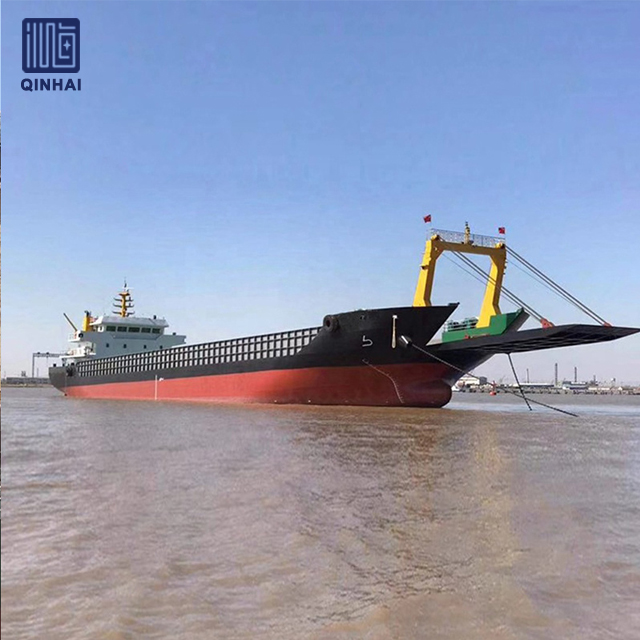
Landing craft require specialized rules for deck load capacities. Ramp structural integrity and lifting appliances undergo intense engineering scrutiny. The class must verify the vessel can handle heavy rolling cargo and tidal beaching operations without buckling the bottom plating. The bow ramp hinges and hydraulic cylinders must meet strict safety factors to prevent catastrophic failure during loading operations.
Certifying a 20000 DWT LCT vessel with crane requires careful class selection. ABS and BV marine crane certification requires rigorous load testing standards. They demand extensive documentation for lifting appliances and slewing rings. CCS offers excellent project suitability for regional builds. CCS utilizes localized testing protocols. This speeds up the dynamic and static crane certification process at Asian shipyards significantly. The local surveyors can attend the factory acceptance tests (FAT) for the winches and hydraulic power units without requiring international travel, keeping the project on schedule and under budget.
Tankers must navigate stringent environmental and safety notations. Hazardous cargo requires flawless containment systems. Class societies mandate rigorous vapor control, inert gas (IG) systems, and fire suppression inspections. Pump room ventilation and Ex-proof electrical equipment are strictly monitored to prevent catastrophic explosions. The cargo tank coatings must be verified for compatibility with the intended chemical or petroleum products.
Selecting a class for a 3000 DWT oil tanker ship demands attention to detail. The focus centers on double-hull inspection standards. Discharge pump certifications must meet strict international codes. Furthermore, major oil companies require strict vetting through the SIRE program. BV and ABS often hold historical preference with Western oil majors. However, CCS is increasingly accepted for regional petroleum transport and domestic chemical trades. The choice dictates which terminals will accept the vessel for loading. You must align the class society with the specific vetting requirements of your target charterers.
Owners must analyze trade-offs between initial classification fees and long-term operational expenditure. Higher initial classification fees with a Western IACS member might yield lower lifetime insurance premiums. A globally recognized class can reduce port inspection delays across European and American ports. It may also secure better international charter rates. However, budget-conscious projects operating regionally might prioritize lower upfront capital expenditure. CCS provides an excellent balance of IACS-level compliance and highly competitive initial survey fees. You have to weigh the immediate cash flow impact against the projected earnings over the first five years of operation. A cheaper initial build does not always translate to higher profitability if the vessel faces constant port state control scrutiny.
Specifying BV or ABS certification for components adds real costs at the shipyard level. Marine cranes, main engines, and steel plates often see a 3–8% markup. This premium stems from surveyor travel logistics and specialized testing requirements. International administrative overhead also drives up the price. Many Asian equipment manufacturers hold standing CCS type-approvals. Requiring BV or ABS means the foundry or factory must undergo a fresh audit. The manufacturer passes these surveyor call-out fees directly to the shipowner. If you order a main engine, the BV surveyor must witness the testbed run. If that surveyor has to fly in from another country, you pay for the flight, hotel, and day rate. These component-level fees compound rapidly across the hundreds of certified parts required for a newbuild.
Structuring a custom vessel price quote correctly is essential for budget control. You must isolate the exact cost difference between classing under ABS, BV, or CCS. Do not accept a lump sum figure from the shipyard.
This detailed financial breakdown prevents hidden budget overruns during the construction phase. It forces the shipyard to be transparent about their markup on class fees. You can then make an informed decision based on hard data rather than assumptions.
| Classification Society | Primary Strength | Cost Impact at Asian Yards | Best Fit For |
|---|---|---|---|
| ABS | Gross tonnage, offshore standards, structural integrity | High (3-8% premium on components) | Heavy tonnage, global resale, offshore energy, USCG alignment |
| BV | Fleet volume, specialized vessels, complex electrical systems | High (3-8% premium on components) | Custom builds, passenger ships, global compliance, DP vessels |
| CCS | Efficiency, localized surveyor network, rapid approvals | Low (Highly cost-effective) | Regional trade, rapid construction, budget control, Asian builds |
Construction delays often occur if a shipyard uses an unfamiliar class society. Misinterpretations of class rules lead to rejected welds or structural rework. A yard accustomed to CCS might struggle with ABS documentation requirements. Their welders might only hold CCS qualification certificates. Bringing in ABS requires requalifying the welders through new Welding Procedure Specifications (WPS) and Procedure Qualification Records (PQR). This requalification process takes weeks and costs thousands of dollars in test plates and lab fees. Aligning the classification society with the shipyard's historical experience mitigates this schedule risk entirely. It ensures the engineering department understands the exact drawing formats required for rapid approval. The yard's quality control department will already know the specific preferences of the local surveyors.
Critical construction milestones require immediate surveyor presence. Keel laying, block erection, and sea trials cannot proceed without class sign-off. Bottlenecks happen when surveyors must travel internationally or cover too many regional yards. Ensure the chosen class has a robust, fully staffed local office near the shipyard. Alternatively, hire experienced third-party marine consultants. They bridge the communication gap between the yard's engineering team and the class society. They ensure the physical work matches the approved drawings before the official surveyor arrives. A good consultant catches a misaligned pipe spool or an incomplete weld before the class surveyor rejects it, saving days of rework and keeping the project moving forward.
Sometimes it makes strategic financial sense to dual-class a newbuild vessel. Combining CCS and BV satisfies both local construction regulations and international charterer requirements. Dual classing leverages local yard efficiency while securing global operational freedom. The local class handles the statutory certificates on behalf of the flag state. The international class handles the hull and machinery notations. It does increase initial survey fees and administrative overhead. However, it maximizes long-term asset flexibility and broadens the potential chartering market. You get the fast build time of a local class and the global trading power of an international class. This strategy requires careful coordination during the design phase to ensure the vessel meets the most stringent requirements of both societies.
A: Base classification fees are often comparable. However, requiring ABS or BV certification for components at Asian shipyards typically adds a 3-8% premium to equipment costs compared to CCS. This increase stems from localized surveyor availability, travel expenses, and specialized testing logistics at the factory level.
A: Yes. CCS is a top-five, full IACS member and is widely accepted globally by port state control authorities and premium P&I clubs. However, specific international charterers or Western oil majors may still hold historical preferences for Western classes like ABS or BV for certain specialized trades.
A: BV and ABS maintain highly stringent, globally recognized testing standards for lifting appliances, making them ideal for international offshore work. CCS offers faster, highly efficient local certification in major Asian manufacturing hubs. This localized approach speeds up dynamic and static load testing for regional operations.
A: Yes. Top-tier IACS members like ABS and BV generally provide a wider pool of secondary buyers and easier flag state transfers. This broad market acceptance supports higher resale valuations and faster transaction times when selling commercial vessels on the global secondary market.
A: Yes, you can switch classes through the Transfer of Class Agreement (TOCA) process. Owners must account for the inspection costs, administrative downtime, and potential physical modifications required when switching between class rules. It is generally more cost-effective to select the right class during the newbuild phase.


