
Views: 0 Author: Site Editor Publish Time: 2026-09-12 Origin: Site


Evaluating maritime transport assets requires looking far beyond basic box-counting metrics to understand true payload viability and route compatibility. Misaligning vessel capacity with route demands creates severe financial and operational risks. Operators often underutilize deadweight tonnage (DWT), face unexpected port draft restrictions, or lack necessary onboard handling equipment for specific trade lanes. Accurate procurement and chartering decisions demand a comprehensive analysis of volume metrics, weight limits, ballast requirements, and specialized vessel configurations. You must finalize these parameters before engaging shipyards for commercial terms. Understanding exactly how we measure container ship capacity ensures you select the right asset for your operational profile. We will examine the technical specifications, operational constraints, and specialized vessel designs that dictate modern maritime logistics.
The maritime industry relies on standardized metrics to quantify cargo volume. The Twenty-foot Equivalent Unit (TEU) serves as the universal baseline. This metric estimates exactly how many ISO shipping containers a cargo hull can accommodate. Standardizing these dimensions aligns global port infrastructure, rail networks, and vessel designs under a single operational framework. A standard 1-TEU container measures 20 feet long, 8 feet wide, and 8.6 feet high. In metric terms, this translates to 6.09 meters by 2.4 meters by 2.6 meters. These exact dimensions, governed by ISO 668 standards, ensure seamless transfer between ships, trucks, and trains using standardized corner castings and twistlocks.
While the TEU remains the baseline, the Forty-foot Equivalent Unit (FEU) dominates modern deep-sea trade routes. An FEU counts as two TEUs in capacity planning. Shipping lines prefer FEU configurations for larger, lower-density cargo volumes. Handling one 40-foot box requires the exact same number of gantry crane moves as handling one 20-foot box. This drastically reduces port turnaround times and lowers stevedoring costs. High-cube containers introduce another physical variable. They stand 9.6 feet (2.9 meters) tall. Stacking high-cube containers impacts vertical configurations inside the cargo hold and above the weather deck. Deck officers must carefully calculate these heights to comply with strict line-of-sight regulations from the navigation bridge, mandated by SOLAS V/22, which requires a clear view of the sea surface forward of the bow.
Shipyards market vessels based on nominal capacity. This number represents the absolute maximum physical slots available for containers, assuming every slot holds a standard, lightweight empty box. However, nominal capacity differs significantly from effective capacity. Effective capacity dictates the actual number of loaded, revenue-generating containers a ship can safely carry under real-world conditions. A vessel boasting a 10,000 TEU nominal capacity rarely carries 10,000 fully loaded boxes. Heavy cargo limits, draft restrictions, and stability requirements force operators to leave top-tier slots empty.
Empty container repositioning further skews nominal capacity utilization. Global trade imbalances dictate that ships often carry thousands of empty boxes back to manufacturing hubs. Empty containers weigh significantly less than loaded ones, usually around 2.2 to 2.4 metric tons. This allows operators to stack them higher on deck without compromising the vessel's metacentric height (GM). Capacity planning requires distinguishing between revenue-generating loaded slots and necessary empty repositioning slots. You must evaluate a vessel based on its effective payload under specific trade conditions, factoring in the average weight per TEU on your intended route.
Understanding container vessel technical specifications requires looking past marketing brochures. You must analyze the structural and mathematical limits of the hull, the propulsion system, and the cargo securing manuals.
| Metric | Definition | Operational Impact |
|---|---|---|
| TEU (Nominal) | Maximum physical container slots available on board. | Determines theoretical maximum volume and deck layout. |
| DWT (Deadweight) | Maximum allowable weight of cargo, fuel, water, and crew. | Dictates actual heavy cargo carrying limits and draft. |
| Gross Tonnage (GT) | Total internal volume of the vessel (ITC 69 standard). | Used for calculating port dues, pilotage, and regulatory fees. |
| Scantling Draft | Maximum structural draft the hull is designed to withstand. | Restricts access to shallow ports, canals, and river berths. |
| Air Draft | Distance from the waterline to the highest point of the ship. | Determines bridge clearance capabilities on inland routes. |
Gross Tonnage (GT) and Deadweight Tonnage (DWT) serve entirely different operational purposes. GT measures the internal volume of the ship based on the International Convention on Tonnage Measurement of Ships. Port authorities use GT to calculate docking fees, pilotage charges, and canal tolls. It does not measure cargo capacity. DWT measures weight. It represents the maximum weight a ship can safely carry before submerging its legal load line mark. DWT includes the weight of cargo, heavy fuel oil (HFO), marine gas oil (MGO), fresh water, ballast water, provisions, and the crew.
Heavy cargo loads expose the limitations of nominal TEU capacity. A typical loaded FEU carrying machinery or agricultural bulk can weigh between 25 and 30 metric tons. If a ship loads exclusively heavy FEUs, it will hit its DWT limit long before filling all available physical slots. Chief mates must calculate the exact weight of every container using the ship's loading computer. They balance the cargo manifest against the required fuel and ballast water. If the total weight exceeds the DWT, the ship cannot legally or safely sail. This makes DWT a far more critical metric than TEU for heavy industrial trade routes.
Modern container ships rely on computer-managed weight distribution. Stowage planning software assigns each box a determined place based on its specific weight and destination port. Stowage planners place heavy units at the bottom of the cargo hold. Lighter units occupy the upper tiers on deck. This configuration lowers the center of gravity, ensuring vessel stability during heavy weather. Misplaced heavy containers high on the deck can cause catastrophic structural failure, severe rolling at sea, or parametric roll resonance.
Integrated pump and ballast systems maintain structural integrity. As shore cranes load containers, the ship pumps ballast water in or out of dedicated double-bottom and wing tanks. This counteracts uneven loads, minimizes hull shear forces, and manages draft limits. Ballast operations consume a portion of the available DWT. If a ship requires 2,000 tons of ballast water to maintain stability and propeller immersion, that is 2,000 tons of cargo weight it cannot carry. Advanced ballast water treatment systems (BWTS), now mandatory under IMO regulations, also add permanent lightweight to the vessel. You must account for these systems when evaluating effective cargo capacity.
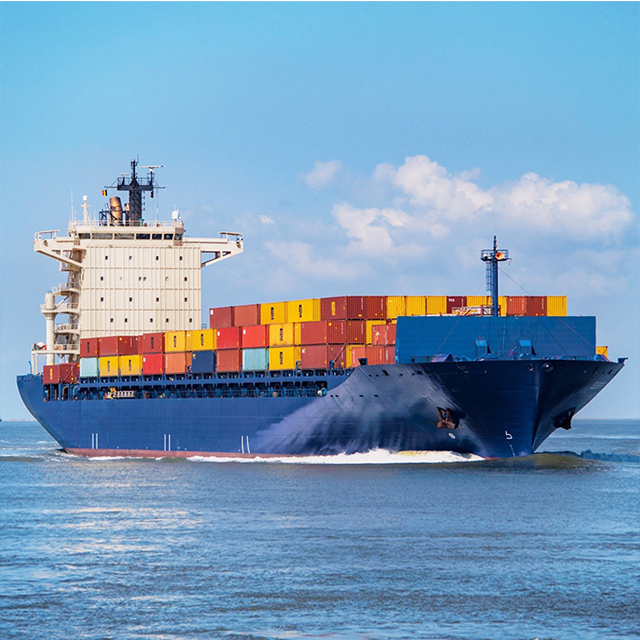
High-frequency regional feeder routes demand specific vessel designs. Ultra-large container vessels (ULCVs) cannot access shallow river ports or secondary coastal terminals. These routes require an optimal balance between capacity and port accessibility. A 10000 ton cargo hold container vessel provides the ideal solution for short-sea shipping. These vessels feature shallow drafts, allowing them to navigate restricted waterways like the Pearl River Delta or the Rhine.
Evaluating this class requires focusing on draft flexibility and fuel efficiency. A 10,000-ton DWT vessel typically carries around 700 to 900 TEU. The structural design prioritizes rapid port turnaround times. Wide hatch covers, cell guides, and unobstructed cargo holds allow shore cranes to load and discharge boxes quickly without excessive lashing requirements. These vessels often feature highly maneuverable propulsion systems, including powerful bow and stern thrusters. This reduces reliance on port tugboats, cutting operational expenses. For regional logistics networks, this vessel class maximizes operational uptime and route flexibility.
Many secondary ports lack shore-based ship-to-shore (STS) gantry cranes. Servicing these underdeveloped terminals requires specialized onboard equipment. A 20000 ton crane container vessel, commonly known as a geared vessel, carries its own heavy-duty electro-hydraulic deck cranes. This allows the ship to operate autonomously. It can load and discharge containers using only its own machinery, stevedores, and crew.
You must carefully analyze the operational trade-offs of geared vessels. Onboard cranes add significant lightweight to the ship, often hundreds of tons. This reduces the available DWT for cargo. The cranes also require rigorous maintenance programs. Hydraulic systems, slewing bearings, and wire ropes degrade quickly in harsh saltwater environments. Operating these cranes requires active heel control systems to prevent the ship from listing dangerously during heavy lifts. However, the ability to access any port regardless of shore infrastructure offers massive strategic advantages. Geared vessels dominate trade routes in developing regions, island nations, and remote industrial sites. The autonomy they provide outweighs the payload penalty.
Niche logistics operations often require rapid, independent cargo discharge. Island supply chains and specialized coastal routes cannot afford long port stays or wait times for local stevedores. A 5000 ton self unloading container vessel serves these highly specific markets. These ships feature specialized onboard mechanisms, such as deck-mounted gantry systems or conveyor belts, designed to move cargo from the hold to the pier without external assistance.
Evaluating a self-unloading configuration requires comparing turnaround speed against lost TEU capacity. The unloading mechanisms occupy valuable deck space, require reinforced deck plating, and consume cargo hold volume. A standard 5,000-ton vessel might carry 400 TEU, but a self-unloading variant might only carry 280 to 300 TEU due to the space and weight of the discharge equipment. The advantage lies entirely in speed and independence. These vessels can arrive at a rudimentary concrete pier, discharge their cargo in hours, and depart before the tide changes. For specialized supply chains, this rapid turnaround dictates the entire operational strategy.
Physical port constraints dictate ultimate container ship capacity. You cannot deploy a vessel that exceeds the infrastructure limits of its intended route. Panamax, Neo-Panamax, and Suezmax standards define maximum allowable vessel dimensions based on canal lock sizes. A ship's scantling draft determines whether it can safely navigate approach channels at low tide without grounding. Air draft restricts vessels passing under bridges. If a ship stacks high-cube containers too high, it may strike bridge structures, requiring operators to wait for low tide to transit.
Terminal infrastructure also limits capacity utilization. Shore cranes have specific outreach limits. If a vessel's beam is too wide, the crane cannot reach the outermost container slots on the offshore side. Pier length dictates how many ships can dock simultaneously and how many mooring lines are required. Evaluating capacity requires mapping the vessel's exact dimensions against every port on the proposed route. A massive ship offers excellent economies of scale, but only if the ports can physically accommodate its draft, beam, and length overall (LOA).
Vessel size, speed, and fuel consumption share a non-linear relationship. Pushing a large hull through the water at high speeds requires exponential increases in main engine power. To manage fuel costs, operators utilize "slow steaming." By reducing speed by just a few knots, a vessel can cut daily fuel consumption drastically. This practice changes how we evaluate capacity, as longer transit times require more vessels to maintain a weekly service loop.
Optimizing for maximum capacity impacts regulatory compliance. The International Maritime Organization (IMO) enforces strict emissions standards. The Energy Efficiency Design Index (EEDI) and the Carbon Intensity Indicator (CII) require ships to meet specific carbon targets. A massive, fully loaded ship moving slowly achieves better EEDI ratings than a smaller, faster ship. Procurement teams must select two-stroke crosshead diesel engines capable of efficient low-load operation. Derating main engines allows large vessels to maintain compliance while maximizing their DWT utilization and minimizing specific fuel oil consumption (SFOC).
Selecting the right shipyard determines the long-term structural viability of the asset. When vetting a container vessel manufacturer in China, you must demand strict adherence to International Association of Classification Societies (IACS) standards. Classification societies like DNV, ABS, or Lloyd's Register ensure the vessel meets all structural, metallurgical, and safety regulations. You should never procure a commercial vessel built outside IACS oversight.
Assess the shipyard's specific track record and industrial infrastructure. Look at their steel cutting precision using CNC plasma or laser cutters, and evaluate their block assembly efficiency. Modern shipbuilding relies on constructing massive steel blocks, outfitting them with piping, and welding them together in a drydock. The shipyard must have sufficient drydock dimensions and Goliath gantry crane capacity for your specific vessel class. Ask for historical data on welding defect rates, non-destructive testing (NDT) results, and marine coating application standards. Verify their engineering capabilities and their familiarity with complex torsion box structures before signing letters of intent.
Shipbuilding contracts carry significant implementation risks. Steel plate price volatility can derail project budgets if contracts lack proper escalation clauses. Supply chain delays for critical components on the Maker's List, like main engines, generators, or ballast water treatment systems, can push delivery dates back by months. Quality assurance during sea trials often reveals performance shortfalls in speed or maneuverability. You must structure contracts to mitigate these specific risks.
If the delivered vessel fails to meet the guaranteed speed or fuel consumption metrics during sea trials, the shipyard must face financial penalties. Clear contractual language protects your capital and ensures the vessel performs exactly as specified in the initial design phase.
Procurement teams must define their exact operational profile before evaluating shipyard proposals. Analyze your route data, port infrastructure, and cargo density. Determine whether a geared or gearless configuration best serves your supply chain. Once you establish these parameters, you can confidently approach shipyards for commercial discussions.
A: TEU capacity measures the maximum volume of standard 20-foot containers a ship can hold. Deadweight Tonnage (DWT) measures the maximum actual weight the ship can safely carry, including cargo, fuel, water, and crew. Ships often hit their DWT weight limit before filling all available TEU volume slots.
A: Heavy containers consume the ship's DWT capacity rapidly. If a vessel loads primarily heavy industrial goods, it will reach its maximum safe weight limit quickly. The crew must leave remaining TEU slots empty to prevent the ship from sinking below its legal load line.
A: A standard 1-TEU ISO container measures exactly 6.09 meters in length, 2.4 meters in width, and 2.6 meters in height. These standardized dimensions allow seamless transfer between ships, port cranes, railcars, and transport trucks globally.
A: Geared vessels feature onboard heavy-duty deck cranes. This allows them to load and unload containers autonomously without relying on shore-based gantry cranes. They are essential for servicing underdeveloped ports, remote island nations, and secondary coastal terminals lacking modern infrastructure.
A: Stowage software dictates exactly where each container sits to maintain structural stability. Ballast systems pump water into tanks to counteract uneven cargo weights. The weight of this required ballast water consumes a portion of the ship's total DWT, slightly reducing available cargo capacity.
A: Quotes depend heavily on the vessel's DWT, main engine specifications, steel market prices, and specialized equipment like onboard cranes or self-unloading mechanisms. Compliance with strict environmental regulations and EEDI standards also significantly impacts the final shipyard construction costs.
A: Building a custom container ship generally takes between 18 and 36 months from contract signing to final delivery. This timeline includes engineering design, steel cutting, block assembly, drydock construction, launching, and mandatory sea trials to verify performance metrics.


