
Views: 0 Author: Site Editor Publish Time: 2026-09-10 Origin: Site


Fleet operators and logistics directors face a constant operational hurdle: maximizing payload efficiency without compromising vessel stability or port accessibility. Container ships transport roughly 90% of global non-bulk cargo. The core business problem is the massive discrepancy between theoretical maximums and actual operational capacity. A ship's nominal TEU (Twenty-foot Equivalent Unit) rating rarely reflects the true number of boxes it can carry on a given voyage. Actual capacity is strictly governed by deadweight tonnage (DWT) limits, cargo density, the specific container mix, and route-specific draft restrictions.
You need a structured approach to evaluating technical specifications, comparing specialized tonnage configurations, and navigating the procurement process with shipbuilders. We will break down the engineering realities of maritime transport to help you align vessel capabilities with your specific route demands.
Nominal TEU represents the theoretical maximum volume of containers a vessel can physically stack above and below deck. Shipbuilders calculate this metric based purely on available geometric space. Space does not equal payload capability. Deadweight Tonnage (DWT) defines the actual weight limit the ship can safely carry. This weight encompasses the cargo itself, fuel oil, ballast water, fresh water, provisions, and the crew. A vessel cannot exceed its maximum DWT without compromising structural integrity and violating load line regulations.
To bridge the gap between volume and weight, naval architects use the homogenous load metric, typically calculated at 14 tons per TEU. A standard 20-foot container can technically hold over 28 tons of payload. If a ship loaded every physical slot with maximum-weight containers, it would exceed its structural limits and sink. If a ship is loaded entirely with containers weighing 14 tons each, it will reach its DWT limit long before every physical slot is filled. Vessels gross out on weight before they space out on volume. Understanding this dynamic is mandatory when evaluating actual container vessel capacity for heavy industrial routes.
Industry benchmarking reveals a massive shift in scale. Modern ultra-large vessels now exceed 24,000 TEU, but the global average capacity currently sits around 4,580 TEUs. This figure is nearly double the average from 2006. The industry pushes toward economies of scale to reduce the per-container transit cost, but larger ships require exponentially more complex weight management.
Theoretical TEU limits assume a uniform load of standard 20-foot containers. Real-world stowage planning is far more complex. The specific container mix alters actual capacity drastically. Loading 40-foot containers (FEUs) or High Cube containers changes the stacking geometry. High Cubes are a foot taller than standard boxes. They reduce the total number of tiers a vessel can safely stack above deck without obstructing bridge visibility or exceeding windage limits.
Reefer plug capacity introduces another strict constraint. Accommodating refrigerated containers requires substantial onboard power generation. A typical reefer unit draws between 4 and 5 kilowatts of power. A vessel carrying 1,000 reefers needs up to 5 megawatts of dedicated auxiliary power. Running these auxiliary engines consumes additional marine diesel oil. This extra fuel weight directly impacts the available DWT, reducing the total weight allowance for standard dry cargo. Reefers themselves are heavier than standard dry boxes. A high-reefer voyage will hit the vessel's weight ceiling much faster than a standard dry run.
Modern hull hydrodynamics and beam width dictate how many containers can be stacked side-by-side and how high the tiers can go. A wider beam increases the metacentric height (GM), providing the initial stability required to carry top-heavy loads above the weather deck. Naval architects balance a streamlined hull for fuel efficiency with a wide enough beam to support maximum tier configurations. If the GM is too large, the ship becomes stiff and rolls violently, which can snap container lashings. If the GM is too small, the ship becomes tender and risks capsizing.
Active ballast water management systems maintain this stability. As fuel is consumed during a voyage, the ship becomes lighter at the bottom, raising its center of gravity. Ballast water is pumped into lower double-bottom tanks to compensate, keeping the vessel upright and ensuring proper propeller immersion. Poorly optimized hull-to-capacity ratios lead to excessive ballast requirements. If a ship must carry thousands of tons of ballast just to stay upright, that weight is subtracted directly from the profitable cargo DWT.
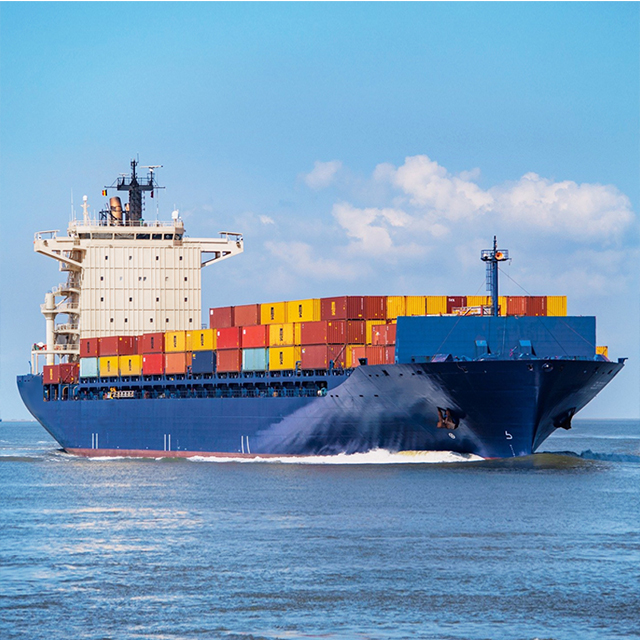
Feeder vessels handle regional trade and short-sea shipping. Their success relies on high maneuverability, shallow draft capabilities, and the ability to navigate inland waterways or secondary coastal ports. These ships operate as spokes in a hub-and-spoke logistics model, feeding cargo from massive deep-water hubs to smaller regional terminals.
Typical DWT ranges for feeders fall between 20,000 and 40,000 tons. A defining characteristic of many feeder ships is the inclusion of onboard cranes. These geared vessels service ports that lack adequate shore-side gantry infrastructure. They load and discharge cargo autonomously, making them highly versatile in developing regions.
Evaluating mid-to-large vessels requires analyzing dimensional limits dictated by global transit chokepoints, primarily the Panama Canal. Traditional Panamax vessels were strictly limited by the original canal locks, restricting their beam to 32.2 meters and length to 294 meters. The expansion of the canal birthed the Neo-Panamax class, allowing vessels up to 14,000 TEU with a beam of 51.2 meters to transit.
Fleet operators weigh the trade-offs between carrying capacity and transit flexibility. A Neo-Panamax offers excellent economies of scale for trans-Pacific or trans-Atlantic routes while retaining the ability to cross between oceans without navigating around Cape Horn. Reviewing precise container vessel technical specifications ensures the chosen hull design aligns with the intended canal transits and regional port drafts.
Vessels exceeding 14,000 TEU represent the extreme end of maritime engineering. The physical realities of ULCVs demand specific port infrastructure. They require deep-water berths with drafts exceeding 16 meters, extended turning basins, and super-post-Panamax cranes capable of reaching across a beam of 24 container rows.
The primary advantage is unparalleled economies of scale on main east-west trade lanes. This scale comes with the risk of severe port congestion, limited route deployment options, and highly complex stowage coordination. A ULCV can only call at a fraction of the world's ports. They are inflexible assets if global trade patterns shift suddenly.
| Vessel Class | TEU Range | Typical LOA (Length) | Typical Beam | Max Draft |
|---|---|---|---|---|
| Feeder | Up to 3,000 | 100m - 150m | 20m - 25m | 8m - 10m |
| Panamax | 3,000 - 5,000 | 294m | 32.2m | 12m |
| Neo-Panamax | 5,000 - 14,000 | 366m | 51.2m | 15.2m |
| ULCV | 14,000 - 24,000+ | 400m | 61m+ | 16m - 17m+ |
Standard container ships are optimized for uniform box transport, but certain routes demand flexibility. A 10000 ton cargo hold container vessel serves a specific use case for mid-sized, high-density cargo. These vessels handle heavy industrial goods, project cargo, or specialized bulk-to-container transitions where standard cell guides are too restrictive.
To support high point-loads without compromising hull integrity, the cargo hold requires severe structural reinforcements. Tank tops are constructed with thicker, high-tensile steel to withstand the localized pressure of heavy machinery or dense raw materials loaded alongside standard containers. Specialized lashing bridges and reinforced hatch covers ensure that heavy units remain secure during severe weather. This prevents cargo shift that leads to catastrophic loss of stability.
Operating in regions with underdeveloped maritime infrastructure requires vessels capable of self-sustaining operations. A 20000 ton crane container vessel provides significant advantages for heavy-lift requirements, infrastructure project logistics, or remote port operations. These geared vessels carry their own heavy-duty deck cranes, allowing them to load and discharge cargo independently of shore-based gantry systems.
Procuring a geared vessel involves strict trade-offs. The deck cranes weigh hundreds of tons. This weight directly subtracts from the vessel's maximum DWT. The cranes require ongoing hydraulic maintenance, specialized crew training, and create blind spots for bridge navigation. The operational independence gained in under-equipped ports justifies the reduction in nominal payload. It prevents costly delays waiting for scarce shore-side equipment.
For niche applications like short-sea shipping, island logistics, or coastal feeder routes, turnaround speed drives profitability. A 5000 ton self unloading container vessel utilizes specialized onboard mechanisms to achieve rapid discharge rates. These mechanisms range from automated deck gantries to specialized conveyor systems for hybrid bulk and container loads.
The feature-to-outcome value is clear: reduced reliance on local port stevedores and significantly faster discharge rates. By cutting port stay times by up to 50%, the vessel completes more voyages per year. This efficiency is weighed against the loss of usable TEU space. The mechanical footprint of the self-unloading equipment occupies deck space that would otherwise hold cargo. The vessel sacrifices maximum volume for maximum velocity.
A vessel's capacity is only as useful as the ports it can access. Fleet operators map the vessel's fully laden draft and maximum beam against the capabilities of their target ports. If a vessel with a 15-meter draft is deployed on a route where the destination port has a 13-meter channel depth, the operator faces a severe problem. You must also account for the squat effect. A ship moving through shallow water creates a low-pressure area under the hull, causing it to sink deeper than its static draft. A vessel with a 13-meter static draft might draw 14 meters dynamically while underway.
This scenario forces short-loading. The vessel intentionally carries less than its maximum DWT to reduce its draft and clear the shallow channel safely. Short-loading degrades voyage profitability. The operator pays the fuel and operational costs of a large vessel while only collecting freight revenue for a partial load. Crane outreach limits must be verified. If a port's cranes only reach 18 rows across, a vessel with a 20-row beam cannot be fully discharged without turning the ship mid-operation.
The relationship between vessel speed, cargo weight, and fuel consumption is non-linear. Pushing a fully loaded vessel at high speeds requires an exponential increase in engine power and fuel burn. To manage fuel costs, the industry widely adopted slow steaming. Reducing speed by just a few knots drastically lowers the specific fuel oil consumption (SFOC) of the main engine.
Slow steaming impacts capacity utilization and fleet sizing. If a voyage takes 20% longer due to reduced speeds, an operator adds an additional vessel to the service loop to maintain a weekly port call schedule. Balancing the maximum payload against the optimal hydrodynamic speed of the hull maintains schedule integrity without destroying fuel budgets.
Upcoming International Maritime Organization (IMO) regulations directly impact operational capacity. The Carbon Intensity Indicator (CII) and Energy Efficiency Existing Ship Index (EEXI) force operators to evaluate their fleet's emissions profiles. Non-compliant vessels face mandatory engine power limitations (EPL), effectively reducing their top speed and altering route schedules.
Retrofitting older vessels to meet these standards reduces effective cargo capacity. Installing exhaust gas cleaning systems (scrubbers) requires significant physical space for the tower unit and the associated wash water tanks. This equipment adds deadweight and consumes volumetric space that could otherwise hold containers. Retrofitting for alternative fuels like LNG or methanol requires larger fuel tanks due to lower energy density, further eating into the vessel's available payload.
Procuring new tonnage requires partnering with a shipyard capable of executing complex naval architecture. Evaluating a custom container vessel supplier involves auditing their engineering track record. You verify their experience with the specific vessel class you require, whether it is a shallow-draft feeder or a heavily reinforced cargo hold vessel.
Assess their in-house naval architecture capabilities and steel-cutting precision. High precision in steel fabrication reduces residual stress in the hull blocks, extending the fatigue life of the vessel. Ensure strict Classification Society oversight is integrated into every phase of the design and build. Societies like DNV, Lloyd's Register, or ABS guarantee the vessel meets international safety and structural standards. They inspect welding tolerances, block assembly, and coating systems.
Initiating a container vessel price inquiry requires a comprehensive technical specification package. A vague inquiry yields inaccurate bids. Break down the components clearly. Specify the required steel grades, main engine maker's list (e.g., MAN B&W or WinGD), auxiliary power requirements for reefers, and any specialized equipment like heavy-lift cranes or scrubbers.
Use a strict checklist to ensure apples-to-apples comparisons between shipyard bids. Shipyards quote different main engine tiers or omit the cost of essential commissioning spares to make their initial bid look attractive. Mitigate hidden costs by demanding transparent clauses regarding sea trials, final commissioning, and warranty periods. The contract must clearly define the penalties for late delivery or failure to meet the contracted speed and fuel consumption guarantees during the official sea trial speed runs.
A: TEU measures volumetric space, representing the physical number of 20-foot boxes a ship can hold. Deadweight Tonnage (DWT) measures the maximum safe weight the vessel can carry, which includes cargo, fuel, ballast, and crew. Ships usually reach their DWT weight limit before filling every TEU slot.
A: Loading 40-foot containers, High Cubes, or heavy refrigerated units consumes more DWT and physical geometry than standard 20-foot containers. High Cubes restrict stacking heights due to visibility rules, while reefers require extra fuel for power generation, preventing the ship from reaching its nominal TEU maximum.
A: Shallow port channels force vessels to load below their maximum DWT to reduce their draft. This practice, known as short-loading, limits the actual number of heavy containers they can transport, directly reducing the profitability of the voyage to ensure safe under-keel clearance.
A: Geared vessels of this size are ideal for servicing developing ports, remote regions, or infrastructure project sites lacking adequate shore-side gantry cranes. The onboard cranes provide operational autonomy, allowing the ship to load and discharge cargo independently without waiting for port equipment.
A: Key elements include the required nominal TEU, maximum DWT, design speed, main engine type, environmental compliance systems, classification society standards, specialized deck equipment, and a strict delivery schedule with defined sea trial parameters.
A: Shipbuilders use reinforced tank tops made of high-tensile steel, specialized lashing bridges, and optimized ballast systems. These structural reinforcements handle high point-loads and high-density freight safely, preventing hull stress and cargo shifting during transit.
A: The primary benefits include rapid port turnaround times and a reduced dependency on local port labor or infrastructure. This high-velocity discharge capability makes them highly efficient for short-sea shipping, island logistics, or coastal feeder routes where speed is critical.


