
Views: 0 Author: Site Editor Publish Time: 2026-09-18 Origin: Site


Fleet operators face a constant battle balancing operational expenditures with cargo demand on draft-restricted routes. Deploying ultra-large vessels here causes dead freight. Using undersized ships kills economies of scale. The solution lies in right-sized tonnage. You need to define the exact operational profile of a 10000 ton container vessel. We evaluate its technical capacity against alternative classes and establish a rigorous framework for sourcing, financing, and requesting accurate quotations from shipyards. This guide breaks down hull design, propulsion specs, and procurement strategies to maximize route profitability. We strip away the theory and look at what actually works on the water. You will learn how to match vessel specifications to port infrastructure, navigate shipyard contracts, and keep your fleet compliant with international maritime regulations.
The global maritime supply chain relies heavily on the hub-and-spoke model. Ultra-large container vessels discharge tens of thousands of TEUs at major deep-water transshipment hubs like Singapore, Rotterdam, or Shanghai. From there, feeder vessels take over. A 10,000-ton vessel acts as the primary spoke, transporting cargo from these massive hubs to smaller regional ports that cannot accommodate the extreme draft or length of mainline ships. This tonnage class offers the exact maneuverability required to navigate congested regional waterways while carrying enough volume to make the short-haul voyage economically viable. Port congestion at major hubs forces operators to rely on these agile vessels to maintain schedule integrity and prevent container pile-ups at the terminal.
Short-sea shipping involves moving freight along coastlines without crossing an ocean. In regions like the Mediterranean, the Baltic Sea, or Intra-Asia routes, high-frequency scheduling is mandatory. Shippers expect reliable, predictable transit times similar to trucking or rail, but with significantly higher volume capacity. A 10,000-ton vessel excels here. Its hull is designed to withstand coastal weather patterns while maintaining a speed profile that allows for rapid port turnarounds. Operators deploy these vessels to bypass congested land borders, offering a high-capacity alternative to highway freight transport. The structural design accounts for short, choppy wave periods typical of coastal waters, ensuring cargo remains secure during transit.
Navigating major river systems such as the Yangtze, the Rhine, or the Mississippi requires specialized naval architecture. Vessels must possess a shallow draft to avoid grounding during dry seasons and a low air draft to clear inland bridges. A 10,000-ton vessel designed for river-sea navigation features a modified hull form. It maintains the structural integrity required for rough coastal transit while integrating flat-bottom characteristics for river entry. This dual capability allows cargo to move directly from an ocean hub to an inland manufacturing center without requiring a secondary discharge onto barges or rail. Engineers often incorporate retractable radar masts and low-profile superstructures to meet strict air draft limitations on these routes.
Regional trade heavily involves perishable goods, pharmaceuticals, and agricultural products. Transporting these requires refrigerated containers. A modern 10,000-ton vessel is equipped with high-capacity auxiliary generators to support a dense allocation of reefer plugs. Maintaining the cold chain across a short-sea route demands uninterrupted power generation. If a vessel lacks sufficient electrical output, operators cannot maximize their high-yield perishable cargo capacity. Engineering the power grid on these vessels is a primary focus during the design phase to ensure temperature stability from port to port. Redundant power systems are installed to prevent catastrophic cargo loss in the event of a primary generator failure.
Determining the viability of deploying this specific vessel class requires analyzing several physical and operational constraints. Operators evaluate routes based on specific metrics:
Understanding the actual carrying capability requires distinguishing between physical weight limits and volumetric capacity. Deadweight Tonnage (DWT) measures the total weight a ship can safely carry, including cargo, fuel, fresh water, ballast water, provisions, and crew. A 10,000 DWT vessel can carry 10,000 metric tons of total mass before its hull submerges past the maximum safe draft line.
Conversely, Twenty-foot Equivalent Unit (TEU) measures volumetric slot capacity. A 10,000 DWT vessel typically offers a container vessel cargo capacity of 700 to 1,000 TEU. The actual utilization depends heavily on the cargo type. If the route primarily transports heavy raw materials, machinery, or steel components, the vessel will reach its 10,000-ton weight limit long before all 1,000 TEU slots are filled. If the cargo consists of lightweight consumer electronics or apparel, the vessel will fill all its slots before reaching its maximum weight limit. Fleet planners must calculate this weight-to-volume ratio precisely to optimize stowage plans.
| Cargo Type | Average Weight per TEU | Max TEU at 10,000 DWT | Limiting Factor |
|---|---|---|---|
| Scrap Steel / Heavy Machinery | 22 Metric Tons | ~450 TEU | Deadweight Limit (Vessel sinks to max draft) |
| Mixed Consumer Goods | 14 Metric Tons | ~714 TEU | Deadweight Limit (Vessel sinks to max draft) |
| Lightweight Apparel / Plastics | 8 Metric Tons | 1,000 TEU | Slot Capacity Limit (Vessel runs out of physical space) |
The structural layout of a 10000 ton cargo hold container vessel is engineered for rapid loading and discharging. Below deck, cellular guide systems—vertical steel rails—allow cranes to slide containers into place without requiring manual lashing. This drastically reduces port turnaround times. Above deck, containers are secured using twist-locks and lashing rods attached to heavy-duty lashing bridges. The steel grade used in these lashing bridges must withstand immense torsional forces as the vessel rolls in heavy seas.
Hatch cover configurations play a major role in operational efficiency. Pontoon hatch covers are lifted off entirely by shore cranes, maximizing access but requiring dock space. Folding hatch covers operate hydraulically, remaining on the vessel, which is ideal for ports with limited apron space. Additionally, these vessels must incorporate robust ballast water management systems (BWMS) to maintain stability as cargo is loaded and unloaded asymmetrically. For regional transport of chemicals or hazardous materials, the cargo hold must feature strict IMDG (International Maritime Dangerous Goods) segregation capabilities, including specialized ventilation and fire suppression systems.
Engine selection for a 10,000-ton feeder vessel differs significantly from that of an ocean-crossing behemoth. Feeder vessels experience frequent port calls, requiring engines that perform efficiently at variable speeds and handle repeated starting and stopping. Operators typically choose between two-stroke slow-speed diesel engines, which offer superior fuel economy for longer coastal runs, and four-stroke medium-speed engines, which provide better maneuverability and compact footprints. Shaft generators are frequently installed to draw power directly from the main engine rotation, reducing the reliance on auxiliary diesel generators during transit.
Environmental compliance drives modern propulsion engineering. Vessels must meet strict International Maritime Organization (IMO) regulations, including the Energy Efficiency Design Index (EEDI) for new builds and the Carbon Intensity Indicator (CII) for operational tracking. To future-proof assets, many shipyards now design these vessels to be LNG-ready or Methanol-ready. This involves reinforcing specific hull sections to accommodate future cryogenic fuel tanks and installing dual-fuel compatible engine blocks. Energy-saving devices, such as optimized propeller boss cap fins and air lubrication systems, are also integrated to reduce hydrodynamic drag.
Modern feeder operations require continuous data streams. The integration of Operational Technology (OT) and Information Technology (IT) allows fleet managers to monitor engine performance, fuel consumption, and hull stress in real-time. Condition-based monitoring sensors detect minute vibrations in rotating machinery, predicting bearing failures before they cause a loss of propulsion at sea. Voyage Data Recorders (VDR) and Electronic Chart Display and Information Systems (ECDIS) are fully integrated into the bridge network.
Securing containerized cargo data across hybrid logistics environments is equally critical. As the vessel moves between different regional jurisdictions, the digital handoff of cargo manifests, customs declarations, and reefer temperature logs must be seamless. Advanced satellite communication systems ensure that the vessel remains connected, allowing port authorities to clear cargo before the ship even docks, thereby accelerating the discharge process.
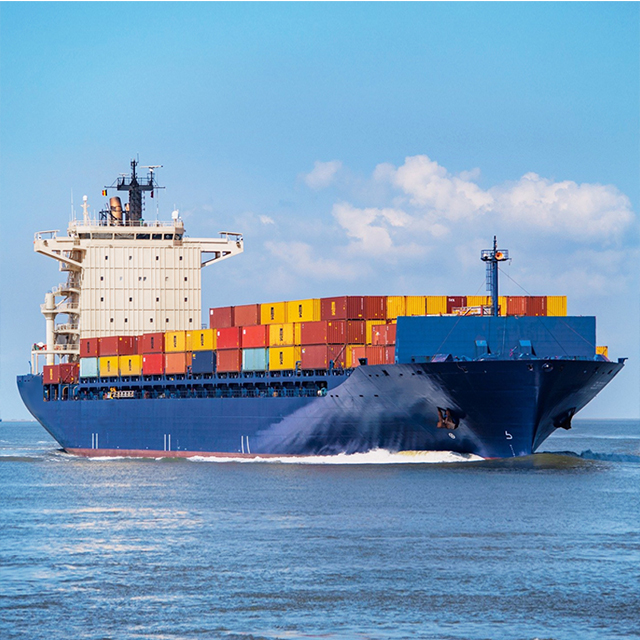
When route parameters become exceptionally restrictive, operators must scale down. A 5000 ton customized container vessel is deployed for extreme shallow-draft ports, island-hopping routes, or highly specialized cargo requirements. These vessels often feature custom dimensions, such as a wider beam relative to their length, to maintain stability despite a shallow draft. Drafts on these vessels frequently sit below 5 meters, allowing them to access remote terminals entirely inaccessible to standard feeder tonnage.
The primary trade-off involves capital expenditure (CAPEX) versus operational efficiency. While a 5,000-ton vessel requires less initial investment to build, its cost-per-TEU to operate is significantly higher than that of a 10,000-ton vessel. The economies of scale are reduced. Smaller vessels experience reduced rough-weather capability, limiting their deployment to protected coastal waters or specific seasonal windows. They are strictly niche assets, highly profitable on specific routes but lacking the flexibility to be redeployed to standard feeder networks.
Conversely, scaling up is necessary when cargo volumes increase but port infrastructure remains underdeveloped. A 20000 ton crane container vessel is specifically designed for routes involving secondary or tertiary ports in developing regions that lack specialized ship-to-shore (STS) gantry cranes. These "geared" vessels are equipped with their own heavy-lift deck cranes, allowing them to load and discharge containers autonomously. The Safe Working Load (SWL) of these onboard cranes typically ranges from 35 to 45 tons, sufficient to handle fully loaded 40-foot containers.
This operational independence comes with distinct engineering trade-offs. The onboard cranes add immense weight to the vessel, reducing the total payload capacity. They require heavier fuel consumption to operate and demand rigorous, ongoing maintenance due to constant exposure to corrosive saltwater environments. The crane housing and structural reinforcement sacrifice valuable deck space, reducing the total TEU slot capacity compared to a gearless vessel of the exact same hull dimensions. Operators choose this class only when port infrastructure limitations make gearless vessels impossible to deploy.
| Vessel Class | Typical Draft | Gear Configuration | Primary Route Profile |
|---|---|---|---|
| 5,000 Ton Customized | < 5.0 Meters | Gearless or Light Gear | Island hopping, extreme shallow river ports |
| 10,000 Ton Standard | 7.5 - 8.5 Meters | Gearless | Coastal feeder, hub-and-spoke, developed regional ports |
| 20,000 Ton Geared | 9.5 - 10.5 Meters | Heavy Deck Cranes | Developing regions, ports lacking STS gantry cranes |
Procuring commercial tonnage requires rigorous due diligence. When selecting a container vessel manufacturer in China, buyers must differentiate between massive state-owned enterprises and specialized private yards. State-owned yards often possess massive dry docks and deep financial reserves, but their production slots may be monopolized by ultra-large vessels or government contracts. Private yards that specialize specifically in feeder vessels often offer more flexible customization options and faster delivery timelines for the 10,000-ton class. You must inspect their slipways, block assembly areas, and outfitting quays to verify their actual production capacity.
Evaluating a shipyard requires analyzing its historical delivery timelines and sister-ship performance data. If a yard has already built a series of 10,000-ton vessels, buyers can request operational data from the existing owners to verify fuel consumption claims and structural reliability. Reviewing the yard's existing order book is also necessary to gauge financial stability; a yard with a healthy backlog is less likely to face sudden bankruptcy during the construction phase. Send your site supervision team to inspect vessels currently under construction on their slipways.
Shipbuilding quality is governed by International Association of Classification Societies (IACS) members, such as DNV, ABS, Lloyd's Register, or the China Classification Society (CCS). Mandatory compliance with these societies ensures the vessel meets global safety and structural standards. During procurement, buyers must specify which classification society will oversee the build, as this impacts the vessel's insurability and resale value. The classification society surveyor will be present at the yard to sign off on every major construction milestone.
Quality assurance at the yard level involves evaluating specific fabrication techniques. Buyers must audit the yard's steel cutting precision, usually executed by CNC plasma or laser cutters. Welding automation, particularly the use of submerged arc welding (SAW) for major hull seams, dictates the structural integrity of the block assembly. Non-Destructive Testing (NDT), including X-ray and ultrasonic testing of welds, must be strictly enforced. The application of anti-corrosion marine coatings must be inspected meticulously. Improper surface preparation before epoxy application leads to premature hull degradation and increased dry-docking frequency.
Securing an accurate 10000 ton container vessel quotation requires breaking down the shipbuilding contract into discrete components. A standard quotation includes basic design fees, hull steel costs, main engine and auxiliary machinery, and outfitting. Buyers must decide between imported tier-one machinery, which increases upfront costs but offers global service networks, and domestic machinery, which lowers initial expenditure. The Maker's List—a contractual document specifying the exact brands of equipment to be installed—must be negotiated line by line.
Payment milestones dictate the financial risk of the project. Standard structures often follow a 20/20/20/20/20 model, tied to contract signing, steel cutting, keel laying, launching, and delivery. Alternatively, buyers may negotiate a heavy-tail structure (e.g., 10/10/10/10/60), which keeps more capital in the buyer's hands until the vessel is proven seaworthy during sea trials. Regardless of the structure, securing Refund Guarantees from top-tier banks is non-negotiable to protect the buyer's capital if the shipyard fails to deliver.
Hidden costs must also be factored into the final budget. These include owner-furnished equipment (OFE) such as specific navigation software or proprietary lashing gear, the salaries and accommodations for the onsite site supervision team, classification society fees, and currency fluctuation risks between the contract signing and final delivery.
Integrating a new vessel into an existing fleet requires projecting long-term operational expenditures against the initial capital outlay. Crewing requirements for a 10,000-ton vessel remain relatively similar to larger vessels, meaning the crew cost per TEU is inherently higher. Fleet managers must optimize automated onboard systems to safely reduce manning requirements where flag state regulations permit. Compliance with International Transport Workers' Federation (ITF) standards dictates minimum crew wages and working conditions.
Insurance premiums are calculated based on the vessel's classification, the intended route, and the cargo profile. Operating in high-traffic regional corridors or extreme weather zones increases hull and machinery premiums. Scheduled dry-docking, required every five years for a Special Survey, represents a massive recurring expense. High-quality initial anti-fouling coatings and robust cathodic protection systems installed during the build phase will significantly reduce the steel replacement and blasting costs during these mandatory dry-dock periods.
Once operational, the vessel is subject to rigorous inspections by Port State Control (PSC) authorities. PSC officers board vessels to verify compliance with international conventions like SOLAS (Safety of Life at Sea) and MARPOL (Marine Pollution). Feeder vessels, due to their high frequency of port calls, face exponentially more PSC inspections than ocean-crossing vessels. Every logbook, from the Oil Record Book to the Ballast Water Record Book, must be flawless.
Deficiencies in ballast water management logs, improper IMDG cargo segregation, or malfunctioning oily water separators can result in immediate vessel detention. A detained vessel disrupts the entire regional supply chain, causing missed transshipment connections and severe reputational damage. Fleet integration must include rigorous crew training programs focused specifically on maintaining continuous audit readiness and flawless maintenance documentation.
To successfully integrate a 10,000-ton container vessel into a regional logistics network, execute the following steps:
A: A standard 10,000 DWT container vessel typically has a fully laden draft ranging between 7.5 and 8.5 meters. This shallow draft allows it to access regional river ports and coastal terminals that cannot accommodate the 14-to-16-meter drafts required by mainline ultra-large container vessels.
A: Yes, these vessels are built to strict classification society standards and are fully seaworthy for ocean crossings. They are rarely used for transoceanic trade because their smaller cargo capacity makes long-haul voyages economically inefficient compared to deploying larger vessels.
A: Depending on the flag state regulations and the level of automation onboard, a modern 10,000-ton container vessel typically operates with a crew of 12 to 18 personnel. Highly automated vessels with unattended machinery space (UMS) notation can operate safely at the lower end of this spectrum.
A: A geared vessel is equipped with onboard heavy-lift cranes, allowing it to load and unload cargo at ports lacking shore-side infrastructure. A gearless vessel has no onboard cranes, relying entirely on port-side gantry cranes, which saves weight and increases total container capacity.
A: From the signing of the contract and initial steel cutting to final sea trials and delivery, the construction process typically takes between 14 and 18 months. This timeline depends heavily on the shipyard's current order book, supply chain stability for main machinery, and the complexity of customized outfitting.
A: Most currently operate on Very Low Sulfur Fuel Oil (VLSFO) or Marine Gas Oil (MGO) to comply with IMO emissions regulations. New builds are increasingly designed as dual-fuel, LNG-ready, or Methanol-ready to accommodate future zero-carbon fuel transitions.


