
Views: 0 Author: Site Editor Publish Time: 2026-09-01 Origin: Site


A vessel’s draft dictates exactly how much payload you can move into specific ports without risking catastrophic grounding. Fleet managers and procurement officers face a constant trade-off between maximizing deadweight tonnage and maintaining access to draft-restricted terminals, canals, or riverways. Relying on standardized hull designs often leaves you with underutilized cargo capacity or restricted route optionality. Optimizing a fleet requires a rigorous understanding of the variables that dictate container vessel draft. You must account for hydrodynamics, water density, and structural limitations. Leveraging this data allows you to define precise specifications before commissioning a build or charter. We will break down the physics of displacement, the impact of onboard equipment, and how custom hull forms maximize cargo hold capacity while strictly adhering to the draft limits of your most profitable routes.
Understanding the spatial limitations of a ship requires precise definitions of its vertical measurements. Draft is the vertical distance from the waterline to the keel, which represents the deepest point of the hull submerged underwater. This measurement dictates the minimum water depth required for safe navigation. Freeboard is the vertical distance from the waterline to the main deck. It serves as a critical safety margin against flooding and determines the vessel's reserve buoyancy. Air draft measures the distance from the waterline to the highest physical point of the vessel, such as the radar mast or crane housing, which is essential for navigating under bridges or port infrastructure.
| Vertical Metric | Measurement Reference Points | Operational Significance |
|---|---|---|
| Draft | Waterline down to the Keel | Determines minimum water depth for safe navigation and port entry. |
| Freeboard | Waterline up to the Main Deck | Provides reserve buoyancy and safety margin against flooding. |
| Air Draft | Waterline up to the Highest Point | Dictates clearance under bridges, power lines, and port cranes. |
| Under Keel Clearance (UKC) | Keel down to the Seabed | Safety buffer to prevent grounding during squat or tidal shifts. |
Modern fleets operate within highly specific draft parameters dictated by their structural design and intended trade routes. Standard operational draft indicators for regional and mid-sized ships typically range from 8.00 meters to 11.0 meters. In contrast, fully loaded mega container ships operating on major transoceanic loops can sit 14.0 meters to 16.0 meters deep in the water, restricting them to a select few deep-water global hubs.
The foundation of these measurements lies in Archimedes' Principle. A vessel must displace a volume of water equal to its total weight. This total weight comprises the lightship weight (the physical mass of the empty ship, including machinery and structural steel) and the deadweight (the combined mass of cargo, fuel, ballast water, fresh water, and crew). As deadweight increases during cargo loading, the displaced volume must increase proportionally, causing the ship to sink deeper and increasing the operational draft.
To monitor this displacement safely, ships utilize draft marks and load lines. The International Load Line Convention mandates the application of the Plimsoll line on the midships hull. This marking visually dictates the legal and safe loading limits across different global zones and seasons, such as Tropical, Summer, Winter, and Winter North Atlantic. Reading these marks accurately is a fundamental skill for deck officers.
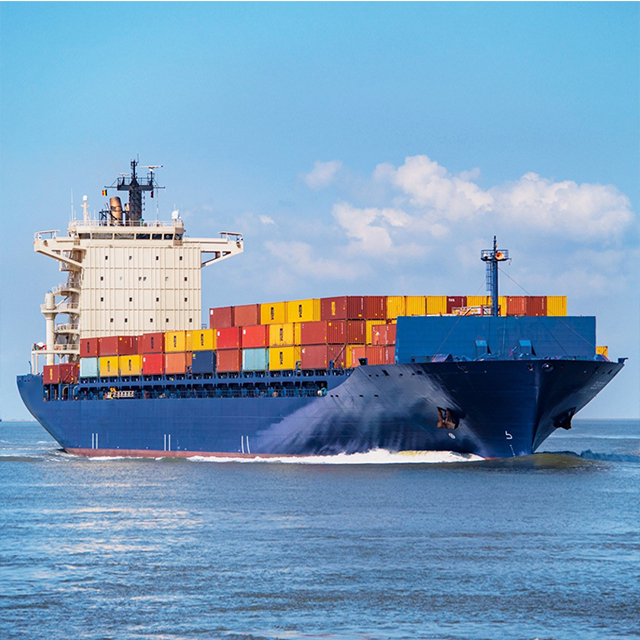
A ship's draft is never a static figure. It is a highly dynamic metric influenced by cargo operations, environmental conditions, and hydrodynamic forces encountered during a voyage. You must track these variables constantly to prevent grounding and optimize payload.
The most immediate factor altering a ship's draft is the cargo load. There is a linear relationship between adding Twenty-Foot Equivalent Units (TEUs) and the subsequent increase in draft. Naval architects quantify this relationship using a metric called Tonnes per Centimeter Immersion (TPC). TPC indicates exactly how many metric tonnes of cargo you must load to increase the vessel's mean draft by one centimeter. Operators calculate maximum allowable cargo against terminal draft restrictions using TPC to determine the absolute maximum tonnage that can be transported.
| Vessel Classification | Approximate TPC Value | Cargo Added for a 10cm Draft Increase |
|---|---|---|
| Feeder Vessel (500 TEU) | 15 - 20 tonnes | 150 - 200 tonnes |
| Panamax (4,000 TEU) | 50 - 60 tonnes | 500 - 600 tonnes |
| Neopanamax (14,000 TEU) | 120 - 140 tonnes | 1,200 - 1,400 tonnes |
Environmental factors significantly alter displacement. The transition from dense, cold saltwater in the open ocean to less dense, warm freshwater in rivers or canals causes a vessel to sink deeper, even if the cargo weight remains entirely unchanged. Saltwater has an average density of 1.025 tonnes per cubic meter, while freshwater has a density of 1.000. To prevent accidental overloading and grounding before entering inland waterways, officers utilize the Fresh Water Allowance (FWA) calculation. The standard formula for FWA is the vessel's displacement divided by 40 times the TPC. This formula predicts exactly how many millimeters the draft will increase when moving into freshwater, allowing operators to adjust cargo or ballast accordingly before transit.
Static draft measurements taken at the berth do not represent the vessel's draft while underway. As a ship moves through shallow water, it pushes water ahead of it. This water must accelerate to flow under the hull and past the ship. According to Bernoulli's principle, this acceleration causes a localized drop in water pressure beneath the keel. This pressure drop causes the ship to settle deeper into the water than its static draft, a phenomenon known as the squat effect. Squat increases exponentially with vessel speed and is amplified in confined channels. Navigators calculate strict under-keel clearance (UKC) margins to account for the squat effect during port approaches, often requiring severe speed reductions to maintain safe clearance over the seabed.
Draft changes continuously throughout a voyage due to the consumption of onboard resources. A large container ship can consume over a hundred tonnes of heavy fuel oil per day. As these consumables are burned, the vessel's total weight decreases, reducing the mean draft. To counteract this weight loss, maintain optimal trim, and ensure the propeller remains fully immersed for maximum thrust efficiency, the crew conducts active ballast water management. Pumping seawater into designated ballast tanks restores the lost weight and stabilizes the ship, directly manipulating the operational draft to maintain safe navigational parameters.
Procurement strategies must align the physical dimensions of the fleet with the infrastructural realities of their intended ports. Defining the correct container vessel technical specifications ensures that a ship can carry its maximum intended payload without violating the draft restrictions of its primary trade routes.
Regional supply chains often rely on shallow-draft ports that lack robust shore-side infrastructure. A 5000 ton self unloading container vessel represents a specialized solution for these coastal and feeder routes. Designing a vessel for this environment requires significant engineering trade-offs. Incorporating self-unloading gear, such as deck-mounted conveyor systems or heavy-duty gantry structures, drastically increases the lightship weight. To maintain a shallow draft—often required to be under 8.00 meters for regional berths—without sacrificing the 5,000-ton payload capacity, naval architects must design a wider beam. This wider footprint distributes the displacement over a larger surface area, keeping the keel safely above riverbeds and coastal shoals.
Secondary trade routes connecting regional hubs demand versatile workhorses. A 10000 ton cargo hold container vessel serves this segment by balancing internal volume with navigational flexibility. The primary evaluation dimension for this class is optimizing the block coefficient (Cb). The block coefficient measures how boxy the hull is compared to a rectangular block of the exact same length, beam, and draft. A higher Cb maximizes the volume of the cargo hold, allowing for more TEUs, but increases water resistance. Engineers fine-tune this coefficient to ensure the vessel can carry its 10,000-ton deadweight while maintaining a draft that permits passage through regional canals and medium-depth ports without excessive fuel penalties.
Transporting heavy project cargo or servicing ports entirely devoid of gantry cranes requires specialized lifting capabilities. A 20000 ton crane container vessel provides the necessary independence for these operations. However, mounting massive, top-heavy deck cranes introduces severe implementation risks regarding stability and draft. The cranes raise the ship's center of gravity significantly. To maintain stability and prevent the vessel from exceeding safe draft limits on one side during active cargo operations, these ships require specialized hull forms. They feature heavily reinforced pedestals, pontoon hatch covers, and highly complex, rapid-response anti-heeling ballast systems capable of transferring hundreds of tonnes of water across the beam in minutes to counteract the leverage of a suspended heavy load.
| Vessel Class | Typical Draft Limit | Primary Operational Environment | Key Design Feature |
|---|---|---|---|
| 5,000 Ton Self-Unloading | Under 8.0 Meters | Coastal routes, shallow riverways | Wide beam, deck-mounted conveyors |
| 10,000 Ton Cargo Hold | 8.5 - 10.0 Meters | Secondary trade routes, regional hubs | Optimized block coefficient (Cb) |
| 20,000 Ton Geared | 10.0 - 11.5 Meters | Ports lacking shore-side gantry cranes | Heavy-lift cranes, rapid ballast systems |
Ship design is an exercise in managing conflicting physical requirements. The most prominent compromise in naval architecture is the relationship between the beam and the draft. To carry the same deadweight tonnage at a shallower draft, engineers must increase the vessel's beam. While a wider hull successfully reduces the operational draft and grants access to restricted ports, it introduces significant operational costs.
A wider beam increases the wetted surface area and alters the wave-making resistance of the hull. This increased resistance requires more engine power to maintain service speeds, leading directly to higher fuel consumption. Fleet operators must rigorously weigh the projected lifetime fuel costs against the anticipated revenue generated by accessing draft-restricted, high-margin regional ports. You cannot simply widen a ship indefinitely without destroying its hydrodynamic efficiency.
Furthermore, global chokepoints dictate hard limits on vessel dimensions. Designing a ship requires evaluating the strict draft and beam limitations of critical waterways. For example, vessels designed for the Panama Canal (Neopanamax class) must adhere to a maximum draft of 15.24 meters in Tropical Fresh Water, governed by the depth of Lake Gatun. Similarly, Suezmax vessels and ships intended for specific inland river systems must be engineered around absolute dimensional ceilings. Failing to account for these chokepoints during the design phase permanently restricts the vessel's operational theater and reduces its charter value.
Standardized, off-the-shelf shipyard designs are engineered for broad market appeal, not specific route optimization. When operators deploy standard designs on draft-restricted routes, they are often forced to short-load the vessel, operating at 80% capacity to avoid grounding. This artificial cap on payload destroys voyage profitability over the lifespan of the ship.
The solution is commissioning a custom build tailored to the exact bathymetry, infrastructural limits, and cargo demands of a specific trade route. Partnering with a specialized custom container vessel manufacturer allows operators to dictate the exact beam-to-draft ratios required for their operations.
Vetting these manufacturers requires strict evaluation dimensions. Operators should assess builders based on their proficiency with Computational Fluid Dynamics (CFD). Advanced CFD modeling allows engineers to optimize the hull lines virtually, minimizing the resistance penalty of a wider, shallow-draft beam. Furthermore, the manufacturer must demonstrate proven experience with specialized tonnage, particularly if the design requires heavy-lift cranes or self-unloading conveyors. The shipyard must also guarantee compliance with the latest Energy Efficiency Design Index (EEDI) standards, ensuring the custom hull form meets international emissions regulations.
Procuring a custom vessel carries inherent risks, including delays, cost overruns, or the failure of the finished ship to meet the contracted speed and draft guarantees. Mitigating these risks requires rigorous contract structuring. Procurement officers must insist on comprehensive physical model testing in towing tanks before any steel is cut. Contracts must include strict liquidated damages and sea-trial performance penalties if the delivered vessel fails to achieve the specified draft at the agreed deadweight tonnage.
A: Standard mid-sized container ships typically operate with a draft between 8.00 and 11.0 meters. Ultra-large mega container ships, fully loaded for transoceanic voyages, require significantly deeper water, often operating with drafts ranging from 14.0 to 16.0 meters.
A: Draft is the vertical distance measured from the waterline down to the lowest point of the keel, indicating how deep the ship sits in the water. Freeboard is the vertical distance from the waterline up to the main deck, providing a safety margin against flooding.
A: Water density directly impacts buoyancy. Saltwater is denser (1.025 t/m³) than freshwater (1.000 t/m³). When a vessel moves from the ocean into a freshwater river or canal, it loses buoyancy and sinks deeper, increasing its draft even if the cargo weight remains identical.
A: The squat effect is a hydrodynamic phenomenon where a ship moving through shallow water creates a localized drop in water pressure beneath its hull. This pressure drop causes the vessel to settle deeper than its static draft, reducing under-keel clearance at higher speeds.
A: Draft marks are painted on the forward, midships, and aft sections of the hull. In the metric system, numbers are typically 10 centimeters high and spaced 10 centimeters apart. The draft is read at the exact point where the water surface intersects the painted numbers.
A: Deadweight tonnage includes the weight of all cargo, fuel, water, and crew. There is a direct, linear relationship between DWT and draft. As more weight is loaded onto the vessel, it must displace an equal weight of water, causing the draft to increase proportionally.


