
Views: 0 Author: Site Editor Publish Time: 2026-09-16 Origin: Site


Offshore logistics dictate the operational tempo of energy extraction. Mismatched vessel capabilities create immediate bottlenecks on the water. They lead to excessive fuel burn and limit the ability to service deepwater drilling assets. Procurement teams and fleet managers face a strict engineering challenge. They must balance payload capacity, station-keeping reliability, and capital expenditure. Over-specifying a hull inflates purchase costs unnecessarily. Under-specifying risks operational failure during harsh metocean conditions. This guide breaks down how to evaluate offshore supply vessel specifications effectively. We align technical parameters with operational demands, compliance frameworks, and strict supplier vetting processes. You will learn how to match deck load ratings with platform crane limits and verify dynamic positioning redundancy.
Procurement success relies on defining exact operational criteria before approaching the market. A vessel must safely transport essential materials to offshore installations. These materials include heavy drilling fluids, steel casing, and specialized subsea hardware. Operations occur under specific metocean conditions, including high wave states and strong surface currents. Evaluating offshore supply vessel technical specifications ensures the asset matches its intended environment. You cannot deploy a shallow-water hull for deepwater rig support without risking severe safety incidents.
Evaluation requires looking through distinct operational lenses. Shallow water operations demand different hull forms and draft limits than deepwater assignments. Understanding primary vessel functions prevents costly procurement mistakes. You must select the right asset class for your specific offshore campaign. A mismatch here leads to vessels sitting idle at the dock.
| Vessel Class | Primary Function | Key Technical Priority | Typical DP Requirement |
|---|---|---|---|
| Platform Supply Vessel (PSV) | Transporting consumables, fluids, and deck cargo to offshore rigs. | Maximum Deadweight Tonnage (DWT) and clear deck space. | DP1 or DP2 |
| Anchor Handling Tug Supply (AHTS) | Towing rigs, handling heavy subsea anchors, and mooring operations. | Bollard pull, winch capacity, and stern roller rating. | DP2 |
| Multi-Purpose Support Vessel (MPSV) | Subsea construction, ROV operations, and well intervention. | Active Heave Compensated (AHC) cranes and moonpool dimensions. | DP2 or DP3 |
| Fast Supply Vessel (FSV) | Rapid crew transfers and light, urgent cargo deliveries. | Transit speed, passenger seating, and ride control systems. | DP1 |
Technical specifications directly dictate long-term operational costs. Maintenance cycles depend heavily on engine selection and machinery layout. Fuel consumption varies wildly between traditional direct-drive diesel systems and modern diesel-electric configurations. Crew requirements scale with the complexity of onboard automation and tonnage regulations. Evaluating these factors upfront prevents budget overruns during the vessel's operational lifespan. Smart procurement looks far beyond the initial shipyard invoice and analyzes the daily running costs.
Vessel dimensions dictate both payload potential and port accessibility. Standard length overall (LOA) typically ranges from 50 to 100 meters. This translates to roughly 160 to 330 feet. Mid-to-large vessels hit an operational sweet spot for deepwater support. These assets usually measure between 190 and 280 feet. Evaluating an 85m offshore supply vessel for sale provides an excellent benchmark for deepwater logistics. It offers massive capacity compared to smaller 67m variants. Those 220-foot vessels remain better suited for continental shelf operations where wave heights are lower.
Draft limitations require careful scrutiny during the planning phase. Lightship draft often sits around 1.98 meters. Maximum loaded draft can easily exceed 5.11 meters. This draft variance severely restricts access to certain coastal supply bases. Shallow-water ports cannot accommodate fully loaded deepwater vessels. You must match maximum draft specifications with your primary shore base infrastructure. Tides, seasonal dredging schedules, and under-keel clearance rules also impact operational windows.
Usable clear deck space defines a vessel's topside earning potential. A standard 67m vessel benchmark illustrates this well. It typically features a 145 ft by 46 ft clear deck. This provides roughly 44.2m by 14m of usable storage. This area accommodates drill pipes, heavy casing, and containerized equipment. Deck layout must allow safe crew movement during loading operations. Obstructions like vent pipes or mooring bitts reduce actual usable square footage significantly.
Deck load capacity determines what infrastructure you can transport safely. Deck strength metrics are measured in tons per square meter. Heavy subsea manifolds require reinforced deck plating. Standard ratings range from 5 to 10 tons per square meter. You must connect deck layout to offshore platform crane limitations. Wider beams provide excellent stability during transit. However, a 56-foot beam requires longer platform crane outreach to unload cargo from the outboard edges. Timber sheathing is often installed over the steel deck to prevent metal-to-metal sliding and protect the hull structure from impact damage.
Regulatory definitions separate Gross Tonnage (GT) from Net Tonnage (NT). These are volumetric measurements, not weight. Regulations apply to vessels propelled by machinery other than steam. Rules trigger specifically for vessels over 15 GT. A typical mid-sized vessel might register at 380 tons NT. GT and NT directly impact port dues, canal tolls, and mandatory manning requirements. Higher tonnage often requires larger, more expensive crew complements and higher-grade licensing for the master and chief engineer.
Deadweight Tonnage (DWT) remains the ultimate commercial metric. DWT measures the actual weight a vessel can safely carry. It encompasses all cargo, fuel, potable water, ballast water, and crew weight. High DWT combined with efficient hull design maximizes profitability per voyage. Operators prioritize vessels that carry more weight without sacrificing transit speed. You calculate DWT by subtracting the lightship weight from the maximum displacement of the vessel.
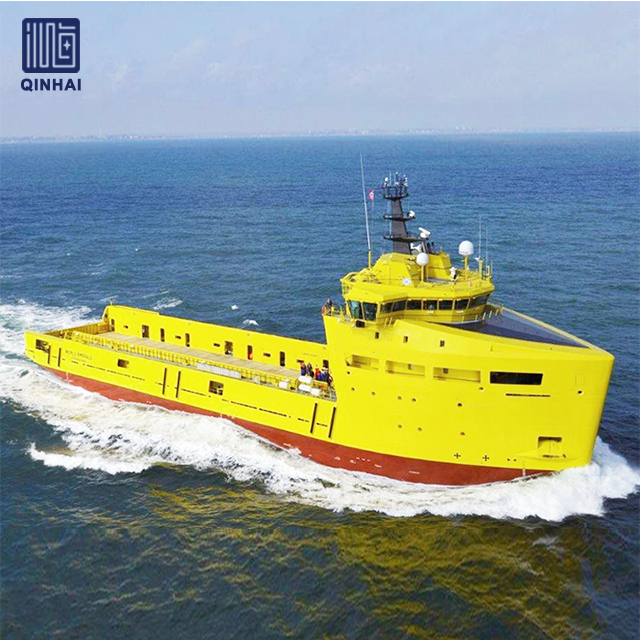
Below-deck versatility drives modern offshore logistics. Pneumatic bulk handling systems manage essential dry materials. Standard capacities often reach 8,000 cubic feet distributed across multiple vertical silos. These systems transport cement, barite, and bentonite directly to the drilling rig. Compressors must deliver high discharge rates, typically operating at 80 psi, to minimize unloading time. Moisture control within these tanks prevents cargo spoilage and blockages in the piping manifold during transit.
Liquid mud and brine require highly specialized storage solutions. Segregated tank systems prevent cross-contamination of expensive drilling fluids. Mud requires continuous agitation to prevent heavy solids from settling at the bottom of the tank. Dedicated pumps ensure distinct fluids never mix in the piping manifold. Modern specifications increasingly demand specialized cargo capabilities. Methanol tanks and distinct chemical storage are now standard requirements for deepwater campaigns. These tanks require stainless steel construction or specialized zinc coatings to prevent corrosion.
Vessel endurance dictates how long an asset remains on station. Fuel oil capacities determine maximum operational days without returning to port. Marine Gas Oil (MGO) tanks must support both transit and prolonged DP operations. Potable water storage supports the vessel crew and rig personnel. High endurance reduces the frequency of costly port calls and keeps the drilling operation supplied without interruption.
Transfer rates matter just as much as total tank volume. High-capacity discharge pumps minimize time spent moored to the rig. Faster offloading reduces exposure to sudden weather changes. Efficient piping manifolds allow simultaneous transfer of fuel, water, and mud. This parallel processing drastically cuts down operational downtime. A vessel that can pump 150 cubic meters per hour will clear the rig zone much faster than one limited to 75 cubic meters per hour.
Propulsion systems define a vessel's operational profile and fuel economy. Diesel-electric systems dominate the modern supply vessel market. They offer superior fuel efficiency during variable load operations. Multiple smaller generator sets feed a common electrical bus, allowing the power management system to run only the engines needed for the current load. Diesel-mechanic setups provide brute force for towing but burn more fuel during standby operations. Hybrid battery systems are gaining traction to shave peak power demands. They reduce emissions and lower engine maintenance hours significantly.
Brake Horsepower (BHP) must balance against transit efficiency. Standard transit speeds hover around 12 to 14 knots for most supply vessels. Pushing beyond this speed requires exponential increases in fuel consumption due to hull drag. Maneuverability relies heavily on bow and stern thrusters. Tunnel and azimuth thrusters enable precise close-quarters rig approaches. Thruster configuration directly impacts safety during cargo transfer operations. Variable frequency drives (VFD) allow precise control over thruster RPM, improving station-keeping accuracy.
Dynamic Positioning classifications dictate offshore operational limits. DP1 provides basic automated station-keeping without redundancy. DP2 introduces redundancy in all active components. DP3 adds physical separation of redundant systems for maximum safety, usually requiring an A60 fire-rated bulkhead between engine rooms. Deepwater operations universally demand advanced DP capabilities to prevent catastrophic drift-off incidents.
Procurement teams constantly weigh immediate availability against exact customization. Purchasing existing commercial vessels for sale allows faster deployment. Second-hand assets come with proven track records and immediate cash flow potential. However, they rarely match your exact ideal specifications perfectly. Commissioning a newbuild guarantees modern efficiency and tailored layouts. The trade-off involves waiting 18 to 24 months for shipyard delivery and managing construction oversight.
Retrofitting older vessels introduces significant hidden costs. Upgrading a ten-year-old hull to meet current environmental regulations is expensive. Installing mandatory ballast water treatment systems requires major piping modifications and drydock time. Achieving Tier III emissions compliance often demands complete engine overhauls or exhaust scrubber installations. You must factor these upgrade costs and upcoming special survey expenses into any second-hand purchase evaluation.
Asian shipyards currently dominate the global offshore build market. They offer competitive pricing and massive construction capacity. Vetting a China offshore supply vessel supplier requires a structured approach. You must review the shipyard's historical delivery record thoroughly. Request detailed general arrangement (GA) plans early in the discussion. Verify the origin of all critical tier-one components. Engines, thrusters, and DP systems should come from globally recognized manufacturers to ensure spare parts availability.
Classification society oversight guarantees build quality. Continuous surveyor presence is mandatory during the entire construction process. Agencies like ABS, DNV, or Lloyd's Register ensure structural integrity. They verify that welding procedures meet international maritime standards. Never compromise on classification society involvement when ordering a newbuild vessel. You should also conduct your own factory acceptance tests (FAT) for major machinery before it is installed in the hull.
Flag state rules govern every aspect of vessel operation. Adherence to SOLAS ensures basic safety of life at sea. MARPOL regulations dictate strict environmental protection measures, including garbage management and oil spill prevention. Regional requirements add another layer of complexity. Operating in US waters requires compliance with USCG Subchapter L and O. You must select a flag state that aligns with your intended operational theater and crew nationality preferences.
Class notations expand a vessel's operational versatility. A FiFi 1 notation allows the vessel to perform external firefighting duties using high-capacity water monitors. An Oil Rec notation permits the asset to participate in spill response operations. These notations make the vessel more attractive to charterers. However, they also increase mandatory maintenance overhead and annual inspection costs. You must weigh the charter rate premium against the maintenance burden.
Mismatched specifications introduce severe operational risks. Insufficient thruster power makes rig approaches dangerous in high-current environments. Inadequate tank cleaning systems lead to contaminated drilling fluids, which operators will reject. You must model environmental forces against the vessel's capability plots. Mitigation requires building safety margins into your initial procurement specifications and understanding the exact limits of the hull design.
Rigorous testing prevents deployment failures. Sea trials validate shipyard promises against real-world performance. DP footprint testing proves the vessel can hold station under stress. Bollard pull tests verify the actual towing capacity of an AHTS. You must witness these trials before accepting delivery. Finalizing procurement without comprehensive physical testing invites operational disaster and voids warranty claims.
A: Standard lengths range from 50 to 100 meters (160 to 330 feet). Mid-sized 67m vessels are common for continental shelf operations. Larger 85m vessels are typically required for deepwater support due to their increased cargo capacity and superior station-keeping capabilities.
A: A Platform Supply Vessel (PSV) focuses purely on transporting cargo and fluids. An Anchor Handling Tug Supply (AHTS) features powerful winches for towing rigs and handling subsea anchors. A Multi-Purpose Support Vessel (MPSV) is equipped with heavy cranes for subsea construction.
A: Dynamic Positioning (DP) allows a vessel to maintain its exact position and heading using automated thrusters. It is crucial for safe cargo transfers near offshore platforms without using anchors. DP2 provides system redundancy, which is mandatory for most deepwater operations.
A: Deadweight tonnage measures the total weight a vessel can safely carry. This includes cargo, fuel, fresh water, ballast water, provisions, and crew. It is the primary metric used to determine a supply vessel's revenue-generating payload capacity.
A: A vessel's draft determines the minimum depth of water it requires to float. Deep loaded drafts can prevent vessels from entering shallow coastal supply bases or ports. Operators must match vessel draft specifications with local port infrastructure and tidal patterns.
A: Profitability relies heavily on versatile below-deck storage. Key capacities include segregated liquid mud tanks, pneumatic dry bulk silos for cement, and dedicated tanks for drill water and fuel. Modern vessels also require specialized tanks for chemicals like methanol.


