
Views: 0 Author: Site Editor Publish Time: 2026-09-23 Origin: Site


Regional fuel distribution, bunkering operations, and short-sea shipping demand highly efficient, compliant maritime assets. Procuring a small oil tanker for sale requires navigating complex trade-offs between deadweight tonnage (DWT), physical dimensions, and MARPOL regulatory compliance. Buyers face strict financial realities when choosing between new builds and second-hand vessels. To maximize operational ROI, avoid costly purchasing mistakes, and minimize compliance risks, you must evaluate technical specifications and shipyard capabilities before finalizing a vessel acquisition. We will break down the exact metrics, hull requirements, and operational constraints you need to assess. This guide provides field-tested parameters to help you match vessel capacity to your specific route, ensuring your next maritime asset performs reliably under rigorous daily operations.
Over-sizing a vessel leads to excessive operational expenditure and severe port restrictions. Under-sizing results in lost revenue and highly inefficient voyage economics. You must translate DWT into actual barrel capacity based on the specific gravity of your intended cargo. Small tankers typically fall under the General Purpose (GP) category on the AFRA scale. They serve specialized coastal and inland routes where larger Aframax or Suezmax vessels cannot operate. Physical footprint matters just as much as cargo volume. Beyond maximum summer draft, you must match Length Overall (LOA) and Beam to specific terminal berths. Inland lock dimensions, bridge air drafts, and turning basins will strictly dictate your maximum allowable vessel size. A ship that cannot physically turn in a designated river basin is commercially useless.
Vessel block coefficient (Cb) also plays a major role in sizing. A fuller hull form maximizes cargo capacity but increases water resistance, requiring more engine power and fuel to maintain service speed. A finer hull form improves speed and fuel efficiency but sacrifices cargo space. You must balance these hydrodynamic realities against your charter party speed requirements and fuel budget.
Inland waterways, river navigation, and localized port bunkering represent the primary operational environments for this weight class. When evaluating a 1000 ton small oil tanker, prioritize shallow draft capabilities. Maneuverability in tight channels is an absolute requirement. You need rapid loading and unloading cycle times to maintain profitability, as these vessels rely on high-frequency short trips. These ships often operate in heavily congested port areas alongside commercial traffic and barges. Responsive steering gear and highly reliable propulsion systems are mandatory to prevent collisions.
Coastal distribution, short-sea shipping, and regional product transport fit this size perfectly. A 3000 DWT oil tanker ship offers a strong balance of cargo volume and fuel efficiency. You must evaluate coastal weather resilience and freeboard height. Crew requirements increase at this tonnage, necessitating larger accommodation blocks and more stringent life-saving appliances (LSA). The vessel needs robust navigation equipment, including dual ECDIS and ARPA radar, for open-water transits. It serves as the primary workhorse for regional fuel supply chains, moving refined products from major hub refineries to secondary distribution terminals.
At 3000 DWT, cargo segregation becomes a major commercial advantage. The ability to carry marine gas oil (MGO) and very low sulfur fuel oil (VLSFO) simultaneously without cross-contamination allows operators to service multiple clients on a single voyage. This requires completely independent piping systems, double valve segregation, and dedicated cargo pumps for each tank grouping.
Multi-role operations, offshore support, and remote facility supply demand larger, specialized vessels. A 5000 DWT custom oil tanker with crane provides unmatched versatility in the field. You must evaluate deck load capacity carefully, ensuring the main deck is heavily reinforced with thicker steel plating and closer longitudinal framing. The crane's safe working load (SWL) dictates its ability to handle heavy cargo hoses, deploy skimming equipment, or perform offshore supply transfers. Dynamic positioning (DP1 or DP2) capabilities are often required for offshore platform support to maintain station without anchoring.
The hydraulic power unit (HPU) driving the deck crane must have sufficient redundancy. If the primary hydraulic pump fails during a hose transfer at sea, the operation must be safely aborted without dropping the load. Buyers should specify marine-grade knuckle boom or telescopic cranes designed specifically for dynamic marine environments, complete with active heave compensation (AHC) if operating in rough offshore sectors.
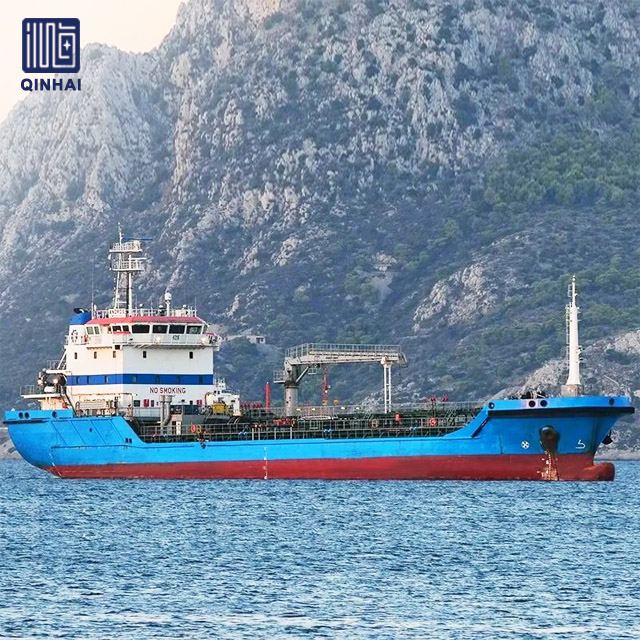
Second-hand vessels require lower initial capital expenditure. They offer immediate market readiness. You can deploy the asset and capitalize on current freight demand right away. However, they carry significantly higher operational expenditure. Maintenance costs, fuel inefficiency from older engine designs, and upcoming mandatory drydocking requirements eat directly into your profit margins. Older steel requires more frequent coating repairs and anode replacements to fight corrosion.
New builds demand higher upfront costs and lead times ranging from 18 to 24 months. These initial hurdles are offset by optimized fuel consumption through electronically controlled main engines. Modern automation reduces crew workload and allows for optimized routing. Lower maintenance schedules keep the vessel operational and earning charter hire for more days out of the year. A new build also provides a clean vetting slate for oil majors.
Navigating the second-hand market requires strict technical discipline. You must mandate independent pre-purchase condition surveys. Never rely solely on the seller's documentation or class records. Verifying the vessel's SIRE (Ship Inspection Report Programme) history is essential. Poor vetting records will lock you out of lucrative charter contracts with major oil companies. Hidden steel degradation, neglected auxiliary machinery, or compromised cargo tank coatings can turn a cheap vessel into a massive financial liability.
Hire a qualified marine surveyor to conduct extensive ultrasonic thickness measurement (UTM) on the hull, main deck, and internal cargo tank bulkheads. Pay specific attention to the splash zones inside the tanks and the wind-and-water line on the exterior hull. Any steel wastage approaching the classification society's allowable limits will require immediate, expensive steel renewal at the next drydock.
Older tonnage faces severe commercial limitations in the modern shipping market. Vessels over 15 years old face stricter oil major vetting and often require CAP 1 or CAP 2 (Condition Assessment Program) ratings to secure charters. They also attract much higher marine insurance premiums due to perceived structural risks. You must evaluate the financial risk of retrofitting older vessels.
Meeting current ballast water management (BWM) regulations is mandatory and requires installing expensive treatment systems. Emissions regulations, specifically the Energy Efficiency Existing Ship Index (EEXI) and Carbon Intensity Indicator (CII), often require costly engine modifications, shaft power limiters (SHaPoLi), or the installation of energy-saving devices like Mewis ducts. Sometimes, the capital required to retrofit a 20-year-old hull exceeds its residual commercial value, making it a candidate for recycling rather than purchase.
Verifying mandatory double-hull construction is your first step. This prevents environmental disasters during groundings or low-impact collisions and complies strictly with MARPOL Annex I. Single-hull tankers are entirely obsolete and illegal for heavy oil transport. When inspecting used vessels, assess hull coating conditions thoroughly. Epoxy coatings in cargo tanks must be intact to prevent cargo contamination and steel pitting. Review recent steel thickness gauging reports. Localized pitting or widespread corrosion requires immediate shipyard intervention. Structural integrity directly impacts the vessel's classification status and its ability to trade internationally.
| Coating Type | Primary Application | Advantages | Limitations |
|---|---|---|---|
| Pure Epoxy | Crude Oil, Heavy Fuel Oil | Excellent water and crude resistance. Easy to repair. | Absorbs some lighter cargoes. Hard to clean between grades. |
| Phenolic Epoxy | Clean Petroleum Products | High chemical resistance. Good for multi-grade transport. | Requires strict curing temperatures during application. |
| Zinc Silicate | Solvents, Chemicals | Does not absorb cargo. Extremely easy to clean. | Poor resistance to acids and alkalis. Brittle under stress. |
Cargo handling equipment dictates your operational flexibility and turnaround time in port. Compare deep-well centrifugal pumps against positive displacement screw pumps. Your choice depends entirely on the viscosity of the intended cargo. Heavy fuel oil and bitumen require different handling mechanics than clean products like diesel or naphtha. Evaluate manifold layouts for terminal compatibility. Heating coils (steam or thermal oil) are necessary for high-viscosity cargoes to maintain pumpability. The number of segregated cargo tanks determines your ability to transport multi-grade shipments simultaneously without risk of cross-contamination.
Match the vessel's fully loaded summer draft to the minimum charted depths of your intended operational ports, factoring in under-keel clearance (UKC) policies. A grounded tanker is a catastrophic failure that results in massive salvage claims and environmental fines. Evaluate the necessity of bow thrusters. They are critical for unassisted port approaches, saving thousands in tugboat fees over the vessel's lifespan. Twin-screw configurations offer superior maneuverability in tight rivers and turning basins. They also provide critical mechanical redundancy; if one main engine fails, the vessel can still navigate safely to port. Reliable propulsion ensures you meet tight charter party delivery windows and avoid off-hire penalties.
Selecting a reliable builder is paramount to the success of a new build project. When evaluating an oil tanker manufacturer in China, verify their classification society credentials immediately. The builder must be certified and regularly audited by major IACS members like ABS, DNV, Lloyd's Register, or Bureau Veritas. Review the shipyard's delivery history carefully. They must have a proven track record of delivering your specific DWT class on time. Budget overruns, poor steel cutting tolerances, and delayed deliveries destroy project economics before the ship even touches the water.
Request the shipyard's reference list. Contact previous buyers to ask about the yard's adherence to the shipbuilding contract, their handling of change orders, and the quality of their outfitting work. A yard that excels at building bulk carriers may lack the specialized pipefitting expertise required for complex tanker manifolds.
A capable manufacturer can tailor the vessel to your exact operational needs. Assess their in-house engineering ability to integrate specific requirements. This includes custom deck machinery, specialized cargo monitoring systems, or hybrid propulsion setups. Advanced radar tank gauging improves cargo measurement accuracy, reducing disputes with terminals. Integrated bridge systems enhance navigational safety and reduce officer fatigue. The shipyard's engineering team should provide comprehensive stability calculations, damage stability booklets, and structural finite element analysis (FEA) for any custom modifications you request.
Evaluate the transparency of the construction process. You must secure the contractual right to place your own owner's representatives on-site during the entire build. Daily inspections by your team prevent substandard welding, improper coating applications, and poor cable routing. Post-delivery warranty support is equally critical. Ensure the shipbuilding contract clearly defines warranty periods for the hull structure, main machinery, and navigation electronics. A strong 12-month guarantee engineer clause protects your initial capital investment during the critical first year of operation, ensuring the yard fixes any teething problems at their expense.
Understand the massive gap between the shipyard's base contract price and the final delivered cost. The base price rarely covers everything required to put the ship into commercial service. You must budget for classification society plan approval fees, site supervision team salaries, and initial bunkering. Crew familiarization, safety training, and the procurement of initial spare parts add significantly to the expenses. Delivery voyages from the shipyard to your operational region require fuel, hull insurance, and crew wages. Failing to account for these fully commissioned costs will break your capital budget and force you to seek emergency financing.
When looking at oil tankers for sale on the second-hand market, you must weigh your procurement strategies. Broker commissions typically add a percentage to the acquisition cost. However, experienced S&P brokers provide professional negotiation skills that often reduce the final purchase price by more than their fee. They offer vital market intelligence on recent comparable sales. They also provide secure escrow services and handle the complex memorandum of agreement (MOA) paperwork to protect your funds. Direct purchases save commission fees but expose you to higher contractual risks and require deep internal maritime legal expertise.
Vessel age heavily impacts marine hull and machinery (H&M) insurance premiums. Protection and indemnity (P&I) clubs also scrutinize older tonnage more closely. Classification society status dictates your financing terms; top-tier IACS vessels secure lower interest rates and longer amortization periods from marine banks. Project the 10-year residual value of the asset before purchasing. Historical market cycles show that well-maintained, compliant vessels hold their value and can be sold for a profit during market peaks. Poorly maintained ships face rapid depreciation and are often sold for scrap steel value. Factor these long-term financial metrics into your initial purchase decision to ensure a profitable exit strategy.
A: A small oil tanker typically has a commercial lifespan of 25 to 30 years. This duration depends heavily on strict maintenance routines, high-quality hull coatings, and adherence to mandatory drydocking schedules. Regulatory changes, such as new global emissions standards, can shorten a vessel's viable commercial life if retrofitting the engine becomes financially unfeasible.
A: Deadweight tonnage (DWT) measures the total weight a ship can carry, including cargo, fuel, fresh water, and crew. For oil, 1 metric ton roughly equals 7 to 7.5 barrels, depending on the specific cargo density. Therefore, a 3000 DWT vessel carries approximately 21,000 barrels of product.
A: Operators must strictly comply with MARPOL Annex I, which mandates double-hull construction to prevent oil spills. Additionally, vessels must adhere to local port state control regulations, install approved ballast water management systems, and maintain valid statutory certification from an IACS-approved classification society.
A: Yes, retrofitting is possible but requires extensive engineering feasibility studies. Adding heavy deck machinery like a crane requires recalculating the vessel's intact and damage stability. You must reinforce the main deck structure with under-deck supports and obtain new drawing approvals from your classification society.
A: To receive an accurate quote, you must provide the shipyard with detailed technical specifications. Include your required DWT, maximum draft, cargo type, preferred pump systems, and intended operational routes. This allows the manufacturer's engineering team to calculate exact steel weight and machinery requirements.
A: Deep-well centrifugal pumps are installed directly in each cargo tank and are ideal for pumping clean, low-viscosity products like diesel. Screw pumps are positive displacement pumps located in a central pumproom. They are mandatory for moving heavy, high-viscosity cargoes like heavy fuel oil or bitumen.


