
Views: 0 Author: Site Editor Publish Time: 2026-09-11 Origin: Site


Moving liquid bulk cargo across oceans leaves zero room for structural guesswork. Put the wrong cargo in the wrong hull, and you face massive operational delays, severe contamination, and accelerated steel degradation. Fleet operators and marine logistics coordinators constantly navigate strict regulatory frameworks and structural trade-offs when expanding tonnage. The biggest hurdle usually comes down to matching the vessel architecture with the exact supply chain node—specifically, deciding between raw extraction transport and refined product distribution.
This guide breaks down the hard technical specifications, hull architectures, and shipyard procurement realities of crude versus product tankers. We lay out a concrete framework for evaluating custom shipbuilding options and initiating accurate shipyard inquiries. You need exact specifications to get exact builds. We examine hull framing, tank coatings, pumping systems, and specialized auxiliary equipment to ensure your next vessel aligns perfectly with your operational profile.
Maritime liquid bulk transport demands strict adherence to baseline engineering criteria. Fleet managers must evaluate route draft limitations before selecting a vessel class. A ship with a 15-meter draft cannot service a terminal restricted to 12 meters, regardless of cargo capacity. Cargo viscosity dictates the necessity of internal heating systems and boiler capacities. Terminal infrastructure compatibility determines the required pumping head pressure and manifold arrangements. Furthermore, classification society standards govern the structural scantlings and environmental compliance of the hull.
We categorize the overarching oil tanker ship types into two primary divisions based on cargo characteristics. The maritime industry classifies them as "dirty" carriers and "clean" carriers. Dirty carriers transport heavy, unrefined oils, bitumen, and residual fuels. These cargoes have high specific gravity and high pour points, meaning they thicken easily. Clean carriers transport light, refined petroleum products and volatile chemicals. These cargoes have low flash points and require strict purity maintenance. This fundamental division dictates the entire internal architecture of the cargo holds.
A vessel's position in the supply chain dictates its fundamental design parameters. Upstream and midstream operations rely heavily on crude carriers. These massive ships act as floating pipelines. They move raw extraction from offshore platforms, floating production storage and offloading (FPSO) units, and export terminals directly to major coastal refineries. Downstream operations require product tankers. These specialized vessels take over after the refining process. They handle the complex, multi-grade distribution of refined goods from refineries to regional storage facilities, tank farms, and local distribution networks.
The structural debate of crude oil tanker vs product tanker centers heavily on hull framing and cargo space geometry. Crude tankers rely on internal framing structures. The massive cargo holds feature exposed structural ribs, heavy web frames, and longitudinal stiffeners directly inside the tanks. Because crude oil is a single, homogenous cargo, the oil trapped in these structural corners during discharge is acceptable; operators simply use Crude Oil Washing (COW) systems to blast the residue off the frames. These vessels also require extensive internal heating coils, typically made of aluminum brass or stainless steel. High-viscosity, unrefined crude oil thickens at lower temperatures. The heating coils use thermal oil or steam to maintain cargo flowability during transit and discharge.
Product tankers utilize a completely different engineering logic to achieve cargo purity. They feature external framing. Shipbuilders place the heavy structural framing on the main deck, leaving the internal tank walls completely smooth. Instead of flat bulkheads with stiffeners, they use vertically corrugated bulkheads to separate the cargo tanks. The zig-zag shape of the corrugation provides the necessary structural rigidity without requiring internal web frames. Smooth internal surfaces minimize cargo residue buildup. This design drastically reduces stripping and cleaning turnaround times between voyages. It serves as the primary physical defense against cross-contamination when switching a tank from diesel to aviation fuel.
Tank coatings protect the hull steel from corrosion and maintain cargo purity. The chemical resistance requirements differ significantly between vessel types, directly impacting shipyard labor and material costs.
Discharge efficiency depends entirely on the vessel's pumping architecture. Crude tankers utilize high-capacity, centralized pump rooms. Shipbuilders locate these rooms aft of the cargo tanks, just forward of the engine room bulkhead. A complex network of large-diameter bottom piping connects all cargo tanks to these main centrifugal pumps. This centralized system excels at rapid, single-grade discharge, moving massive volumes of homogenous liquid ashore quickly.
Product tankers require strict cargo segregation to prevent mixing different refined grades. They utilize independent, submerged deep-well pumps located inside every individual cargo tank. This segregated system eliminates the centralized pump room and the shared bottom piping network entirely. Each tank has its own pump and its own dedicated piping leading directly to the deck manifold. Deep-well pumps allow the simultaneous discharge of up to six or more different refined grades. They prevent different chemicals from mixing in shared pipelines during offloading, ensuring the aviation fuel does not mix with the heavy fuel oil.
| Technical Specification | Crude Oil Tanker | Product Tanker |
|---|---|---|
| Hull Framing Location | Internal (inside cargo tanks) | External (on main deck) |
| Bulkhead Design | Flat with internal stiffeners | Vertically corrugated (smooth) |
| Tank Coating System | Basic pure epoxy (partial or full) | Phenolic epoxy or zinc silicate (full) |
| Pumping Architecture | Centralized pump room aft | Segregated deep-well pumps per tank |
| Piping Layout | Shared bottom lines | Independent lines to deck manifold |
| Heating Requirements | Extensive internal heating coils | Rarely required (cargo dependent) |
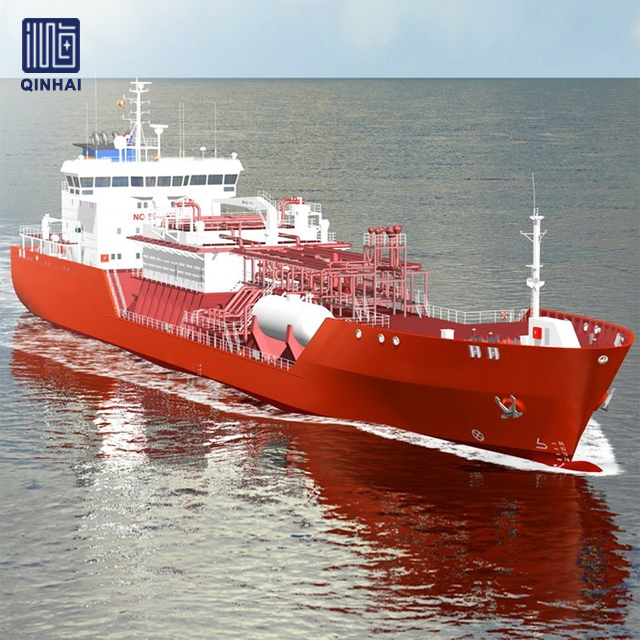
Crude carriers operate on a massive scale, moving homogenous quantities of unrefined oil across global oceans. The maritime industry standardizes these vessels into specific size classes based on deadweight tonnage (DWT) and geographical chokepoints.
These massive vessels face severe route limitations. A fully laden VLCC draws over 20 meters of draft, preventing it from entering standard coastal ports. They rely heavily on single-point moorings (SPMs) located miles offshore. Deep-water terminals and specialized lightering operations—where the VLCC transfers oil to smaller Aframax vessels at sea—are mandatory for discharging these giants.
Product tankers prioritize operational versatility over sheer volume. They operate in smaller classes to access diverse regional infrastructure, navigating tighter turning basins and shallower channels. The standard classes include General Purpose (10,000–24,999 DWT), Handysize (25,000–34,999 DWT), Medium Range (35,000–54,999 DWT), and Long Range (LR1 and LR2, 55,000+ DWT). Medium Range (MR) tankers form the absolute backbone of global refined petroleum distribution.
Smaller vessels offer distinct niche utility that larger ships cannot match. A 3000 DWT oil tanker ship provides exceptional operational advantages for short-sea shipping and coastal distribution. These compact vessels navigate inland waterways and river systems easily. They distribute light products directly to draft-restricted coastal facilities, such as municipal power plants or regional airports. They supply remote island communities and small industrial ports that MR tankers cannot physically access due to draft or length-overall (LOA) restrictions.
Standard tanker designs often fall short for specialized offshore operations. Fleet operators must evaluate the operational return of commissioning customized vessels rather than buying off-the-shelf designs. Procuring a 5000 DWT custom oil tanker with crane capabilities transforms a standard transport ship into a highly versatile offshore support vessel.
Deck cranes facilitate heavy hose handling during complex ship-to-ship or ship-to-platform transfers. They enable efficient offshore supply transfers to drilling rigs, FPSOs, and remote coastal outposts. A robust electro-hydraulic deck crane with a 5-ton to 10-ton safe working load (SWL) allows the vessel to operate autonomously in remote terminals lacking shore-side lifting infrastructure. This independence reduces port fees, eliminates the need for shore cranes, and accelerates turnaround times in underdeveloped maritime regions.
Offshore refueling requires highly specialized vessel architecture. A standard product tanker cannot safely perform ship-to-ship (STS) bunkering without significant structural and mechanical modifications. Designing a custom oil tanker refueling vessel demands specific engineering solutions tailored to dynamic marine environments where two ships are moored together in open water.
The technical requirements for a bunker tanker are strict and heavily regulated. High-precision Coriolis mass flow metering systems are mandatory for accurate custody transfer, ensuring the receiving vessel gets exactly what they pay for. Specialized pneumatic fendering systems (like Yokohama fenders) must protect both hulls during close-quarters STS mooring in heavy swells. Rapid-deployment hose booms speed up connection times and prevent hose chafing against the ship's rail. Furthermore, high-maneuverability propulsion is critical. Shipbuilders must integrate bow thrusters and azimuth stern drives (ASD) to ensure safe station-keeping and positioning against receiving vessels without relying on tugboats.
Procurement teams must understand the hard engineering cost drivers behind different tanker types. Product tankers generally carry a significantly higher cost-per-DWT than crude tankers of similar size. This price premium stems directly from structural complexity. Complex segregated piping networks require more stainless steel and specialized welding labor. Deep-well hydraulic pumps in every single tank add massive equipment costs compared to three large centrifugal pumps. External framing construction demands intricate deck welding and heavier scantlings to maintain longitudinal strength. Advanced phenolic or zinc silicate tank coatings are expensive to purchase and highly labor-intensive to apply, requiring climate-controlled shipyard conditions.
Operators must weigh this higher CapEx against operational flexibility. A product tanker offers superior revenue potential in volatile shipping markets. The ability to carry diverse, refined chemical and petroleum loads protects operators from single-market downturns. If the diesel market drops, the vessel can clean its tanks and transport aviation fuel or vegetable oils. Furthermore, clean product transport generally commands higher freight rates than raw crude transport, accelerating the return on the initial shipyard investment.
Environmental regulations dictate tanker design, equipment selection, and procurement timelines. MARPOL Annex I mandates strict oil discharge monitoring equipment (ODME) and specific slop tank arrangements to handle tank washings. Double-hull construction is a universal mandate for all modern oil tankers, requiring a minimum distance between the outer hull and the cargo tanks to prevent catastrophic spills during low-impact groundings or collisions.
Ballast Water Management Systems (BWMS) implementations differ based on the vessel's operational profile. Coastal product tankers making frequent port calls in muddy, turbid waters require high-capacity, rapid-treatment BWMS, often utilizing electro-chlorination. Crude carriers on month-long transoceanic voyages may utilize ultraviolet (UV) treatment technologies optimized for clear water and long transit times. Compliance with these mandates directly impacts shipyard selection, as the yard must have experience integrating these specific systems into the engine room layout.
Selecting the right shipyard mitigates severe financial and operational risks. Vetting a custom oil tanker manufacturer requires a strict due diligence framework based on hard engineering metrics, not marketing brochures. You must evaluate the shipyard based on verifiable technical capabilities.
Address risk mitigation proactively in the shipbuilding contract. Protect against delayed delivery by structuring heavy penalty clauses. Monitor steel quality variations by demanding mill test certificates for all hull plates before cutting begins. Prevent sub-standard welding by hiring independent third-party surveyors to conduct continuous non-destructive testing (NDT), such as X-ray and ultrasonic testing, during the block assembly phase.
Obtaining accurate shipyard estimates requires a highly structured Request for Quotation (RFQ). A vague inquiry yields unreliable cost projections and massive change-order fees later. You must control the technical narrative when initiating an oil tanker price inquiry.
A successful inquiry explicitly defines all major cost drivers in a preliminary technical specification. You must specify the estimated lightweight steel tonnage and the required steel grades (e.g., AH36 high-tensile steel). Detail the exact coating specifications, including the brand and required dry film thickness (DFT) in microns. List the precise pump configurations, including capacity (m3/hr) and head pressure. Define all auxiliary machinery through a strict Maker's List, specifying acceptable brands for cranes, thrusters, main engines, and BWMS. Finally, state the intended trade routes, specific gravity of the heaviest intended cargo, and draft restrictions. Providing this level of hard engineering detail forces shipyards to submit realistic, binding estimates.
The choice between crude and product tankers requires strict alignment with your cargo profiles and supply chain position. Crude carriers dominate the raw, high-volume transport from extraction points, utilizing internal framing and centralized pumps for maximum volume efficiency. Product tankers excel in multi-grade, refined distribution to end markets, relying on external framing, smooth bulkheads, and deep-well pumps to guarantee cargo purity. Misjudging this alignment results in contaminated cargo, restricted port access, and severe operational delays.
Take the following steps to advance your procurement process:
A: The primary difference is structural design based on cargo. Crude tankers use internal framing and centralized pumps to move unrefined, heavy oil. Product tankers use external deck framing, smooth internal corrugated bulkheads, and segregated deep-well pumps to transport refined, multi-grade petroleum products without cross-contamination.
A: External framing leaves the inside of the cargo tanks completely smooth. This prevents refined petroleum products from getting trapped in structural corners. Smooth walls drastically reduce tank cleaning times between voyages and eliminate the risk of cross-contamination when switching between different chemical grades.
A: It is highly impractical and financially prohibitive. Crude tankers have internal framing that traps refined cargo, basic epoxy coatings that cannot withstand aggressive chemicals, and centralized piping that mixes different grades. Converting one requires completely rebuilding the cargo holds, piping, and pumping systems.
A: Product tankers are significantly smaller to access regional ports. They typically range from 10,000 DWT to 80,000 DWT. Crude carriers are massive, designed for deep-water long-haul routes, typically ranging from 80,000 DWT (Aframax) up to 320,000+ DWT (VLCC and ULCC).
A: The main cost drivers include the lightweight steel tonnage, the complexity of the pumping system (centralized vs. segregated deep-well pumps), the type of tank coating (basic epoxy vs. expensive zinc silicate), and specific auxiliary machinery like deck cranes or bow thrusters.
A: A refueling vessel requires specialized equipment for safe ship-to-ship transfers. This includes high-precision Coriolis mass flow metering systems, heavy-duty pneumatic fendering, rapid-deployment hose handling cranes, and high-maneuverability propulsion systems like bow thrusters or azimuth stern drives.
A: A 3000 DWT tanker is a highly maneuverable, shallow-draft vessel used for short-sea shipping, inland waterways, and supplying small coastal facilities. A VLCC exceeds 200,000 DWT, requires deep-water offshore moorings, and is restricted to long-haul, transoceanic crude transport between major global hubs.


