
Views: 0 Author: Site Editor Publish Time: 2026-09-14 Origin: Site


Delivering heavy machinery, construction materials, or bulk cargo to remote coastal, inland waterways, or island locations often fails at the last mile due to a lack of deep-water port infrastructure. Traditional deep-draft cargo ships require developed harbors and cranes, while dumb (towed) barges lack the maneuverability and autonomy required for complex, time-sensitive logistics in shallow, restricted waters. You end up burning days waiting for tides, tug availability, or favorable weather windows. Understanding the engineering mechanics of a self propelled lct vessel—and evaluating the specific capacity configurations available—enables project managers and fleet operators to select the exact maritime asset needed to bridge the infrastructure gap and open up entirely new logistical routes.
Operating in shallow waters without sacrificing payload capacity requires a specific architectural approach. Naval architects design these vessels to maximize open deck space while ensuring precise directional control during shore approaches. The engineering focuses on surviving the physical impact of intentional grounding and providing the mechanical force to retract from the shoreline.
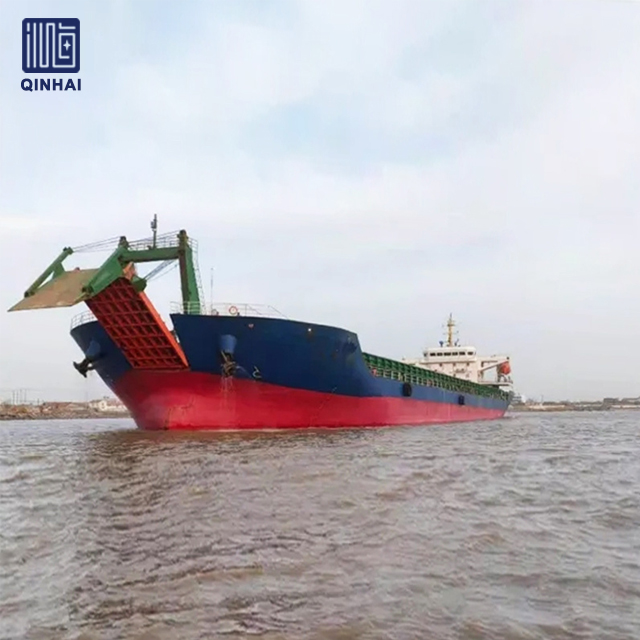
Most LCTs utilize a standard stern-engine configuration. Designers push the entire superstructure, crew accommodations, and engine room to the extreme aft section. This layout keeps the forward deck entirely clear for cargo and shifts the vessel's center of gravity aft. Keeping the bow light minimizes the forward draft, allowing the vessel to push further up onto a beach or riverbank before the hull makes contact with the bottom.
A typical setup features double marine diesel engines paired with twin propellers and twin rudders. This twin configuration provides the massive torque required for pushing the bow onto a sandy or muddy shore. More importantly, it delivers the reverse thrust needed to break the suction of mud and retract the vessel from the beach after unloading. Twin screws allow the operator to run one engine ahead and one astern, pivoting the vessel on its own axis. This maneuverability proves essential when navigating tight river bends or holding position against crosscurrents while the bow ramp remains deployed.
Larger LCT models often integrate bulbous bow designs below the waterline. While flat-bottom vessels typically suffer from poor hydrodynamics, a bulbous bow modifies the water flow around the hull, reducing wave-making resistance. This engineering addition improves fuel efficiency and increases the overall transit speed when moving between distant islands or coastal hubs, cutting down transit times on open-water routes.
The flat-bottom hull design allows the vessel to operate in minimal water depths. You can navigate inland waterways, shallow river mouths, and tidal harbors inaccessible to standard freighters. The flat bottom distributes the vessel's displacement over a massive surface area, keeping the draft exceptionally low even when fully loaded.
Operating a flat-bottom vessel in open seas presents rolling challenges. Without a V-shaped hull to cut through waves, the vessel tends to snap-roll. Engineers install bilge keels along the lower sides of the hull to counter this. These longitudinal steel appendages increase hydrodynamic resistance against rolling motions, reducing roll amplitude and maintaining stability when the vessel encounters rougher sea states during regional transits.
The hull supports a single cargo area architecture. The main deck remains entirely open and unobstructed by hatch covers or internal bulkheads. You can load oversized, non-standard project cargo directly onto the deck. Heavy tracked excavators, long steel pipes, modular building units, and massive mining dump trucks easily fit. Traditional cargo holds restrict payload dimensions, but an open LCT deck accommodates awkward, bulky loads that defy standard shipping container dimensions.
The bow ramp transforms the vessel into a mobile port facility. Engineers construct these ramps using heavy-duty steel plating, reinforced internal webbing, and massive steel hinges welded directly to the hull structure. The deployment system relies on either hydraulic cylinders or mechanical winch-and-wire setups.
Hydraulic systems offer faster, smoother operation and lock the ramp rigidly in place. Mechanical winches provide rugged reliability in remote areas where hydraulic fluid leaks or pump failures could paralyze the vessel. The ramp facilitates direct Roll-on/Roll-off (Ro-Ro) loading. You lower the ramp directly onto an unprepared beach, a mudbank, or a simple concrete slipway. Dump trucks, bulldozers, and flatbed trailers drive straight off the cargo deck and onto the shore. You eliminate the need for port-side cranes, reduce handling time, and bypass congested port facilities entirely.
| Ramp Component | Engineering Function | Field Application |
|---|---|---|
| Hydraulic Cylinders | Provides controlled lowering and lifting force. | Allows rapid deployment in tidal zones before water recedes. |
| Steel Fingers | Articulated extensions at the tip of the ramp. | Bridges the gap over uneven rocks or soft mud for vehicle tires. |
| Watertight Seals | Rubber gaskets along the ramp perimeter. | Prevents water ingress onto the cargo deck during open-sea transits. |
| Locking Pins | Secures the ramp mechanically when stowed. | Takes the load off the hydraulic system during heavy weather. |
Matching vessel specifications to specific industrial use cases ensures operational success. Fleet managers must evaluate various LCT cargo vessel types to align with project scopes. Capacities range from small riverine units to massive offshore construction assets. Selecting the wrong size leads to either wasted fuel on half-empty runs or dangerous overloading.
A 1000 DWT LCT cargo barge serves as the workhorse for inter-island logistics and coastal supply chains. This capacity perfectly suits riverine transport and coastal material delivery. You can load mid-weight construction equipment, aggregates, palletized supplies, and fuel trucks.
This vessel size balances fuel economy with high maneuverability. It easily navigates narrow, restricted inland waterways where larger vessels would run aground or fail to turn. The lighter displacement allows it to reach settlements located far upriver. Operators favor this size for continuous, short-haul supply runs where quick turnaround times matter more than massive single-trip payloads. A typical 1000 DWT unit operates with a minimal crew, keeping daily running costs low.
The 50m self propelled LCT barge represents a versatile mid-range classification. At this length, the vessel offers substantial deck space optimization. You can arrange modular cargo, shipping containers, or multiple heavy vehicles efficiently without exceeding stability limits.
These vessels maintain steady transit speeds for coastal operations, usually cruising between 8 and 10 knots. Fuel consumption remains manageable due to optimized hull lines. This 50-meter class frequently supports regional mining operations, delivering heavy extraction machinery to remote coastal camps. The deck area provides enough square footage to transport a complete drilling team's equipment in a single voyage, including the rig, support trucks, and living quarters.
Heavy-industrial applications demand massive capacity. A 20000 DWT LCT vessel with crane handles offshore construction, large-scale mining extraction, and national infrastructure projects. These vessels transport entire modular processing plants, wind turbine components, and thousands of tons of raw materials across open oceans.
The integration of onboard deck cranes changes the vessel's operational profile. It transitions from a pure Ro-Ro asset to a self-sustaining Lift-on/Lift-off (Lo-Lo) heavy transport unit. You can handle independent cargo loading and unloading without relying on shore-based equipment. The cranes allow operators to lift heavy static cargo over the side, expanding the vessel's utility in offshore environments where beaching is impossible. You can pull alongside an offshore platform or a larger bulk carrier and transfer cargo directly.
Operating a flat-bottom vessel with a massive open deck requires strict adherence to maritime physics. Operators face unique regulatory and physical constraints. You must address these evaluation dimensions to ensure safe transits and secure classification society approvals before the vessel ever touches the water.
Stability criteria for an LCT differ fundamentally from standard passenger or conventional cargo ships. Standard ships store cargo deep within the hull, keeping the center of gravity low. An LCT carries all its payload on the main deck above the waterline. This creates a high center of gravity (KG) when fully loaded.
The flat deck and single cargo area introduce specific intact stability challenges. The vessel must resist capsizing forces from wind and wave action. Maritime regulations mandate rigorous intact and damage stability calculations. Naval architects must prove the vessel can survive specific flooding scenarios, such as a hull breach in the engine room or a forward void space. Securing classification approval requires demonstrating adequate metacentric height (GM) across all loading conditions. Furthermore, the open deck is susceptible to taking on water in heavy seas. Engineers must design massive freeing ports (scuppers) along the bulwarks to rapidly drain seawater and prevent the free surface effect from destabilizing the ship.
Deck loading capacity dictates what you can safely transport. Engineers measure this capacity in tons per square meter (t/m²). A standard LCT might feature a deck strength of 5 to 7 t/m², while heavy-duty models exceed 15 t/m² to handle concentrated industrial loads.
Improper point-loading poses severe structural risks. Heavy tracked machinery, like a 70-ton excavator, concentrates massive weight on a very small deck area. This point load can buckle the steel deck plating or permanently deform the underlying transverse web frames. Operators use specific mitigation strategies to protect the vessel's structural integrity during loading operations.
Project managers frequently debate between self-propelled units and traditional towed barges. You must compare operational flexibility, transit speeds, and logistical control to determine the best overall asset for your specific route. Relying on the wrong setup leads to blown budgets and stranded cargo.
Self-propelled units eliminate the need for tugboat scheduling. When you rely on a towed barge, you must coordinate with third-party tug operators. Weather delays, tug availability, and harbor congestion frequently disrupt towing schedules. A self-propelled vessel operates on your exact timeline, departing the moment the cargo is lashed down.
These vessels offer higher transit speeds compared to a cumbersome tug-and-barge combination. They provide tighter logistical control over the entire supply chain. In narrow inland waterways, a self-propelled unit demonstrates superior maneuverability. A tugboat struggles to navigate tight river bends while towing a heavy barge on a long steel towline. The self-propelled LCT simply steers through the bend using its twin rudders and independent engine controls.
Evaluating the long-term project value requires looking at the daily operational realities. The financial and logistical dynamics between the two options dictate project pacing.
| Operational Factor | Self-Propelled LCT | Towed Deck Barge |
|---|---|---|
| Capital Expenditure (CAPEX) | Higher upfront cost due to engines, steering gear, navigation electronics, and crew accommodations. | Lower upfront cost; primarily consists of steel hull construction and basic deck fittings. |
| Operational Expenses (OPEX) | Lower per-trip costs; eliminates expensive daily tugboat charter rates and harbor pilot fees. | Higher per-trip costs; requires continuous tugboat chartering, towing gear maintenance, and higher fuel burn. |
| Maneuverability | Excellent; twin engines allow precise beaching, tight turns, and independent docking. | Poor; relies entirely on the tugboat's positioning skills and requires assist tugs in port. |
| Weather Windows | Can navigate safely in moderate sea states independently. | Highly restricted; towing lines risk snapping in rough weather, forcing vessels to seek shelter. |
| Project Turnaround Time | Fast; immediate departure upon loading completion. | Slow; dependent on tug connection, towing speed, and harbor pilot schedules. |
The reduction in tug chartering costs and improved turnaround times yield a superior return on investment for long-term projects. When you control the propulsion, you control the project schedule. You avoid paying standby rates for heavy equipment waiting on the beach for a delayed barge.
Sourcing a maritime asset involves significant implementation risks. You must avoid procurement failures by selecting the right shipyard. Partnering with a reputable custom LCT vessel supplier ensures the final build meets your exact route requirements and survives the harsh realities of marine operations.
Evaluate the shipyard's track record with major classification societies. Look for successful deliveries certified by the American Bureau of Shipping (ABS), Bureau Veritas (BV), or Det Norske Veritas (DNV). A shipyard familiar with these strict standards will deliver a structurally sound vessel. They understand the required steel grades, welding procedures, and non-destructive testing (NDT) protocols necessary to pass class inspections.
Assess their in-house naval architecture capabilities. You need a supplier who can customize deck layouts. Route requirements dictate ramp dimensions. If you operate on steep riverbanks, you need a longer, articulated bow ramp to prevent vehicles from bottoming out. If your crew spends weeks at sea, you must customize the accommodations for comfort, endurance, and HVAC capacity. The supplier must translate these field requirements into compliant engineering drawings without compromising the vessel's stability.
Approaching a shipyard requires a structured technical Request for Quotation (RFQ). A vague request leads to inaccurate estimates, mismatched specifications, and expensive change orders during construction. Submitting a detailed LCT vessel price inquiry sets the foundation for a successful build.
Provide a comprehensive framework of mandatory data points. Include the required Deadweight Tonnage (DWT) based on your heaviest projected payload. State the maximum allowable draft for your specific destination shores. Define the operating environment clearly. Specify whether the vessel will face open sea states or remain in calm inland waterways, as this dictates the required hull scantlings and freeboard.
List your classification requirements upfront. Detail any specific machinery needs. If you require onboard deck cranes, specify the lifting capacity, outreach, and whether they need to be pedestal-mounted or crawler-type. If your maintenance crew prefers specific marine engine brands for parts availability in your operating region, state those preferences in the initial RFQ to ensure accurate machinery sizing.
A self-propelled LCT vessel remains the most effective maritime asset for bridging the gap between heavy cargo transport and undeveloped infrastructure. The choice between a compact 1000 DWT unit and a massive 20000 DWT vessel dictates your project's scale. You must ensure strict alignment between the vessel's draft, deck strength, and the physical realities of the destination shore.
A: An LCT features a specialized bow ramp designed for direct Roll-on/Roll-off operations on undeveloped beaches. It is self-propelled using a twin-engine stern configuration for high maneuverability. Standard barges lack propulsion, require tugboats for movement, and rely on port-side cranes for loading and unloading cargo.
A: The operational draft depends heavily on the vessel's total Deadweight Tonnage (DWT). Engineers design many LCTs to operate in waters as shallow as 1.5 to 3 meters when fully loaded. This shallow draft allows them to beach directly onto shores and access undeveloped tidal harbors.
A: A 50m LCT typically utilizes twin marine diesel engines. Builders pair these engines with double propellers and twin rudders. This specific configuration provides the high torque necessary for pushing onto a beach and the reverse power needed for safe retraction after unloading.
A: Yes. Because LCTs feature flat bottoms, open main decks, and carry cargo above the waterline, they have a high center of gravity. They must meet specific classification society stability criteria that differ significantly from standard cargo or passenger ships to ensure safe operations.
A: You must provide precise technical metrics. Include the required Deadweight Tonnage (DWT), maximum allowable draft, and required deck loading capacity (t/m²). Specify your preferred classification society and list any custom additions, such as specific ramp dimensions or onboard deck cranes.


