
Views: 0 Author: Site Editor Publish Time: 2026-09-01 Origin: Site


The profitability of maritime liquid bulk transport hinges directly on matching vessel capacity to specific trade routes and port infrastructure. Procuring an oversized vessel results in underutilized capacity and restricted port access, while undersizing leads to increased per-barrel transport costs and operational inefficiencies. Fleet operators must align physical ship dimensions with terminal drafts, canal locks, and regional demand volumes to maintain healthy margins. This guide breaks down standard global tanker classifications, details technical specifications, and provides a framework for evaluating standard versus custom-built vessels for specialized maritime operations. We examine how deadweight tonnage dictates route selection and why specific hull designs matter for regulatory compliance. You need exact operational data to make informed shipyard procurement decisions and optimize your fleet deployment strategy.
Maritime professionals classify oil tanker size primarily by Deadweight Tonnage (DWT). DWT measures the total weight a ship can safely carry in metric tons. You calculate it by subtracting the ship's lightweight (the weight of the empty vessel) from its maximum displacement. This metric includes the cargo, fuel, fresh water, ballast water, provisions, passengers, and crew. DWT dictates the actual earning capacity of the vessel. It differs entirely from Gross Tonnage (GT), which measures the internal volume of the ship's enclosed spaces. Charterers base their freight calculations on DWT because it directly translates to the volume of liquid bulk moved per voyage. Exceeding the maximum DWT compromises hull integrity and violates international load line regulations, specifically the Plimsoll line marks that dictate safe loading depths for different water densities and seasons.
Three physical dimensions govern a tanker's operational limits: Length Overall (LOA), maximum beam, and fully laden draft. LOA determines if a vessel can fit within a specific terminal berth or turning basin. The beam, or maximum width, dictates clearance through canal locks, narrow straits, and loading arms at the terminal. Fully laden draft measures the vertical distance from the waterline to the lowest point of the hull when fully loaded. Draft represents the most rigid constraint in maritime logistics. A vessel drawing 15 meters of draft cannot enter a port maintained at a 12-meter depth without short-loading, which results in dead freight. Operators must also account for air draft—the distance from the waterline to the highest point on the mast—to ensure clearance under bridges. Furthermore, the squat effect causes a ship to sink deeper into the water when moving through shallow channels, requiring strict under-keel clearance calculations.
Tanker sizing logic splits into two distinct categories: crude carriers and product tankers. Crude oil carriers transport unrefined petroleum from extraction sites to global refineries. These vessels rely on massive economies of scale. They typically exceed 80,000 DWT and operate on long-haul deep-water routes. Crude is a "dirty" cargo that often requires internal heating coils to prevent wax precipitation and maintain viscosity during cold-weather transits. Product tankers transport refined petrochemicals like gasoline, diesel, and aviation fuel from refineries to consumer markets. These vessels are inherently smaller, usually under 60,000 DWT. Product tankers require complex cargo segregation systems to carry multiple refined grades simultaneously without cross-contamination. Their smaller size allows them to navigate shallow coastal waters and dock at regional distribution terminals.
| Tanker Classification | DWT Range | Primary Cargo | Typical Route / Constraint |
|---|---|---|---|
| Coastal / Small | Under 10,000 | Refined Products / Bunkering | Short-sea, rivers, island distribution |
| Handysize / Handymax | 10,000 - 50,000 | Refined Products / Chemicals | Global port access, regional distribution |
| Panamax | 50,000 - 80,000 | Crude / Dirty Products | Panama Canal original locks |
| Aframax | 80,000 - 120,000 | Crude Oil | North Sea, Caribbean, regional crude |
| Suezmax | 120,000 - 200,000 | Crude Oil | Suez Canal transit |
| VLCC / ULCC | 200,000+ | Crude Oil | Deep-water offshore terminals (SPMs) |
Coastal tankers handle short-sea shipping, river navigation, and localized island distribution. These vessels operate where deep-water infrastructure does not exist. A 1000 ton small oil tanker provides extreme maneuverability for shallow-draft ports and inland waterways. Operators use these smaller ships for harbor bunkering operations, supplying fuel directly to larger anchored vessels via heavy-duty hoses. Moving slightly up in scale, a 3000 DWT oil tanker ship offers a balance of payload capacity and regional coastal access. These vessels require minimal terminal infrastructure. They frequently utilize basic hose connections at municipal piers rather than the complex, automated loading arms found at major refineries. Their shallow draft allows them to navigate tidal rivers and service remote coastal communities that rely entirely on imported diesel for power generation.
Handysize and Handymax vessels dominate the global refined product trade. They transport gasoline, diesel, and aviation fuel across medium-distance routes. Their dimensions allow them to access almost any major commercial port globally. This universal access makes them highly liquid assets in the charter market. Operators can easily redeploy a Handymax vessel from the Mediterranean to Southeast Asia based on shifting fuel demands. These ships feature multiple independent cargo tanks, allowing them to discharge different fuel grades at consecutive ports along a single route. This "parcel trade" capability maximizes the vessel's earning potential by ensuring it rarely sails empty.
Panamax tankers strictly adhere to the dimensional limits of the original Panama Canal locks. They maintain a maximum beam of 32.31 meters and a draft limit of 12.04 meters. While the canal expansion allows larger ships, the classic Panamax remains a standard for specific trans-American routes where destination ports have not upgraded their infrastructure. Aframax tankers range from 80,000 to 120,000 DWT. The name originates from the Average Freight Rate Assessment (AFRA) system. Aframax vessels serve as the workhorses of regional crude transport. They dominate short-to-medium crude routes in the North Sea, the Caribbean, and the Mediterranean. Their size allows them to serve refineries that lack the deep-water berths required for larger crude carriers. They also frequently engage in lightering operations, where they receive crude oil from larger vessels anchored offshore and transport it into shallower ports.
Suezmax tankers represent the maximum vessel size capable of transiting the Suez Canal fully loaded. Canal authorities dictate a maximum draft of 20.1 meters and a beam limit of 50 meters for these vessels. Suezmax ships provide a critical economic bridge. They offer massive economies of scale for crude transport while avoiding the costly and time-consuming detour around the Cape of Good Hope. Operators use Suezmax vessels primarily for moving crude oil from the Middle East to European and North American markets. When canal tolls rise, operators must calculate the trade-off between paying transit fees versus burning additional fuel on the longer African route. A typical Suezmax can carry roughly one million barrels of crude oil per voyage.
Very Large Crude Carriers (VLCC) range from 200,000 to 320,000 DWT. Ultra Large Crude Carriers (ULCC) exceed 320,000 DWT. These behemoths carry two million barrels of oil or more per voyage. They operate exclusively on long-haul routes, such as the Persian Gulf to East Asia or the US Gulf Coast. Due to their massive draft, often exceeding 22 meters, they cannot dock at standard port facilities. Instead, they rely on Single Point Moorings (SPMs) or offshore deep-water terminals like the Louisiana Offshore Oil Port (LOOP). Smaller tankers often lighter the cargo from VLCCs at sea, transferring the oil to vessels capable of entering regional ports. The sheer size of these vessels means they require miles of open water just to come to a complete stop.
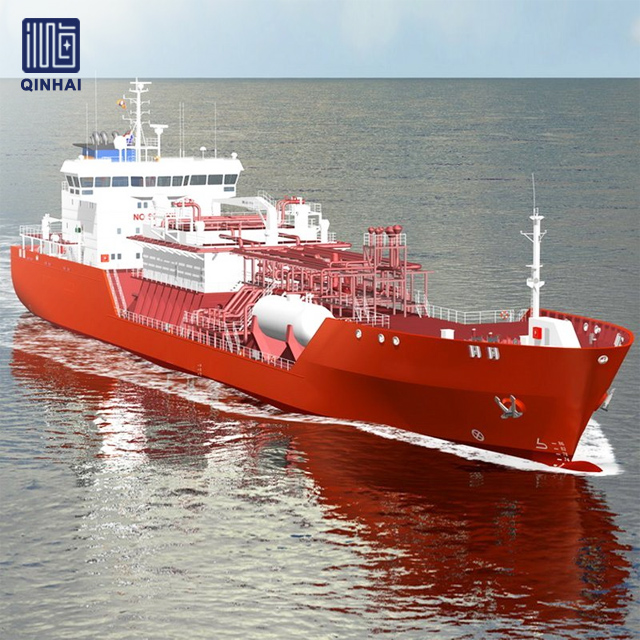
Modern oil tanker technical specifications mandate strict adherence to MARPOL Annex I regulations. All new tankers must feature a double-hull design. This construction places a protective void space—usually about two meters wide—between the outer hull and the internal cargo tanks. If a collision or grounding breaches the outer hull, the inner hull contains the oil, preventing environmental disaster. Double hulls increase the overall steel weight of the vessel. This added lightweight slightly reduces the maximum cargo capacity compared to legacy single-hull designs. Shipbuilders heavily reinforce the longitudinal bulkheads to withstand the immense dynamic forces of sloshing liquid cargo during heavy seas. The void spaces between the hulls also serve as dedicated ballast water tanks, requiring integrated Ballast Water Management Systems (BWMS) to treat the water and prevent the spread of invasive marine species.
Cargo flexibility relies entirely on internal tank segregation and pumping architecture. Product tankers utilize deep-well centrifugal pumps installed in each individual tank. This setup prevents cross-contamination between different refined grades. The tanks feature specialized phenolic epoxy or zinc silicate coatings. These coatings resist chemical corrosion and allow for rapid tank cleaning between voyages. Crude carriers typically use large steam-driven or electric cargo pumps located in a centralized pump room near the engine casing. Buyers must specify the required discharge rate. A high discharge capacity reduces port turnaround time, directly improving the vessel's annual profitability. Standard discharge procedures follow a strict sequence:
Liquid bulk transport carries severe flammability risks. Tankers require specialized fire suppression infrastructure tailored to the flashpoints of their cargo. Deck areas utilize high-expansion foam monitors capable of blanketing the entire manifold and tank deck in minutes. The foam smothers the fire by cutting off the oxygen supply. Pump rooms and engine spaces rely on fixed CO2 flooding systems or high-pressure water mist configurations. Wet chemical systems protect galley areas. Operators must ensure all suppression systems meet SOLAS (Safety of Life at Sea) requirements and undergo rigorous annual certification by classification societies. Fire mains run the entire length of the deck, with isolation valves installed at regular intervals to bypass damaged sections during an emergency.
Preventing vapor ignition represents the highest safety priority on any tanker. Inert Gas Systems (IGS) pump treated exhaust gas or pure nitrogen into the empty spaces of the cargo tanks. The system scrubs the boiler exhaust gas to remove soot and sulfur, then cools it before blowing it into the tanks. This process drops the oxygen level inside the tank below 8%, making combustion physically impossible. IGS operates continuously during cargo discharge and transit. Furthermore, tankers require robust grounding and lightning protection. Static electricity builds up rapidly during the high-speed pumping of refined fuels. Specialized bonding cables and deck grounding points dissipate this static charge safely into the sea. A deck water seal prevents any flammable cargo vapors from traveling backward through the IGS piping into the engine room.
Modern tankers operate as floating data centers. They rely on automated cargo control systems, electronic chart display and information systems (ECDIS), and remote engine monitoring. This digital reliance introduces severe cyber risks. Procurement specifications must mandate strict separation between Operational Technology (OT) and Information Technology (IT) networks. Hardware firewalls must protect the vessel's navigation and propulsion systems from external hacking attempts or malware introduced via crew devices. Compliance with the latest IACS unified requirements for cyber resilience is now mandatory for new builds. Shipyards must install redundant network switches and provide physical air gaps between the crew's recreational Wi-Fi and the bridge's critical control infrastructure.
Environmental regulations drive rapid changes in tanker propulsion. The International Maritime Organization (IMO) enforces strict Energy Efficiency Design Index (EEDI) standards for all new builds. Buyers increasingly specify dual-fuel engines capable of burning Liquefied Natural Gas (LNG) or methanol alongside traditional marine gas oil. These engines drastically reduce sulfur oxides (SOx) and nitrogen oxides (NOx) emissions. Hull optimization, including bulbous bow modifications and low-friction antifouling paints, further improves hydrodynamic efficiency. Operators install advanced shaft generators to produce electrical power directly from the main engine rotation. This reduces the reliance on auxiliary diesel generators during transit, lowering overall fuel consumption and maintenance requirements.
Standard fleet models do not fit every operational profile. Regional offshore energy sectors frequently demand highly specialized vessels. For example, commissioning a 5000 DWT custom oil tanker with crane installations allows a ship to perform dual duties. It can transport liquid bulk while simultaneously handling heavy hoses, offshore rig supplies, or floating boom deployments. Other modifications include dynamic positioning (DP) systems for precise station-keeping near offshore platforms. DP systems use satellite data to automatically control bow and stern thrusters, holding the ship in an exact position against wind and currents. Heating coils represent another common customization, necessary for keeping heavy fuel oil or bitumen viscous during cold-weather transits. Shallow-draft modifications, such as flattened hull bottoms, allow these vessels to navigate tidal rivers that standard tankers cannot access.
Selecting the right shipyard dictates the success of a custom build. Buyers must vet any custom oil tanker manufacturer through strict criteria. First, verify their adherence to International Association of Classification Societies (IACS) standards. Review their past build quality by inspecting vessels they delivered 5 to 10 years ago to check for premature steel corrosion or weld fatigue. Assess their scientific engineering rigor, specifically their use of computational fluid dynamics (CFD) for hull optimization. Financial stability is paramount. A shipyard facing bankruptcy mid-build can trap millions in buyer capital. Always require comprehensive refund guarantees backed by top-tier international banks. The shipyard must also demonstrate a clear track record of passing rigorous sea trials without major mechanical failures.
Customization introduces specific financial trade-offs. Purpose-built vessels achieve exact operational requirements, maximizing efficiency on their designated routes. However, highly niche specifications can severely reduce the vessel's resale value on the secondary market. A standard Handysize tanker appeals to hundreds of global buyers because it fits standard terminal infrastructure. A specialized 5000 DWT tanker with heavy crane infrastructure, dynamic positioning, and shallow draft modifications appeals only to a narrow subset of offshore operators. Buyers must amortize the cost of custom modifications over the life of a guaranteed long-term charter contract to justify the initial capital expenditure. If that charter contract falls through, redeploying a highly customized vessel into the spot market often results in lower daily earnings.
Ordering a vessel that exceeds the maximum permissible draft of a primary destination port creates an immediate operational failure. If a ship cannot enter a port fully loaded, operators must short-load the vessel. Short-loading wastes DWT capacity and destroys voyage profitability through dead freight. Buyers mitigate this risk by conducting rigorous route analysis prior to design approval. This analysis must account for seasonal tidal variations, river siltation rates, and the specific draft limits of all intended terminal berths. You must also verify the outreach limits of the terminal's loading arms to ensure they can physically connect to the vessel's manifold.
The IMO continuously tightens greenhouse gas regulations. Vessels failing to meet acceptable Carbon Intensity Indicator (CII) ratings face operational restrictions or forced slow-steaming mandates. The financial impact of a non-compliant vessel is severe, as charterers will refuse to hire ships with poor environmental ratings. Buyers mitigate this risk by integrating advanced emission reduction technologies during the build phase. Investing in dual-fuel readiness, energy-saving devices (ESDs) like Mewis ducts, and optimized hull forms ensures the vessel remains compliant and competitive throughout its 20-year lifespan.
Over-capitalization occurs when buyers pay for unused DWT capacity. Deploying an Aframax tanker on a route with strict volume ceilings or limited terminal storage forces the vessel to operate half-empty. The buyer pays the higher capital and operational costs of a large ship without reaping the economies of scale. Mitigation requires right-sizing the vessel to historical and projected cargo contracts. Fleet planners must analyze terminal throughput data, refinery output capacities, and seasonal demand fluctuations before finalizing the required DWT. A smaller, fully utilized vessel always generates better returns than a larger, half-empty one.
Shipyards cannot provide accurate pricing without a finalized operational profile. Buyers must define the exact route data, expected sea states, and specific cargo types (crude vs. clean products). The profile must state the required service speed and maximum acceptable fuel consumption. Furthermore, buyers must outline all required safety system specifications, including specific fire suppression methods and inert gas requirements. Approaching a shipyard with vague requirements results in heavily padded estimates that protect the builder against unknown variables. You must know the exact specific gravity of the intended cargo to calculate the required tank volumes accurately.
A professional RFP contains highly detailed technical documentation. It specifies the desired classification society (e.g., DNV, ABS, Lloyd's Register) and the intended flag state, as these dictate specific regulatory build requirements. The RFP must outline cybersecurity protocols for the vessel's network architecture. Crucially, it must include an Approved Maker's List (AML). The AML dictates exactly which brands of engines, pumps, radars, and safety gear the shipyard is allowed to install. Specifying top-tier equipment makers prevents the shipyard from using substandard, cheaper alternatives to increase their profit margins. A standard RFP package includes:
Structuring an oil tanker price inquiry properly ensures transparent negotiations. Demand itemized cost breakdowns rather than vague lump-sum estimates. The quotation should separate the cost of the bare hull, the main engine, cargo handling systems, and navigation electronics. This itemization allows buyers to compare bids from different shipyards accurately. It also highlights exactly how much custom modifications, like specialized cranes or dual-fuel engines, add to the baseline cost of the vessel. Always include clauses for late-delivery penalties and performance guarantees. Establish clear payment milestones tied to physical construction progress, such as steel cutting, keel laying, launching, and final delivery.
A: Deadweight Tonnage (DWT) measures the actual weight a ship can carry, including cargo, fuel, and crew. It dictates earning capacity. Gross Tonnage (GT) measures the total internal volume of the vessel's enclosed spaces. Port authorities use GT to calculate docking fees, while charterers use DWT to calculate cargo payload.
A: A 3000 DWT tanker carries slightly less than 3,000 metric tons of actual oil. You must subtract the weight of the vessel's fuel, fresh water, provisions, and crew from the total DWT to determine the exact cargo payload capacity for a specific voyage.
A: Aframax tankers offer an ideal balance of size and accessibility. They are large enough to provide significant economies of scale for crude transport, yet small enough to dock at most regional refinery terminals without requiring specialized deep-water offshore mooring systems.
A: The three primary specifications are fully laden draft, Length Overall (LOA), and maximum beam. Draft dictates if the ship clears the channel bottom. LOA determines if it fits the berth. Beam dictates clearance through canal locks and narrow harbor entrances.
A: Tankers utilize Inert Gas Systems (IGS) to keep cargo tank oxygen levels below 8%, preventing ignition. They employ high-expansion foam monitors on deck and CO2 systems in engine rooms. Robust grounding cables and specialized deck bonding dissipate lightning and static electricity safely into the water.
A: Building a custom 5000 DWT tanker typically takes 14 to 24 months from contract signing to delivery. This timeline includes engineering design, steel cutting, block assembly, equipment installation, and mandatory sea trials. Complex custom modifications can extend this timeline.
A: An accurate inquiry requires a detailed operational profile. You must provide the required DWT, maximum draft, specific cargo types, desired service speed, preferred classification society, flag state, and an Approved Maker's List (AML) for critical machinery and navigation equipment.


