
Views: 0 Author: Site Editor Publish Time: 2026-09-25 Origin: Site


In commercial maritime operations, a tug boat’s utility is defined by its verifiable towing and pushing capacity, not just its engine size. Procurement teams and fleet operators frequently misinterpret pulling metrics. This misunderstanding leads to the acquisition of vessels that are either underpowered for their operational environment or heavily over-specced. Underpowered vessels risk safety and fail port compliance. Over-specced vessels inflate capital and operational expenditures unnecessarily. Defining success criteria requires moving beyond generalized definitions of towing power. You need standardized, measurable metrics. Understanding the precise bollard pull meaning is necessary before finalizing a vessel design or initiating procurement. You must know how this metric interacts with other technical specifications. You also need the knowledge to validate manufacturer claims independently.
Defining vessel capabilities requires strict separation between theoretical engine power and actual applied force. Bollard pull provides this standardized measurement. It strips away marketing claims and leaves only verifiable physical force. Engineers measure this force in metric tonnes or kilonewtons.
Static bollard pull is the maximum traction force a vessel exerts on a fixed point at zero forward speed. The vessel operates under full engine power, known as Maximum Continuous Rating (MCR). The fixed point is typically a reinforced shore bollard. The connection utilizes a heavy-duty hawser attached to an electronic load cell. This metric provides a baseline for comparing different vessels under identical conditions.
Industry standards divide static pull into two distinct categories. Maximum Bollard Pull represents the peak force sustained for a short duration. Surveyors typically record this peak over a 60-second window. Continuous Bollard Pull represents the sustained force maintained over a minimum of ten minutes. Continuous pull dictates actual operational capability. It reflects the vessel's ability to maintain force without overheating main engines, slipping clutches, or overloading propulsion thrusters.
Static pull measures force at a standstill. Dynamic bollard pull measures the actual pull asserted on a towed object via the towline while the vessel is underway. Real-world towing rarely happens at zero speed. As the tug accelerates, water flows into the propeller faster. The propeller blades lose their optimal angle of attack relative to the incoming water.
Dynamic pull decreases linearly as vessel speed increases. At a certain velocity, the tug uses all its engine power simply to move its own hull through the water. This is the free-running speed. At this speed, the dynamic pull drops to zero. Modern operations measure dynamic pull continuously. Crews use towline tension meters, tow hook load cells, or integrated winch sensors to monitor this force. This real-time data prevents towline snapping and ensures the towed vessel remains under control during transit.
Many operators confuse bollard pull with towing capacity. These are entirely different physical concepts. Bollard pull measures raw force. Towing capacity refers to mass. It represents the total displacement of the vessel or barge the tug can safely move through the water.
A tug with a 50-tonne bollard pull might safely tow a barge displacing 10,000 tonnes in calm water at four knots. If a three-knot head current hits, that same 50-tonne force might only safely control a 5,000-tonne vessel. Naval architects calculate the required force based on environmental resistance, windage area, and hydrodynamic drag, not just the deadweight of the tow.
You cannot rely on theoretical calculations to determine a vessel's pulling force. Shipyards must prove their claims through physical testing. Ensuring the metric provided by the shipyard is accurate requires strict adherence to international testing standards. Classification societies mandate specific environmental controls during these trials.
Physical testing requires highly controlled environmental conditions. Surveyors reject tests conducted in poor weather or inadequate locations. The standard testing procedure follows a strict sequence of events to ensure data integrity.
Poor testing environments easily manipulate results. Shallow water creates a low-pressure zone under the hull known as the squat effect. The vessel sinks slightly, increasing hydrodynamic resistance and dropping the pull reading. Testing too close to a solid quay wall causes propeller wash reflection. The water hits the wall and pushes back against the tug's stern. This artificially inflates the pulling force reading.
Classification Societies prevent this specification manipulation. Organizations like the American Bureau of Shipping (ABS), Lloyd's Register (LR), and Det Norske Veritas (DNV) send independent surveyors to witness the test. They verify water depth, check load cell calibration certificates, and monitor engine exhaust temperatures. Never accept a test report that lacks a stamp and signature from a recognized Classification Society surveyor.
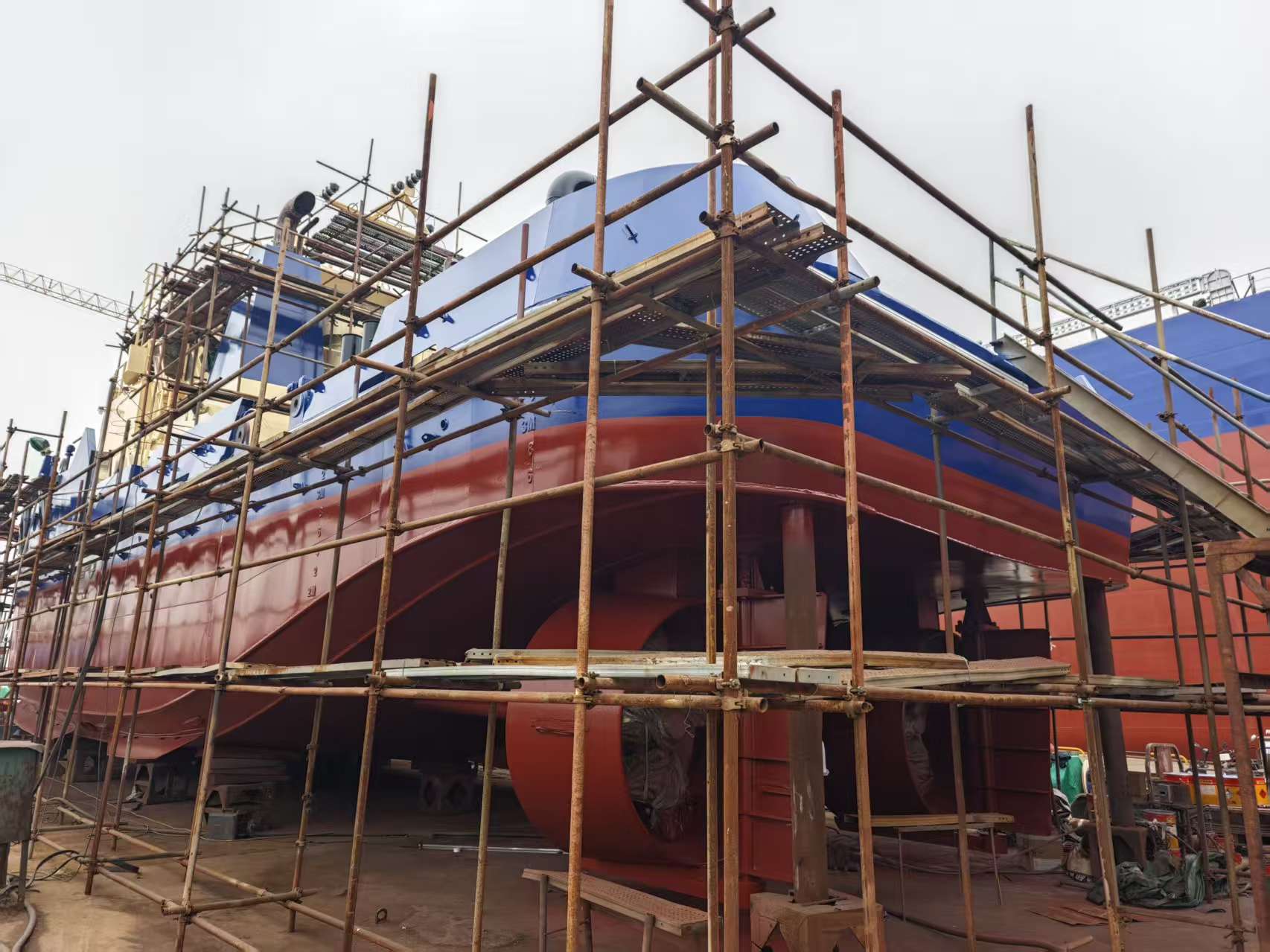
Understanding how individual components combine to generate pulling force prevents expensive procurement mistakes. You must evaluate the entire propulsion system. Reviewing the tug boat technical specifications holistically reveals the true engineering quality of the vessel.
A common myth suggests a direct, unchangeable correlation between engine horsepower and bollard pull. High horsepower paired with an inefficient propeller yields poor pulling force. A poorly designed hull with massive engines wastes fuel, generates heavy wake, and pulls poorly.
Consider a standard 2200 HP 29t tug boat as a benchmark for mechanical efficiency. This configuration generates roughly 1.3 tonnes of pull for every 100 horsepower. This ratio indicates a solid, efficient mechanical setup. If a shipyard offers a 2200 HP vessel but only guarantees 20 tonnes of pull, the propulsion design is highly inefficient. Claims of 40 tonnes of pull from the same 2200 HP engine require intense scrutiny and physical verification.
The method used to transfer engine power to the water dictates the final pulling force. Different propulsion systems offer varying levels of thrust optimization at close-to-zero speeds. Propeller pitch, blade area ratio, and nozzle design all alter the final output.
| Propulsion Type | Static Pull Efficiency | Maneuverability | Primary Application |
|---|---|---|---|
| Conventional (Open Prop) | Low | Basic | Long-distance ocean towing |
| Conventional (Kort Nozzle) | High | Basic | Heavy barge towing, salvage |
| Azimuth Stern Drive (ASD) | Very High | Excellent | Harbor assist, ship handling |
| Voith Schneider (VSP) | Moderate | Superior | Escort duties, tight berthing |
Maximizing static pull often compromises a vessel's agility or free-running speed. A hull designed for maximum pulling force is typically wide and deep. This creates a high block coefficient, resulting in significant drag when the tug travels between jobs.
Naval architects balance hull form design to achieve the required pull without sacrificing hydrodynamic efficiency. A harbor tug needs high pull and high maneuverability, accepting a lower top speed. An ocean-going salvage tug needs high pull and good sea-keeping ability, accepting lower maneuverability in tight spaces. You cannot optimize a single hull for every operational profile.
The certified pull rating applies to a brand-new vessel. Operational realities degrade this performance over the vessel's lifespan. Engine cylinders lose compression, reducing total power output. Propeller cavitation pits the blade surfaces, destroying hydrodynamic efficiency.
Physical blade damage from striking submerged debris alters the propeller pitch. Marine hull fouling increases drag. A five-year-old tug with heavy barnacle growth and worn propellers may lose up to 15% of its original certified pulling force. Regular dry-docking, hull cleaning, and propeller polishing are mandatory to preserve capability.
You must align the technical specification with the intended operational environment. The deadweight tonnage of assisted vessels dictates your baseline requirements. Different commercial vessel types demand entirely different towing solutions.
Harbor tugs operate in confined spaces. They assist large container ships, bulk carriers, and tankers during docking maneuvers. These operations require tight-quarters maneuverability combined with high static pull. The tug must push against the ship's hull to counteract wind and tide.
Typical bollard pull ranges for harbor tugs span from 30 tonnes to over 80 tonnes. The exact requirement depends on port size and local weather conditions. Handling a fully loaded Ultra Large Container Vessel (ULCV) often requires three or four tugs, each boasting 70+ tonnes of pull. Pilots calculate the required force based on the windage area of the specific ship entering the channel.
| Assisted Vessel DWT | Vessel Type Example | Recommended Total Bollard Pull |
|---|---|---|
| Up to 20,000 DWT | Handysize Bulker | 30 - 40 Tonnes |
| 20,000 - 50,000 DWT | MR Product Tanker | 50 - 70 Tonnes |
| 50,000 - 100,000 DWT | Panamax / Aframax | 80 - 120 Tonnes (Combined) |
| Over 150,000 DWT | ULCV / VLCC | 150+ Tonnes (Combined) |
Escort tugs accompany hazardous cargo vessels through narrow channels. They operate at higher speeds, typically between 8 and 10 knots. If the escorted ship loses steering or propulsion, the tug must arrest its momentum immediately to prevent a grounding.
Static bollard pull is a secondary metric for escort duties. Hydrodynamic braking force and dynamic steering pull are far more critical. Escort tugs use their hull shape and specialized winches to generate massive drag forces. The tug turns sideways, acting as a drogue in the water. A tug with a 60-tonne static pull might generate over 100 tonnes of steering force at 10 knots.
Ocean-going operations involve towing disabled vessels or massive offshore structures across open seas. These missions require sustained continuous bollard pull over long distances and extended durations.
While pulling force remains central, other specifications gain equal importance. Heavy-duty winch capacity, massive fuel endurance, and excellent sea-keeping abilities define a successful ocean tug. These vessels often feature deep drafts and conventional twin-screw propulsion with nozzles to maximize forward towing efficiency in rough weather. The towline wire rope must possess a breaking strength at least three times the vessel's maximum bollard pull.
Navigating the global vendor landscape requires strict due diligence. Ensuring build quality and specification accuracy is paramount. When evaluating a tug boat manufacturer in China, you must implement robust technical auditing processes.
Never base procurement decisions solely on marketing brochures. Ensure the manufacturer adheres strictly to International Association of Classification Societies (IACS) standards. The shipyard must demonstrate a history of delivering vessels classed by reputable societies like ABS, BV, or DNV.
Audit their past deliveries. Request certified bollard pull test reports from their previous builds. Cross-reference the stated engine power against the certified pull to verify their engineering efficiency. A reputable yard will provide these documents willingly and arrange visits to previously delivered vessels.
Off-the-shelf designs rarely fit specific port requirements perfectly. Evaluate the shipyard's ability to modify propulsion systems or engine configurations to meet your specific pulling targets. You may require a shallower draft or a specific winch configuration.
Examine their quality control processes regarding steel fabrication and welding standards. Assess their component sourcing network. A high-quality build often pairs a domestically fabricated hull with imported European or Japanese main engines and azimuth thrusters. Ensure the yard has authorized integration experience with these specific OEM components.
Watch for red flags in preliminary technical proposals. Some yards quote theoretical maximum pull instead of certified continuous pull. Others might present test data gathered in non-compliant shallow waters.
Always demand that the contract guarantees a minimum continuous bollard pull, subject to a sea trial witnessed by your chosen classification society. Include financial penalty clauses in the shipbuilding contract. If the vessel fails to meet the guaranteed pulling force during the official trials, the yard must pay a penalty or modify the propulsion system at their own expense.
Moving from technical evaluation to commercial negotiation requires a structured approach. You must provide shipyards with precise data to receive accurate pricing and build timelines. A vague request leads to assumptions, which inevitably lead to operational shortfalls.
When you prepare to request a tug boat quotation, build a comprehensive Request for Quotation (RFQ) package. Include the following specific technical requirements:
Take the following immediate actions to secure the correct vessel for your operational fleet:
A: A standard harbor tug typically requires between 40 and 70 tonnes of bollard pull. The exact number depends on the size of the port and the vessels it handles. Handling Ultra Large Container Vessels often requires multiple tugs with 70 to 80+ tonnes of pull each.
A: There is no direct translation. Horsepower measures engine output, while bollard pull measures applied force. The translation depends entirely on propeller size, pitch, and propulsion type. Typically, 100 HP generates roughly 1.2 to 1.5 tonnes of pull in an optimized system.
A: Maximum bollard pull is the peak force a tug can sustain for a very short period, usually one minute. Continuous bollard pull is the sustained force the vessel can maintain safely for at least ten minutes without overheating the engines or slipping clutches.
A: Bollard pull measures the actual physical force the tug exerts, measured in metric tonnes or kilonewtons. Towing capacity refers to the maximum mass or displacement of the vessel or barge that the tug can safely move through the water.
A: Tugs undergo an official test upon initial construction for classification certification. Operators should re-test the vessel after major engine overhauls, propeller replacements, or significant propulsion system modifications to verify current capabilities.
A: Yes. Engine wear, propeller blade cavitation, hull fouling, and minor structural damage all reduce hydrodynamic efficiency. A poorly maintained tug can lose a significant percentage of its original certified pulling force over a few years.
A: Static pull is measured against a fixed shore point in controlled conditions. Dynamic pull happens while moving. Water flow changes, vessel speeds vary, and towline angles shift constantly. It requires real-time tension meters and load cells to measure accurately underway.


