
Views: 0 Author: Site Editor Publish Time: 2026-07-29 Origin: Site


The procurement of an offshore support vessel represents a massive capital expenditure where operational downtime, harsh marine environments, and tightening emissions regulations leave no room for speculative decision-making. Fleet operators and energy companies struggle to balance immediate project requirements, such as payload, bollard pull, and dynamic positioning, with long-term fleet versatility and regulatory restrictions like Cabotage laws or the Jones Act.
Moving from baseline operational requirements to a finalized procurement strategy requires a rigorous evaluation of technical specifications, regulatory compliance frameworks, and the vetting of shipyard capabilities. This guide provides an evidence-based framework for navigating the offshore supply vessel selection and shipbuilding process, ensuring your fleet remains optimized for current and future demands.
Operational Alignment: Vessel selection must be dictated by specific environmental demands, including water depth, sea state conditions, and required Dynamic Positioning (DP) class.
Cabotage and Regulatory Constraints: Regional compliance (such as Jones Act or local-content requirements) heavily dictates shipyard selection and vessel design parameters.
Future-Proofing Assets: Evaluating propulsion systems, real-time fuel telemetry, and alternative fuel readiness is critical to maintaining compliance with evolving maritime emissions standards (e.g., CII, EEXI).
Vendor Vetting: The choice between standardized hull designs and a custom shipbuilding supplier fundamentally alters project timelines, capital risk, and operational flexibility.
Risk Mitigation: Deconstructing the offshore supply vessel quotation and structuring performance-guaranteed, milestone-based contracts are essential to mitigating delays and cost overruns during the shipbuilding phase.
Defining the primary operating theater is the first step in vessel selection. Operators must distinguish between shallow water and ultra-deepwater capabilities, as these directly impact hull design, draft requirements, and overall stability. Shallow water operations require specialized hull forms to prevent grounding, while deepwater environments demand robust structures capable of withstanding severe wave actions. You must evaluate the specific bathymetry of your target fields before finalizing any hull parameters.
Regional regulatory frameworks and Cabotage laws heavily influence where a vessel can be built and operated. For instance, compliance with USCG 46 CFR requirements or the Jones Act restricts operations to vessels built domestically, owned by local entities, and crewed by citizens. These legal parameters narrow down the pool of available shipyards and dictate specific design modifications. Failing to account for local content laws during the initial planning phase will result in severe operational delays and compliance penalties.
Assessing sea state conditions dictates the necessary Dynamic Positioning (DP) requirements. Operators must evaluate the necessity of DP1, DP2, or DP3 redundancy based on operational risk profiles. High-risk environments, such as close-proximity work near offshore platforms, typically mandate DP2 or DP3 systems to ensure position holding even in the event of a single-point failure.
DP1: Basic dynamic positioning with no redundancy. Suitable for open-water supply runs where position loss does not risk collision.
DP2: Redundancy in all active components. Required for operations within the 500-meter safety zone of an offshore installation.
DP3: Physical separation of redundant systems. Mandatory for high-risk operations like diving support or heavy lifting in harsh environments.
Calculating required capacities for liquid versus dry bulk is essential. Vessels must efficiently transport drilling fluids, methanol, cement, and potable water. Accurate volume calculations prevent underutilization or the need for multiple trips, optimizing logistical efficiency. You need to map out the exact consumption rates of the offshore facility to size the vessel's tanks correctly.
Evaluating deck space optimization, deck strength configurations, and load-bearing capacities ensures the vessel can handle specialized subsea or drilling equipment. High point-load capacities are necessary for heavy machinery, requiring reinforced deck structures. Standard deck strengths range from 5 to 10 tons per square meter, but heavy intervention equipment may require localized reinforcements up to 15 tons per square meter.
Assessing the integration of automated cargo handling systems impacts safety and turnaround times. Automated systems reduce manual labor, minimize the risk of injury, and expedite loading and unloading processes at port and at the offshore installation. Implementing dry bulk handling compressors and automated liquid transfer manifolds directly improves operational uptime.
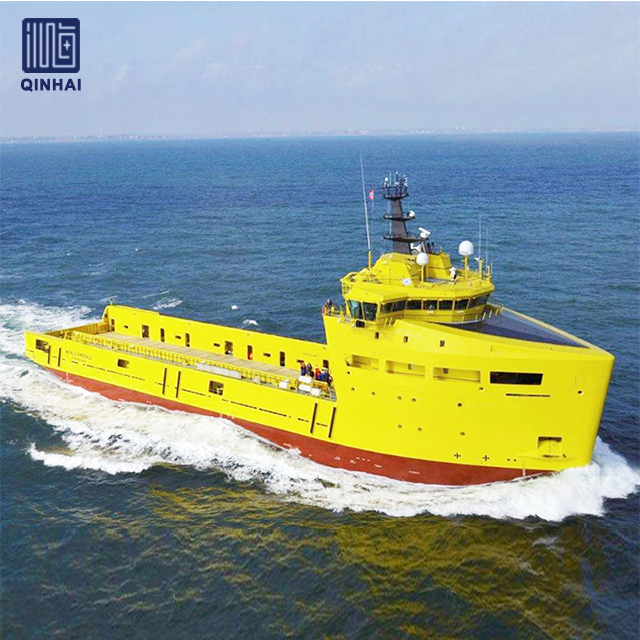
Platform Supply Vessels (PSVs) are primarily used for the high-capacity transport of supplies, crew, and equipment to offshore rigs, production platforms, and offshore wind installations. Their design maximizes cargo space, making them the workhorses of offshore logistics. The hull form is optimized for maximum deadweight capacity while maintaining fuel efficiency during transit.
Assessing standard dimensions and deadweight tonnage (DWT) requirements ensures optimal logistical efficiency. Operators must match the PSV's capacity with the specific supply chain demands of the offshore installation to avoid costly delays or underutilized cargo space. A typical deepwater PSV will range from 3,000 to 5,000 DWT, offering a balance between cargo volume and maneuverability.
Anchor Handling Tug Supply (AHTS) vessels are specialized for rig moving and anchoring operations. Analyzing towing capabilities, winch capacities, and required bollard pull specifications is critical. These vessels must generate sufficient power to maneuver massive offshore structures in challenging sea conditions. Bollard pull requirements can range from 100 tons for shallow water rigs to over 300 tons for ultra-deepwater semi-submersibles.
Evaluating the trade-offs between high-horsepower towing capability and liquid/dry cargo capacity is necessary. While AHTS vessels offer towing prowess, their cargo capacity is often less than that of a dedicated PSV, requiring operators to balance these functional needs based on project scopes. The massive winch systems and wire storage reels consume significant below-deck volume.
Multi-Purpose Support Vessels (MPSVs) offer versatility for subsea construction, ROV (Remotely Operated Vehicle) operations, and light well intervention. These vessels are equipped with specialized cranes, moonpools, and extensive accommodation facilities. The integration of active heave-compensated (AHC) cranes allows for precise subsea equipment deployment regardless of surface wave action.
Determining the return on investment of multi-functional capabilities versus specialized, single-purpose vessels requires careful analysis. While MPSVs provide flexibility across various project phases, their higher capital and operational costs must be justified by sustained utilization rates. Operators often deploy MPSVs on long-term field maintenance contracts to maximize their value.
Comparing traditional diesel-mechanical systems against diesel-electric or hybrid battery propulsion is vital for operational efficiency and peak shaving. Hybrid systems offer significant fuel savings and emission reductions during dynamic positioning operations by optimizing engine loads. Battery banks absorb sudden load spikes from the thrusters, allowing the main generators to run at a constant, efficient baseline.
Assessing the integration of fuel-use optimization software and real-time telemetry systems allows operators to track emissions and manage fuel consumption accurately. These offshore vessel specifications provide actionable data to refine operational practices and reduce overhead. Telemetry data can identify inefficient transit speeds or suboptimal DP configurations.
Evaluating readiness for alternative fuels like LNG, methanol, or ammonia ensures long-term viability against tightening IMO regulations, such as CII and EEXI. Designing vessels with alternative fuel readiness mitigates the risk of early obsolescence. Space must be allocated during the design phase for larger alternative fuel tanks and specialized ventilation systems.
Propulsion Type | Primary Advantage | Best Use Case |
|---|---|---|
Diesel-Mechanical | High raw power output | AHTS towing operations |
Diesel-Electric | Variable load efficiency | PSV dynamic positioning |
Hybrid Battery | Peak shaving, low emissions | MPSV subsea construction |
Evaluating how vessel automation and design impact required crew manning levels helps manage operational overhead. High levels of automation can reduce the necessary crew size, lowering ongoing personnel costs while maintaining safety standards. Automated engine room monitoring and centralized cargo control stations are standard on modern builds.
Assessing accommodation standards and compliance with the Special Purpose Ships (SPS) Code is mandatory for carrying industrial personnel or technicians. Vessels must provide safe, compliant living quarters for non-marine crew members involved in offshore projects. This includes specific requirements for life-saving appliances and structural fire protection.
Analyzing noise and vibration mitigation standards, such as DNV COMF-V class notations, ensures crew safety, comfort, and retention. Reduced noise and vibration levels minimize fatigue, improving overall operational safety and crew well-being. Floating floors and resiliently mounted machinery are effective methods for achieving these standards.
Ensuring alignment with major classification societies like DNV, ABS, or Lloyd’s Register is non-negotiable. Specific class notations, such as CLEAN DESIGN or dynamic positioning redundancy, validate the vessel's capabilities and environmental compliance. The chosen classification society will dictate the specific engineering standards applied throughout the build.
Verifying compliance with the latest international safety (SOLAS), environmental (MARPOL), and Coast Guard mandates protects operators from legal liabilities and operational restrictions. Continuous monitoring of regulatory updates is required throughout the vessel's lifecycle. Ballast water treatment systems and exhaust gas cleaning technologies must meet current and projected standards.
Analyzing the trade-offs of off-the-shelf, proven hull designs versus utilizing a custom shipbuilding supplier is a critical decision. Standardized designs offer faster delivery times and predictable performance data based on existing sister ships. Conversely, custom builds provide bespoke engineering tailored to highly specific operational niches but carry longer lead times and higher initial capital requirements.
Evaluating the engineering capabilities of the shipyard is necessary to accommodate modifications to standard designs. The shipyard must demonstrate the ability to integrate specific equipment or alter capacities without compromising structural integrity or classification approvals. Request detailed engineering drawings of previous modifications to verify their technical competence.
Conducting due diligence on the offshore supply vessel manufacturer involves reviewing their historical delivery of similar vessel classes. Key metrics include on-time delivery rates and the efficiency of post-delivery defect resolution during the warranty period. Speak directly with previous clients to assess the shipyard's responsiveness to warranty claims.
Assessing the financial runway and corporate stability of the shipyard ensures they can sustain multi-year OSV shipbuilding projects without insolvency risk. Financial instability at the shipyard level can lead to severe project delays, compromised build quality, or complete project failure. Require audited financial statements and secure refund guarantees from reputable banks before signing any contracts.
Identifying hidden costs frequently excluded from baseline offshore supply vessel quotation drafts is essential for accurate budgeting. These costs often include commissioning fees, classification society fees, initial spare parts inventory, and specialized crew training programs. Demand a comprehensive line-item breakdown to prevent unexpected expenses during the final delivery phase.
Defining explicit performance guarantees within the quotation protects the buyer. Contracts should specify guaranteed speed, fuel consumption curves, and bollard pull, with financial penalties for underperformance. These metrics must be verified during rigorous sea trials before final acceptance of the vessel.
Comparing fixed-price contracts against cost-plus models requires analyzing fluctuating global steel and component prices. Fixed-price contracts transfer material cost risks to the shipyard, while cost-plus models may offer lower initial estimates but expose the buyer to market volatility. Ensure that any escalation clauses are tied to recognized industry indices.
Managing supply chain vulnerabilities involves securing long-lead items early in the project lifecycle. Components such as main engines, DP systems, and specialized winches require early procurement to prevent downstream construction delays. Establish direct communication with major equipment vendors to monitor manufacturing progress independently of the shipyard.
Structuring contract milestone payments tied strictly to verified construction phases ensures financial leverage is maintained. Payments should never be based merely on calendar dates. Standard milestones include steel cutting, keel laying, main engine installation, launching, and successful sea trials.
Establishing clear protocols for change orders prevents scope creep, technical debt, and budget blowouts. Any modifications to the original specification must be rigorously evaluated for schedule impacts before approval. Implement a strict change order approval hierarchy involving both technical and commercial project managers.
Define your non-negotiable operational parameters, including DP class, DWT, and fuel type, before engaging any shipyards.
Issue detailed Requests for Information (RFIs) to a shortlisted group of shipyards with proven experience in your required vessel class.
Initiate preliminary technical audits of the shipyards' recent builds to verify quality and performance claims.
Structure your procurement contracts with strict, milestone-based payments tied to verified physical construction progress.
A: The average lead time for building an offshore supply vessel typically ranges from 18 to 36 months. This timeline depends on the complexity of the design, shipyard capacity, and the availability of long-lead items like engines and dynamic positioning systems.
A: Evaluate the quotation by requesting a detailed breakdown of all inclusions and exclusions. Specifically look for missing items such as classification society fees, commissioning costs, initial spare parts, crew training, and delivery transit expenses.
A: Cabotage laws mandate that vessels operating in certain domestic waters must be built, owned, and crewed by citizens of that country. This restricts shipyard selection to domestic builders and heavily influences the vessel's design and operational structure.
A: DP2 systems have redundancy so that no single fault in an active system will cause a loss of position. DP3 systems offer higher redundancy, ensuring position is maintained even if an entire compartment is destroyed by fire or flooding, making them suitable for the highest-risk operations.
A: Alternative fuel readiness ensures the vessel can adapt to future, stricter environmental regulations like IMO's CII and EEXI. Designing for fuels like LNG, methanol, or ammonia prevents the asset from becoming obsolete and reduces future retrofitting costs.


