
Views: 0 Author: Site Editor Publish Time: 2026-09-04 Origin: Site


A vessel’s draft dictates operational profitability. It determines exactly how much cargo you can transport before hitting depth limitations in ports and waterways. Misaligning a vessel’s draft capabilities with intended shipping routes or cargo densities leads to severe operational bottlenecks. You risk port access denial, structural vessel deformation, and catastrophic stability failures during transit. For fleet operators and maritime investors, understanding the dynamic relationship between cargo load and draft is essential. It provides the technical foundation for evaluating vessel specifications, mitigating structural risks, and selecting the optimal vessel class for specific trade routes. Mastering draft management ensures your bulk carrier operates safely within its physical limits while maximizing payload efficiency on every voyage.
The fundamental physics of maritime transport rely on Archimedes' principle of displacement. A floating object displaces a volume of water equal to its own weight. As unpackaged granular materials pour into the cargo holds, the total mass of the vessel increases. This added weight forces the hull deeper into the water, directly increasing the bulk carrier draft. Draft is measured as the exact vertical distance from the waterline down to the keel. Accurate measurement requires factoring in the lightship weight, fuel, fresh water, ballast, and the actual cargo payload. The block coefficient of the hull design also influences how rapidly the draft increases per ton of cargo loaded.
To understand displacement fully, you must separate the vessel's constant weights from its variable weights. Lightship weight represents the bare steel hull, machinery, and outfitting. Deadweight tonnage (DWT) encompasses everything else you put on board. When you load cargo, you are eating into the available deadweight capacity. The deeper the hull sinks, the more water it displaces, generating the upward buoyant force required to keep the ship afloat. Naval architects calculate this relationship using a hydrostatic table, which provides the exact displacement for every centimeter of draft.
International load line regulations strictly govern how deep a vessel can sit in the water to maintain safe buoyancy. The Plimsoll line, permanently welded and painted amidships on the hull, indicates the maximum permissible draft under various environmental conditions. Water density plays a major role in these calculations. Saltwater is denser than freshwater, providing greater upward buoyant force. A vessel moving from a saltwater ocean into a freshwater river will sink deeper, increasing its draft even if the cargo weight remains entirely constant. Furthermore, seasonal weather zones dictate specific load lines. The Tropical Fresh Water mark allows for a deeper draft than the Winter North Atlantic mark, ensuring the vessel retains adequate freeboard to survive severe storm conditions.
The sheer weight of thousands of tons of bulk cargo induces immense bending moments and shear forces on the steel structure. This causes microscopic to macroscopic hull deformation. When heavy cargo is concentrated at the ends of the vessel with less weight amidships, the hull bends downward at the bow and stern, a condition known as hogging. Conversely, concentrating weight amidships causes sagging, where the center of the hull bows downward. Marine surveyors must mathematically account for hogging and sagging to ensure accurate draft surveys. Ignoring these structural distortions leads to incorrect cargo measurements, financial discrepancies in cargo billing, and severe safety hazards during navigation.
To accurately assess draft and account for hull deformation, marine professionals follow a strict sequence of observations:
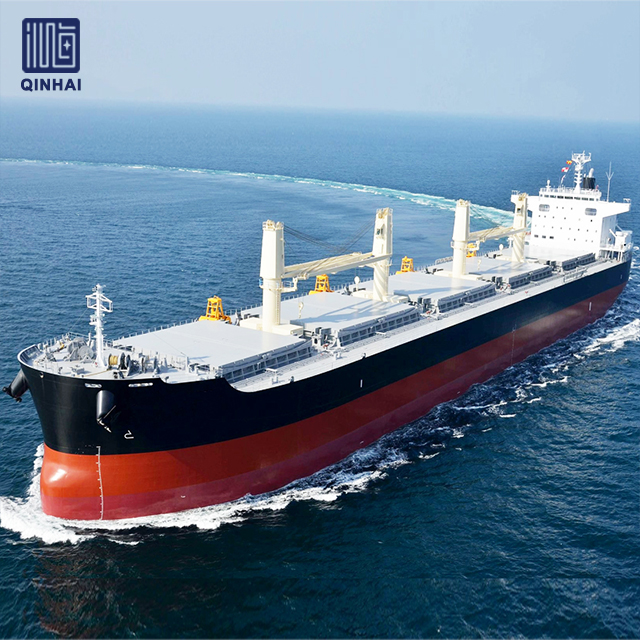
Standard hull designs prioritize deep-sea hydrodynamic efficiency, reducing drag and fuel consumption over long ocean voyages. However, operators frequently require wide-beam, shallow-draft configurations to navigate restricted waterways and underdeveloped coastal ports. These specialized designs maximize stability and cargo capacity without exceeding strict depth limits. While they enable more efficient loading and unloading in shallow terminals, the wider beam increases water resistance, slightly compromising deep-water speed. Evaluating these bulk carrier technical specifications ensures the vessel matches the intended operational environment and avoids costly lightering operations.
Establishing strict Under Keel Clearance (UKC) parameters is the primary success criterion for safe operations in shallow waters. UKC is the physical distance between the lowest point of the keel and the seabed. Operators must calculate the dynamic draft rather than relying solely on the static draft measured at the dock. Dynamic draft accounts for the squat effect, a hydrodynamic phenomenon where a vessel moving through shallow water creates a low-pressure zone beneath the hull, pulling it closer to the seabed. The squat effect increases exponentially with vessel speed. Wave action, tidal variations, and sudden water density changes further impact dynamic draft. Maintaining mandatory UKC prevents catastrophic grounding incidents in shallow ports and narrow canals.
Different unpackaged bulk materials drastically alter the loading profile and hold utilization. High-density cargoes, such as iron ore or steel coils, possess a low stowage factor. They reach the vessel's maximum draft limit while leaving the cargo holds largely empty. This concentrates immense weight in a very small area, requiring heavily reinforced tank tops to prevent structural collapse. In contrast, low-density cargoes like grain, wood pellets, or coal fill the entire hold volume before the vessel reaches its maximum draft. This fundamental difference dictates how weight must be distributed across the hull to maintain a safe center of gravity and transverse stability.
| Cargo Type | Typical Stowage Factor (cu.ft/ton) | Draft Impact | Hold Utilization |
|---|---|---|---|
| Iron Ore | 12 - 15 | Reaches max draft quickly | Low (Holds partially empty) |
| Coal | 40 - 45 | Moderate draft progression | High (Holds mostly full) |
| Grain (Wheat) | 45 - 50 | Slow draft progression | Maximum (Holds completely full) |
| Bauxite | 30 - 35 | Moderate to fast draft progression | Medium (Requires careful trimming) |
Cargo operations for bulk materials can take several days to complete, and the speed of these operations depends heavily on the vessel's handling equipment. Geared vessels feature onboard deck cranes and grabs, allowing them to load and unload independently in ports lacking shore-side infrastructure. Gearless vessels rely entirely on high-capacity shore-side facilities like conveyor belts and pneumatic unloaders. While gearless ships offer higher payload capacities due to the absence of heavy deck machinery, their operational flexibility is restricted to advanced, well-equipped terminals. This directly impacts port stay duration and the frequency of draft monitoring required during loading sequences.
Different Deadweight Tonnage (DWT) capacities serve distinct market segments, each presenting unique draft constraints and operational advantages. Selecting the right size requires aligning the vessel's maximum draft with the depth of the intended ports of call. You cannot force a deep-draft vessel into a shallow river port without risking severe hull damage or grounding. Conversely, deploying a shallow-draft vessel on a deep-sea route sacrifices payload capacity and economies of scale.
A 5000 ton iron ore bulk carrier is engineered specifically for coastal trading, river navigation, and transshipment operations. Its shallow draft profile makes it highly suited for underdeveloped ports or inland waterways where larger vessels simply cannot enter. Because iron ore is extremely dense, this vessel requires heavily reinforced tank tops to support the concentrated weight within a compact footprint. The shallow draft allows operators to bypass congested deep-water hubs and deliver cargo directly to regional industrial facilities. These smaller vessels often operate on tight schedules, requiring rapid loading and discharging to maintain profitability. Their draft marks must be monitored continuously during operations, as even a slight miscalculation in cargo weight can push the vessel over its load line limit in shallow river environments.
The Handysize category offers high versatility for regional trade. A 20000 ton bulk carrier typically operates in ports with moderate draft restrictions. These vessels almost always feature onboard cranes, classifying them as geared carriers. This allows them to execute cargo operations in remote ports lacking extensive shore-side infrastructure. The draft for this class generally ranges between 8 to 10 meters, providing an excellent balance between payload capacity and accessibility, making them the workhorses of the dry bulk fleet. When loading a Handysize vessel, the chief officer must carefully sequence the cargo distribution across the holds. Loading too much weight in the forward holds will cause the vessel to trim by the head, negatively impacting steering and propulsion efficiency. Maintaining an even keel or a slight trim by the stern ensures optimal hydrodynamic performance.
The Handymax class is designed for deep-water port operations and international dry bulk routes, offering optimal economies of scale. Evaluating a 35000 DWT bulk carrier for sale requires rigorous route planning due to its deeper draft, which frequently exceeds 10 meters. Buyers evaluating these vessels must verify that their primary trade routes and destination ports can accommodate the fully laden draft. Failing to do so necessitates costly lightering operations, where cargo is transferred to smaller barges offshore before the ship can safely enter the port. These larger carriers are often gearless, requiring advanced port infrastructure for loading and discharging. The sheer volume of cargo handled by a Handymax vessel means that structural stresses are magnified. The loading computer must be used continuously to simulate shear forces and bending moments before any cargo is actually poured into the holds.
Uneven loading introduces catastrophic risks to maritime operations. When granular or powdered cargo is loaded asymmetrically, it creates severe imbalances in the vessel's center of gravity. In rough sea conditions, this uneven cargo can shift violently to one side. Certain materials, like nickel ore or bauxite, contain high moisture levels. If the moisture exceeds the Transportable Moisture Limit (TML), the cargo can liquefy under the vibration of the ship's engines and the motion of the waves. This effectively turns the solid cargo into a fluid landslide right inside the hold. The resulting free surface effect destroys the vessel's transverse stability, causing an uncontrollable list that can capsize the ship in minutes.
To counteract the immense weight being added during cargo operations, ballast water must be managed meticulously. Ballast water is discharged synchronously as cargo is loaded over several days. This simultaneous operation maintains a safe, even draft and controls the vessel's center of gravity. Pumping out ballast too quickly or too slowly relative to the cargo loading rate induces severe shear forces and bending moments on the hull. The loading sequence must follow a strict, pre-calculated plan approved by the ship's master to prevent overstressing the longitudinal structure. If the de-ballasting system fails or falls behind the loading rate, cargo operations must be halted immediately to prevent structural failure.
Conducting an independent draft survey is the standard maritime method for determining the exact weight of the cargo loaded. The technical framework requires marine surveyors to read all six draft marks located on the hull. These marks are positioned forward, midships, and aft on both the port and starboard sides. Averaging these six readings allows surveyors to calculate the exact displacement, account for water density variations, and verify structural alignment. Any discrepancy between the port and starboard midship readings indicates a list, while differences between forward and aft readings determine the vessel's trim. Precision in these readings is critical for both safety compliance and commercial cargo valuation.
The draft survey process involves several critical calculations to ensure accuracy:
Procuring a vessel requires partnering with a shipyard that demonstrates exceptional engineering standards. When evaluating a China bulk carrier supplier, buyers must scrutinize their track record, manufacturing capabilities, and steel fabrication quality. The yard must adhere strictly to the standards set by the International Association of Classification Societies (IACS), such as ABS, DNV, or Lloyd's Register. This ensures the vessel's structural integrity, steel grade selection, and welding procedures meet rigorous global maritime regulations, guaranteeing a long operational lifespan. You need a builder who understands the specific stresses your vessel will face on its intended routes.
Standard off-the-shelf designs rarely fit every operational profile perfectly. Buyers should negotiate specific hull modifications to suit their operational constraints and primary cargo types. This includes optimizing the block coefficient to maximize cargo volume within specific dimensional limits. Adjusting specialized beam-to-draft ratios allows the vessel to carry more weight in shallow waters without compromising stability. Customizing hold configurations, such as adding hopper tanks or reinforcing tank tops, ensures the ship can efficiently handle the specific density and flow characteristics of the intended bulk commodities. A competent shipyard will provide detailed hydrostatic curves and loading manuals tailored to your exact specifications.
The final phase of procurement involves rigorous quality assurance protocols. Sea trials are mandatory to test the vessel's propulsion, steering, and safety systems under real-world conditions. During this phase, verifying the lightship weight and draft mark accuracy is non-negotiable. An inclining experiment is conducted to determine the exact lightship weight and the vertical center of gravity. Any deviation in the lightship weight directly impacts the vessel's maximum cargo capacity and draft calculations for the rest of its operational life. These metrics must be independently confirmed before finalizing the vessel handover. If the lightship weight is heavier than designed, your deadweight capacity shrinks, permanently reducing your payload and profitability.
The dynamic relationship between cargo load and bulk carrier draft acts as the ultimate constraint on maritime logistics. Accurate evaluation of this metric prevents structural damage, mitigates the severe risk of cargo shifting, and maximizes voyage profitability by ensuring the vessel operates at optimal capacity without violating depth restrictions. Buyers must align their vessel procurement strictly with the draft limitations of their target ports, the availability of shore-side handling gear, and the stowage factor of their primary cargo. This logic applies universally, whether evaluating a 5000-ton coastal vessel for river transshipment or a 35000 DWT deep-sea carrier for international trade.
To move forward with your vessel procurement, execute the following steps:
A: A draft survey determines cargo weight by measuring the vessel's displacement before and after loading. Surveyors read six draft marks (forward, midships, aft on both sides) to account for trim and list. They factor in water density and deduct variable weights like fuel, ballast, and fresh water to calculate the exact cargo payload.
A: Draft is the vertical distance from the waterline to the lowest point of the hull (keel). It changes dynamically based on cargo load and water density. Depth is a fixed structural measurement from the keel to the uppermost continuous deck. Depth remains constant, while draft fluctuates with operational conditions.
A: Saltwater is denser than freshwater, providing greater buoyancy. When a bulk carrier moves from a saltwater ocean into a freshwater river, it loses buoyancy and sinks deeper into the water. This increases the draft even if the cargo weight remains unchanged, requiring careful route planning to prevent grounding.
A: Overloading a vessel submerges the Plimsoll line, violating international maritime regulations. This drastically reduces the freeboard, making the ship highly vulnerable to swamping in rough seas. It also induces excessive structural stress on the hull, compromises stability, and increases the risk of grounding in shallow waterways.
A: Loading and discharging operations can take several days. The exact timeframe depends on the cargo type, port infrastructure, and whether the vessel is geared or gearless. High-capacity shore loaders can fill a gearless vessel in 24 to 48 hours, while geared vessels using onboard cranes may require three to five days.
A: Uneven loading creates severe structural stress, leading to hull deformation known as hogging or sagging. In rough seas, asymmetrically loaded granular cargo can shift or liquefy. This destroys the vessel's center of gravity, causing an uncontrollable list that can lead to the ship capsizing in a matter of minutes.


