
Views: 0 Author: Site Editor Publish Time: 2026-09-24 Origin: Site


Expanding a maritime fleet requires heavy capital investment and locks in your operational capabilities for decades. If you select the wrong vessel architecture, you introduce immediate logistical bottlenecks. Misaligning ship specifications with your actual cargo requirements disrupts sailing schedules and triggers structural, regulatory, and liability failures. Liquid bulk transport demands an entirely different engineering approach compared to dry cargo operations. We evaluate the hard technical differences between general cargo vessels and specialized liquid bulk carriers. Fleet managers and procurement officers must define strict success criteria before acquiring new tonnage. Navigating custom vessel acquisition requires a deep understanding of hull engineering, pumping mechanics, and port infrastructure compatibility. We break down these structural disparities to help operators optimize route profitability, match terminal constraints, and ensure strict regulatory compliance across all voyages.
When you walk the deck of a liquid bulk carrier, the engineering contrast with a dry bulk vessel is immediate. You do not see massive hatch covers or deep, open holds. Instead, you navigate a maze of piping manifolds, valve handwheels, and vapor return lines. Establishing the baseline requirement for any vessel procurement begins with operational mapping. You must match hull design, draft limitations, and cargo handling capabilities to specific trade routes. Commodity types dictate the structural engineering of the vessel. Terminal infrastructure at the destination port determines how quickly a vessel can load and discharge its payload. A mismatch here guarantees operational delays.
Liquid bulk carriers feature highly specialized hull architectures. Modern regulations mandate double-hull designs for all petroleum carriers. This engineering creates a protective void space, usually about two meters wide, between the outer hull and the internal cargo tanks. This void prevents environmental disasters during groundings or low-impact collisions and serves as the vessel's dedicated ballast space. Internally, the vessel utilizes a network of compartmentalized longitudinal and transverse bulkheads. These bulkheads divide the liquid payload into smaller, manageable sections and utilize corrugated steel designs to allow for easier stripping and cleaning of the tanks.
General cargo and bulk carrier ships utilize an entirely different structural philosophy. They feature open-hold architectures designed to maximize internal volume for dry goods. These vessels incorporate tween decks for break-bulk cargo and heavily reinforced tank tops to support dense ores or heavy machinery. Cargo ships lack the extensive internal compartmentalization found in liquid carriers. Instead, they rely on massive, weather-tight hatch covers to secure the expansive cargo holds from the elements. The structural stress on a dry bulk carrier comes from the sheer weight of the solid cargo pressing down on the double bottom, rather than the dynamic fluid pressure against the bulkheads.
Liquid transfer requires closed-loop pneumatic and hydraulic systems. A tanker ship relies on complex piping manifolds running along the main deck. High-capacity centrifugal pumps drive the liquid from deep internal tanks to shore facilities. Crude carriers often use centralized pump rooms, while product and chemical carriers utilize individual deepwell pumps in each tank to prevent cross-contamination. These vessels also integrate Inert Gas Systems (IGS). The IGS scrubs treated exhaust gas from the boilers and pumps it into the empty space above the liquid cargo. This displaces oxygen, keeping it below 8%, and prevents explosive atmospheric conditions inside the tanks.
Geared cargo ships manage payload transfer through mechanical lifting. They utilize onboard deck cranes, heavy-lift derricks, and complex hatch-cover mechanics. Dry bulk carriers rely on shore-based grabbers or onboard conveyor systems. Container ships require massive gantry cranes located at specialized port terminals. The handling systems on dry cargo vessels focus entirely on lifting and placing solid mass, completely lacking the fluid dynamic engineering, stripping eductors, and closed-loop vapor recovery systems of liquid carriers.
Liquid payloads introduce unique stability challenges. The free-surface effect occurs when liquid sloshes back and forth inside a partially filled tank as the ship rolls. This shifting mass creates a virtual rise in the vessel's center of gravity and threatens transverse stability. Liquid carriers mitigate this dangerous effect through internal longitudinal bulkheads. These bulkheads break up the continuous surface area of the liquid, drastically reducing the free surface moment. Strict Ballast Water Management Systems (BWMS) further adjust the vessel's trim and draft during complex loading sequences, ensuring the hull does not experience excessive bending moments.
Dry cargo vessels face different stability threats. Solid bulk cargoes, like grain or iron ore, can shift during heavy weather. This creates a permanent list if not properly leveled and secured. Cargo ships manage this by trimming the cargo flat and utilizing specialized hold designs, such as upper wing tanks, to restrict cargo movement. Their ballast systems primarily compensate for the total weight of the cargo rather than dynamic, fluid shifting during transit.
Operational efficiency heavily depends on port turnaround times. Liquid carriers utilize specialized terminal manifolds for rapid discharge. The Oil Companies International Marine Forum (OCIMF) standardizes the exact spacing, height, and presentation of these manifolds so any ship can connect to any terminal. Once the vessel connects its heavy hoses or hard loading arms (Chiksans) to the shore facility, pumps can move thousands of cubic meters per hour. This closed-loop transfer allows for continuous, high-speed operations regardless of most weather conditions.
Dry cargo operations require extended berth times. Crane-operated dry bulk or container handling is a mechanical, piece-by-piece process. Weather conditions severely impact these operations. Rain forces general cargo ships to close their hatch covers, halting operations to protect moisture-sensitive goods like grain or paper rolls. The fundamental difference in loading mechanics creates a massive operational gap in port efficiency between the two vessel classes.
| Feature | Liquid Bulk Carrier | Dry Cargo Ship |
|---|---|---|
| Hull Architecture | Double-hull, highly compartmentalized corrugated bulkheads | Single or double bottom, open holds, tween decks |
| Cargo Handling | Centrifugal deepwell pumps, piping manifolds, IGS | Deck cranes, derricks, hatch covers, shore gantries |
| Stability Threat | Free-surface effect (dynamic liquid sloshing) | Solid cargo shifting, uneven weight distribution |
| Port Infrastructure | OCIMF manifolds, hard loading arms, storage farms | Gantry cranes, grabbers, expansive staging yards |
| Weather Impact | Minimal impact on closed-loop liquid transfer | High impact; rain halts open-hatch operations |
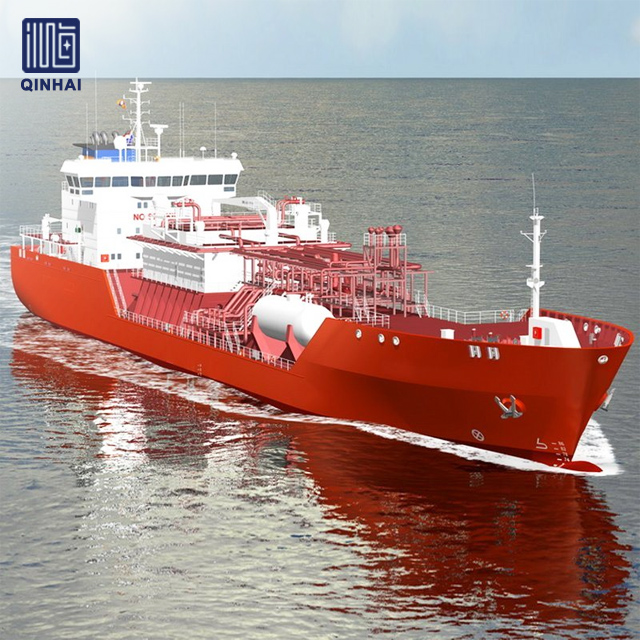
The liquid bulk sector encompasses a wide spectrum of operational scales. Vessels range from small coastal barges to Ultra Large Crude Carriers (ULCCs). Understanding these classifications is critical for matching vessel capabilities to specific supply chain demands. Each category dictates draft restrictions, port accessibility, and the fundamental economies of scale for the operator.
Industry standards categorize vessels primarily by their Deadweight Tonnage (DWT). This metric represents the total weight a ship can safely carry, including cargo, fuel, fresh water, and crew. Smaller vessels, often classified as Handy or Handymax, typically operate below 50,000 DWT. These vessels offer maximum flexibility for regional trades and shallow-draft ports.
As tonnage increases, so do draft restrictions. Panamax vessels are specifically dimensioned to transit the Panama Canal. Aframax and Suezmax vessels serve medium-to-long haul routes, balancing high capacity with access to major global terminals. At the extreme end, Very Large Crude Carriers (VLCC) and ULCCs exceed 300,000 DWT. These massive structures require specialized deep-water offshore terminals, such as Single Point Moorings (SPM), for loading and discharge.
| Vessel Classification | DWT Range | Typical Draft Limit | Primary Operational Route |
|---|---|---|---|
| Coastal / Short Sea | 1,000 - 10,000 | 4m - 7m | Inland waterways, regional distribution |
| Handysize / MR | 10,000 - 50,000 | 9m - 12m | Coastal trade, medium-range product transport |
| Panamax | 50,000 - 80,000 | 12m - 13m | Trans-oceanic, canal-restricted routes |
| Aframax | 80,000 - 120,000 | 14m - 15m | Medium-to-long haul crude transport |
| Suezmax | 120,000 - 200,000 | 16m - 17m | Long haul, Suez Canal transits |
| VLCC / ULCC | 200,000+ | 20m - 22m+ | Intercontinental crude oil trade |
Beyond sheer size, operators must evaluate specific oil tanker ship types based on the commodity. Crude oil carriers feature massive, unlined steel tanks designed to move unrefined petroleum directly from extraction points to refineries. They utilize steam heating coils at the bottom of the tanks to keep heavy crude viscous and pumpable during cold weather transits.
Product tankers transport refined derivatives like gasoline, diesel, and aviation fuel. These vessels require specialized tank coatings, typically phenolic epoxy or zinc silicate, to prevent cargo contamination and facilitate easier cleaning between different product loads. Chemical tankers represent the most complex engineering in this sector. They utilize duplex stainless steel tanks and independent piping systems for every single compartment. This allows the simultaneous transport of highly reactive and hazardous chemicals without cross-contamination.
Offshore support and fleet logistics require highly specific configurations. Deploying a custom oil tanker refueling vessel provides immense operational advantages. These specialized ships supply marine fuel directly to other vessels at sea or alongside a berth. They feature heavy-duty pneumatic fendering systems, high-maneuverability propulsion like azimuth thrusters, and specialized flow meters. Bunker vessels reduce supply chain bottlenecks by eliminating the need for large cargo ships to deviate from their routes to dock at dedicated fueling piers.
Procurement teams must evaluate how specific tonnage and custom features translate to operational outcomes. Vessel sizing directly impacts route flexibility, terminal compatibility, and turnaround times. A ship that is too large will face draft restrictions and port exclusion. A ship that is too small will fail to achieve necessary economies of scale, requiring too many voyages to meet cargo demands.
Regional distribution networks rely heavily on smaller, highly maneuverable vessels. A 3000 DWT oil tanker ship is engineered specifically for coastal trade, inland waterways, and short-sea shipping routes. These vessels feature shallow drafts, often under six meters, allowing them to navigate river estuaries and service secondary ports that lack deep-water infrastructure.
The operational viability of this size class lies in its high utilization rate. These vessels can perform rapid, multi-port discharge sequences. They often transport marine gas oil (MGO) or heavy fuel oil (HFO) from major regional hubs to smaller, localized storage facilities. The structural design prioritizes rapid turnaround and high maneuverability over massive volume, often incorporating twin-screw propulsion and bow thrusters for unassisted docking in tight harbor spaces.
Scaling capacity requires analyzing operational trade-offs. Moving to a 5,000 DWT platform increases payload capacity while maintaining reasonable draft limits. However, larger vessels require more robust cargo handling equipment. When servicing remote facilities or offshore platforms, reliance on shore-based infrastructure becomes a significant liability.
Procuring a 5000 DWT custom oil tanker with crane solves specific logistical bottlenecks. The onboard lifting equipment is not for the cargo itself, but for the heavy hose handling required during ship-to-ship (STS) transfers. A 10-inch cargo hose full of oil is incredibly heavy and cannot be manhandled by the crew. A dedicated deck crane, typically rated for a 5-ton safe working load (SWL) at a 15-meter outreach, allows the crew to autonomously deploy and retrieve heavy cargo hoses, reducers, and Yokohama fenders. This autonomous capability is critical for offshore bunkering operations and servicing terminals with degraded lifting infrastructure.
Liquid bulk transport operates under severe legal, financial, and environmental scrutiny. Non-compliant operations invite massive fines, vessel detentions, and catastrophic environmental damage. Procurement specifications must integrate all mandatory international regulations directly into the vessel's engineering blueprint.
The International Convention for the Prevention of Pollution from Ships (MARPOL) strictly governs liquid bulk operations. Annex I specifically addresses the prevention of pollution by oil. This mandate dictates the double-hull requirements and the mandatory segregation of ballast water from cargo tanks. Vessels must never mix operational ballast with petroleum payloads.
Compliance requires the integration of Oil Discharge Monitoring Equipment (ODME). The ODME continuously analyzes any water discharged overboard from the slop tanks. If the oil content exceeds the strict 15 parts-per-million (ppm) threshold, the system automatically shuts the overboard valve and redirects the flow back into the vessel. Furthermore, modern vessels must incorporate vapor emission control systems. These systems capture volatile organic compounds (VOCs) displaced during loading, returning them to the shore facility rather than venting them into the atmosphere.
The Safety of Life at Sea (SOLAS) convention mandates rigorous fire suppression engineering. Liquid bulk payloads present extreme flammability and explosion risks. Tanker vessels require specialized deck foam monitor systems capable of smothering a massive deck fire in minutes. The high-expansion foam must cover the entire cargo manifold area. All electrical equipment located in hazardous zones, such as the main deck and pump rooms, must carry strict explosion-proof ratings.
Standard dry cargo vessels do not require this level of localized fire suppression. General cargo holds typically rely on CO2 flooding systems for deep-seated fires. The immediate, explosive nature of petroleum vapors demands rapid-response foam and water spray systems that are entirely unique to the liquid bulk sector.
Hardware engineering only solves half the compliance equation. The operational gap in crewing is substantial. The Standards of Training, Certification, and Watchkeeping (STCW) mandates specialized endorsements for liquid bulk crews. Personnel must hold advanced Dangerous Cargo Endorsements (DCE) specific to oil, chemicals, or liquefied gas.
This specialized training covers advanced firefighting, inert gas system operation, and crude oil washing (COW) procedures. Crews train extensively on cargo simulators to handle emergency shutdown (ESD) sequences. General cargo crews do not require these advanced endorsements. Fleet managers must account for the limited pool of certified liquid bulk mariners when planning operations and crew rotations.
Environmental liability drastically alters the risk profile of maritime operations. Protection and Indemnity (P&I) insurance for liquid bulk carriers reflects the catastrophic potential of an oil spill. Coverage must account for massive environmental remediation, third-party damages, and complex legal defenses. In jurisdictions like the United States, the Oil Pollution Act of 1990 (OPA 90) requires vessels to carry a Certificate of Financial Responsibility (COFR) before entering national waters.
Dry cargo vessels present a significantly lower environmental liability profile. While a sunken cargo ship represents a total hull and payload loss, it rarely triggers the billion-dollar environmental cleanup associated with a major petroleum spill. Operators must factor these elevated liability parameters into their long-term operational risk models.
Vetting shipyards requires balancing upfront engineering quality against long-term operational reliability. A poorly constructed vessel will suffer from frequent breakdowns, failed port state control inspections, and extended dry-docking periods. You must evaluate suppliers based on their demonstrated technical competence and regulatory track record.
Auditing a custom oil tanker supplier begins with classification society approvals. The shipyard must have a proven history of delivering vessels certified by major International Association of Classification Societies (IACS) members, like the American Bureau of Shipping (ABS), Det Norske Veritas (DNV), or Lloyd's Register. These societies verify that the vessel's structural integrity, welding procedures, and safety systems meet all international standards.
Evaluate the supplier's past delivery performance. Request case studies of similar tonnage vessels currently in operation. Investigate their block assembly methods, coating application facilities, and post-delivery warranty support. Coating application requires strict temperature and humidity control; a shipyard lacking indoor painting facilities will struggle to deliver a durable product tanker. A reliable supplier provides comprehensive technical documentation, including detailed piping and instrumentation diagrams (P&ID) and approved stability booklets.
Initiating a vessel procurement requires a highly detailed Request for Quote (RFQ). Vague inquiries lead to inaccurate proposals and misaligned expectations. You must provide the shipyard with exact operational parameters to ensure the proposed design meets your specific route and cargo demands.
When submitting an oil tanker price inquiry, your technical specifications document must include the following mandatory data points:
The choice between a cargo ship and a liquid bulk carrier is dictated entirely by the physical state of the commodity. Achieving operational success in the liquid bulk sector requires precise engineering and regulatory foresight. Misjudging draft limits, pumping capacities, or safety mandates will cripple fleet efficiency and invite severe legal liabilities. Procurement teams must move beyond basic tonnage requirements and focus on exact operational configurations.
To ensure a successful fleet expansion, execute the following next steps:
A: A liquid bulk carrier utilizes a double-hull design with extensive internal longitudinal and transverse bulkheads to manage fluid dynamics. Cargo ships feature single or double bottoms with expansive, open holds and large weather-tight hatch covers designed to maximize internal volume for solid goods.
A: Liquid carriers require standardized deck manifolds that connect to shore-based loading arms or flexible hoses for closed-loop pumping. Cargo ships rely on mechanical lifting equipment, such as shore-based gantry cranes, derricks, or grabbers, and require large staging yards to handle solid freight.
A: This vessel size offers a shallow draft and high maneuverability, making it ideal for coastal trade and inland waterways. It can easily access secondary ports lacking deep-water infrastructure, allowing operators to execute rapid, multi-port discharge sequences for regional fuel distribution.
A: An onboard crane provides autonomous cargo handling. The crew uses it to lift and maneuver heavy cargo hoses, reducers, and pneumatic fenders during ship-to-ship transfers. This eliminates reliance on shore-based lifting infrastructure when servicing remote offshore terminals or anchored vessels.
A: Refueling vessels must integrate SOLAS-mandated fire suppression systems, including high-expansion deck foam monitors. They also require Inert Gas Systems (IGS) to displace oxygen in the tanks, explosion-proof electrical fittings in hazardous zones, and specialized heavy-duty fendering for safe mooring.
A: You must provide the target Deadweight Tonnage (DWT), maximum draft limits, cargo specific gravity, and viscosity. You also need to specify the required discharge rates, custom deck machinery requirements, and the intended classification society to ensure accurate engineering proposals.


