
Views: 0 Author: Site Editor Publish Time: 2026-09-14 Origin: Site


The Strait of Hormuz handles roughly 20% of global oil and liquefied natural gas flow. When geopolitical tensions escalate in this narrow corridor, the maritime industry feels the impact instantly. Chokepoint disruptions force fleet operators into massive route diversions. Rerouting around the Cape of Good Hope adds weeks to voyage durations and thousands of nautical miles to standard transit schedules. This extensive detour causes supertanker cargo volumes to plummet and freight rates to swing wildly. You cannot rely solely on vulnerable mega-vessels during these regional crises. Fleet operators must pivot toward agile, specialized fleets. Deploying mid-size tankers and dedicated support vessels guarantees operational continuity. We need to look at how Strait of Hormuz oil tankers adapt to these severe bottlenecks. By diversifying your fleet composition, you protect profit margins and keep global energy supply chains moving despite unpredictable regional instability.
Geopolitical blockades in vital maritime corridors generate immediate fallout across all baseline shipping metrics. When the Strait of Hormuz experiences restricted access, the global supply chain suffers an instant contraction. This bottleneck translates directly into surging global energy prices and volatile freight markets. Fleet operators must rapidly adjust their logistics networks to account for sudden spikes in war-risk insurance premiums. You also face severe supply bottlenecks at alternative anchorages as vessels stack up waiting for clearance or new routing orders.
The vulnerability of mega-vessels becomes glaringly apparent during these regional crises. Industry data frequently highlights dramatic drops in supertanker volumes, sometimes plummeting by as much as 36% during peak tensions. Very Large Crude Carriers (VLCCs) require deep-water channels, massive port infrastructure, and highly predictable transit windows. When a chokepoint closes, these massive capital assets become stranded. They sit at anchor burning fuel, racking up massive demurrage charges, or they are forced into month-long detours around the African continent. Relying solely on massive vessels limits your ability to pivot. The sheer size and draft of a VLCC restrict it from utilizing secondary ports or shallow-water anchorages, severely degrading fleet efficiency.
Operators must implement robust risk continuity frameworks to navigate these destabilizing effects. Effective strategic management requires diversifying asset classes and operational capabilities. You must integrate smaller, more flexible vessels into the core fleet to handle localized distribution when major arteries are severed. Managing oil tanker shipping operations under these conditions demands real-time route optimization and dynamic fuel management. You must execute complex offshore cargo transfers safely to keep the product moving toward refineries.
Disruptions heavily necessitate increased regional transshipment and Ship-to-Ship (STS) operations outside the immediate conflict zone. Standard operational frameworks for both oil and LNG cargoes must adapt immediately. Instead of direct point-to-point delivery from major Middle Eastern terminals to global refineries, operators utilize safe-haven anchorages. Mega-tankers discharge their cargo into multiple smaller vessels in open water. This shift to transshipment keeps the larger vessels out of high-risk areas while ensuring the continuous flow of energy products to their final destinations.
Shifting toward fleet diversification stands as the primary risk mitigation strategy against route disruptions. By balancing a fleet with a mix of VLCCs, Suezmax, and smaller specialized tankers, operators insulate their supply chains from localized shocks. Mid-size vessels provide the tactical flexibility required to maintain cargo momentum when primary shipping lanes are compromised.
A 3000 DWT oil tanker ship offers distinct maneuverability and draft advantages critical for disrupted logistics networks. With a significantly shallower draft than larger crude carriers, these vessels easily access secondary, shallow-water ports that remain unaffected by major chokepoint closures. This capability allows operators to bypass congested primary terminals and deliver refined products or crude directly to localized distribution hubs.
In operational scenarios requiring rapid STS transfers, a 3000 DWT vessel outperforms larger tankers in pure agility. They quickly position alongside anchored mega-vessels, receive cargo, and navigate tight coastal waterways without requiring extensive tug assistance. Their smaller turning radius and advanced twin-screw propulsion systems make them ideal for navigating complex archipelagos or crowded safe-haven anchorages. Deploying a fleet of these vessels ensures that cargo continues to move even when standard VLCC routes are completely blocked.
Integrating specialized deck equipment dramatically increases a vessel's operational autonomy. A 5000 DWT custom oil tanker with crane provides essential heavy-lift capabilities directly on the main deck. This allows the vessel to handle heavy pneumatic fenders and large-diameter cargo hoses independently during offshore STS transfers. By eliminating the reliance on shore-based cranes or specialized support barges, operators conduct transshipment operations in remote or underdeveloped anchorages.
The scalability and operational benefits of deploying multi-role 5000 DWT vessels are substantial. These vessels service diverted mega-tankers in alternative locations, effectively acting as mobile terminals. They manage offshore support tasks, deliver supplies, and transfer cargo, offsetting the higher freight costs associated with Cape of Good Hope diversions. The ability to perform multiple roles maximizes asset utilization and ensures continuous revenue generation during prolonged supply chain disruptions.
| Vessel Class | Primary Role in Disruptions | Draft & Port Access | STS Transfer Capability | Operational Agility |
|---|---|---|---|---|
| VLCC (>200,000 DWT) | Long-haul transport via diverted routes (Cape of Good Hope) | Deep draft; restricted to major global terminals | Requires specialized support vessels and fenders | Low; highly vulnerable to chokepoint closures |
| 3000 DWT Tanker | Coastal distribution and rapid regional transshipment | Shallow draft; accesses secondary and river ports | High agility for quick alongside positioning | High; easily rerouted to alternative safe havens |
| 5000 DWT with Crane | Autonomous offshore support and mobile terminal operations | Moderate draft; flexible port entry | Independent hose and fender handling via deck crane | Very High; multi-role capability reduces shore reliance |
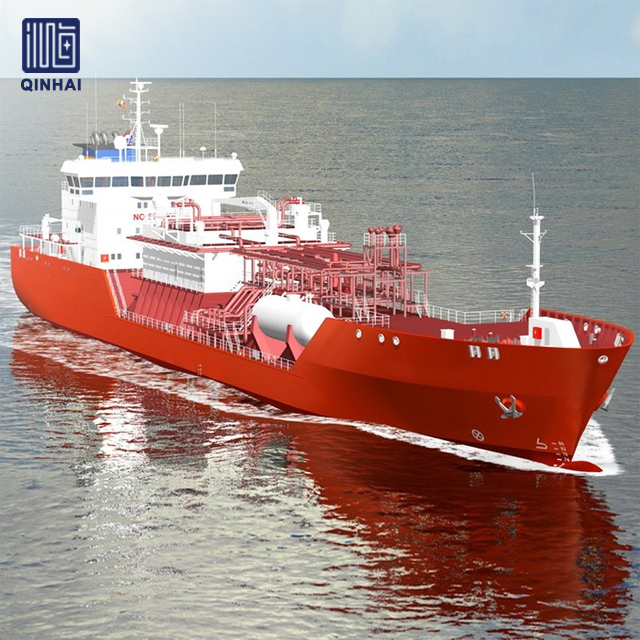
When vessels are forced to divert around the Cape of Good Hope, the logistical strain on global energy supplies intensifies. These extended voyages add thousands of nautical miles and weeks of transit time to standard schedules. The primary challenge becomes maintaining adequate fuel levels for these mega-vessels without forcing them into congested, out-of-the-way ports. Mid-ocean or alternative port bunkering becomes an absolute necessity to keep the global supply chain moving efficiently.
Purpose-built refueling vessels maintain the momentum of diverted fleets. A custom oil tanker refueling vessel acts as mobile infrastructure, delivering bunker fuel directly to mega-tankers in open water or designated safe anchorages. This operational role reduces port-call delays, minimizes deviation time, and mitigates the cascading ripple effects of extended transit schedules. By bringing the fuel to the diverted ships, operators preserve tight delivery windows and optimize overall fleet fuel consumption.
Executing safe open-water bunkering requires highly specific technical specifications. These custom vessels must be equipped with high-capacity mass flow meters to ensure precise custody transfer of fuel under challenging maritime conditions. Advanced fender systems, such as large Yokohama pneumatic fenders, are required to absorb the kinetic energy between two vessels mooring in open swells. Furthermore, integrating Dynamic Positioning (DP1 or DP2) capabilities allows the refueling vessel to hold its station accurately alongside the receiving ship, preventing hose ruptures and ensuring environmental safety during the transfer process.
To execute a flawless offshore refueling operation, crews follow a strict sequence of events:
Adapting a fleet requires securing reliable shipyard partners capable of delivering specialized vessels on time and strictly to specification. The procurement process is a critical phase where operational requirements must perfectly align with manufacturing capabilities. Evaluating shipyards demands a rigorous assessment of their technical expertise, regulatory compliance, and project management transparency.
The Chinese shipbuilding sector possesses immense capacity for constructing custom commercial vessels. When selecting an oil tanker supplier in China, operators must focus on authoritativeness and trust signals. Evaluate the shipyard's historical track record with similar mid-size tanker projects. Inspect their steel cutting technology, automated welding processes, and block assembly methods. Crucially, the shipyard must demonstrate strict adherence to International Association of Classification Societies (IACS) standards, ensuring the vessel will be certified by top-tier societies like ABS, DNV, or Lloyd's Register.
Cross-border procurement naturally involves implementation risks. Common concerns include quality control consistency, intellectual property protection for custom designs, and communication barriers during complex engineering phases. To mitigate these risks, operators must deploy independent, third-party marine surveyors to conduct continuous on-site inspections. Establishing clear communication protocols, utilizing international maritime legal frameworks for contracts, and requiring detailed weekly progress reports ensures the build remains aligned with your exact specifications.
When auditing a potential shipyard, focus on these critical evaluation criteria:
Securing an accurate and comprehensive quotation requires far more than requesting a base hull cost. An effective oil tanker price inquiry must break down all overall value influencing factors. The inquiry should specify the exact maker's list for critical machinery, including preferences for Tier III compliant main engines and auxiliary generators. It must detail all custom deck equipment requirements, such as heavy-lift cranes, specialized manifold configurations, and high-capacity cargo pumps. Additionally, the inquiry must account for classification society fees, sea trial expenses, and initial spare parts outfitting.
Procurement teams must carefully evaluate conceptual trade-offs during the inquiry phase. Comparing the upfront capital expenditure of custom modifications against long-term operational savings is vital. Investing heavily in a specialized deck crane or advanced refueling booms increases the initial build cost. However, this upfront investment drastically reduces reliance on expensive shore-based infrastructure and tug services over the vessel's lifespan. These custom features generate significant long-term operational savings, particularly when navigating the logistical chaos of supply chain disruptions.
Operating custom mid-size and refueling tankers in international waters requires strict adherence to a complex web of maritime regulations. Regulatory compliance is non-negotiable. Vessels must meet all MARPOL requirements, specifically Annex I for double-hull construction and oil discharge monitoring, and Annex VI for stringent NOx and SOx emission limits. Compliance with SOLAS dictates the integration of advanced fire-fighting systems, life-saving appliances, and navigation equipment. Furthermore, to secure charters with major oil companies, the vessel must be designed to pass rigorous OCIMF SIRE vetting processes.
Understanding manufacturing timelines allows operators to plan their fleet deployment accurately. Building a 3000 to 5000 DWT custom tanker typically follows a structured, multi-month schedule. The initial phase involves detailed naval architecture and class approval of the General Arrangement plans. This is followed by steel cutting and keel laying, marking the official start of physical construction. Block assembly and hull welding precede the launching of the vessel. The final phase is outfitting, where machinery, piping, and electrical systems are installed, culminating in comprehensive dock and sea trials to verify performance parameters.
| Construction Phase | Key Activities | Quality Control Checkpoints |
|---|---|---|
| Design & Engineering | General Arrangement approval, hull line optimization, machinery selection. | IACS class approval of all structural drawings. |
| Steel Cutting & Keel Laying | CNC plasma cutting of steel plates, laying the first hull blocks. | Material certification verification and weld seam inspections. |
| Block Assembly & Launch | Joining hull sections, installing main engine, launching into water. | Non-destructive testing (NDT) on critical hull welds. |
| Outfitting & Sea Trials | Piping installation, electrical wiring, testing speed and maneuverability. | OCIMF SIRE pre-vetting and final class certification issuance. |
Mitigating financial and scheduling risks during the build process requires robust contract structuring. Shipbuilding contracts must utilize milestone-based payment structures. Payments should be strictly tied to verified physical progress, such as steel cutting, keel laying, launching, and successful sea trials. Including strict penalty clauses for delayed delivery incentivizes the shipyard to maintain the agreed-upon schedule. These contractual safeguards protect your capital and ensure the vessel is delivered ready for immediate deployment.
A: Disruptions force massive route diversions around the Cape of Good Hope. This immediately translates into higher freight costs, surging global energy prices, and increased war-risk insurance premiums. Operators must rapidly shift toward regional transshipment and offshore STS operations for both oil and LNG cargoes to bypass conflict zones.
A: A 3000 DWT vessel provides exceptional agility and a shallow draft. It easily accesses alternative, shallow-water ports that larger vessels cannot navigate. This efficiency facilitates rapid regional ship-to-ship transfers and localized distribution when major shipping hubs become congested or entirely blocked during geopolitical crises.
A: Integrating a heavy-lift deck crane gives the vessel complete operational autonomy. It independently handles heavy pneumatic fenders and large cargo hoses during STS transfers. This capability allows the vessel to manage offshore support tasks efficiently without relying on specialized shore-based port infrastructure or support barges.
A: These specialized vessels provide essential on-water bunkering for fleets forced to take longer routes. By delivering fuel directly to diverted mega-tankers in open water or safe anchorages, they prevent costly, time-consuming detours to out-of-the-way ports and keep the global energy supply chain moving.
A: You must look for a proven track record with custom commercial builds and verified IACS classification experience. Prioritize shipyards that demonstrate transparent project management processes, high-quality component sourcing, and advanced steel-cutting technology. Always utilize third-party marine surveyors to ensure the build matches your exact specifications.
A: An accurate inquiry requires comprehensive technical specifications. You must specify the required Deadweight Tonnage (DWT), draft limits, and main engine tier preferences. Include specific custom deck equipment needs, such as heavy-lift cranes or mass flow meters, and clearly define the intended operational routes and classification society.


