
Views: 0 Author: Site Editor Publish Time: 2026-09-10 Origin: Site


Acquiring a commercial vessel represents a massive capital investment. Technical oversights or compliance failures during the purchase process carry severe consequences. Buying an asset without rigorous vetting often leads to unexpected drydock fees, restricted trading capabilities, or outright rejection by major charterers. The secondhand market presents distinct challenges compared to commissioning new builds. Buyers face the constant risk of hidden structural defects, outdated cargo systems, and failing stringent oil major vetting processes. Distressed asset deals that appear favorable on paper can quickly turn into costly investment mistakes. Fleet managers, shipowners, and maritime investors require a structured evaluation framework. You must systematically assess vessel condition and regulatory compliance before finalizing a purchase. This approach prioritizes physical integrity, operational suitability, and upcoming capital expenditures. By applying an evidence-based approach to vessel inspection, you mitigate acquisition risks and secure an asset that aligns with your operational demands.
Operational bottlenecks happen when operators deploy a vessel with the wrong draft, capacity, or discharge capability for their specific trade routes. Terminal restrictions, port infrastructure limitations, and cargo parcel sizes dictate the exact specifications you need. Buying a vessel just because it is available leads to underutilized cargo space, dead freight, or the inability to berth at primary discharge ports. You have to match the steel to the contract. If your charter requires discharging at a terminal with a maximum draft of 10 meters, buying a vessel that draws 11 meters fully laden forces you into expensive lightering operations.
Short-sea shipping and localized bunkering operations require highly maneuverable vessels. These ships navigate restricted draft ports and congested waterways daily. A 1000 ton small oil tanker provides distinct operational advantages in these environments. These vessels easily access shallow river berths, service offshore anchorages, and perform continuous short-haul voyages with rapid turnaround times. Their smaller footprint allows operators to secure niche contracts that larger tonnage cannot fulfill. You can run these smaller ships into tight coastal terminals where larger vessels simply cannot maneuver without extensive tug assistance.
For regional product distribution, operators balance payload capacity with port accessibility. Deploying a 3000 DWT oil tanker ship offers superior route flexibility across coastal networks. This size class efficiently transports refined products between regional storage terminals while maintaining a draft suitable for most secondary ports. The economics of this tonnage rely on maximizing laden voyage days and minimizing port stay durations. You achieve this through efficient cargo pumping systems that strip tanks quickly and get the vessel back to sea.
Deep-sea trades demand entirely different asset classes. Medium Range (MR) product tankers, typically around 37,000 to 50,000 DWT, serve as the workhorses of the refined product market. They offer the versatility to carry multiple grades of cargo simultaneously across transoceanic routes. Crude carriers like Suezmax and Very Large Crude Carriers (VLCCs) scale up to 116,000 DWT and beyond. These massive ships focus exclusively on economies of scale for long-haul crude transportation.
When evaluating larger tonnage, verifying exact vessel dimensions is a strict requirement. Length Overall (LOA), Beam, and Draft must align perfectly with the specific terminal restrictions of intended trading regions. Major Asian hubs and Middle Eastern export terminals enforce rigid dimensional limits. A vessel exceeding the maximum allowable draft or beam for a target berth becomes commercially restricted.
| Vessel Class | Typical DWT Range | Primary Cargo Types | Standard Trade Routes |
|---|---|---|---|
| Coastal / Small Tanker | 1,000 - 10,000 DWT | Refined Products, Bunkers | Short-sea, Inland waterways, Local bunkering |
| Medium Range (MR) | 35,000 - 55,000 DWT | Clean and Dirty Products, Chemicals | Transoceanic, Regional distribution hubs |
| Suezmax | 120,000 - 160,000 DWT | Crude Oil | West Africa, Mediterranean, Black Sea trades |
| VLCC | 200,000 - 320,000 DWT | Crude Oil | Middle East Gulf to Asia / US Gulf |
Certain operational profiles demand specialized deck equipment and non-standard tank configurations. Offshore supply networks and ship-to-ship (STS) transfer operations frequently require independent cargo handling capabilities. Operating a 5000 DWT custom oil tanker with crane allows crews to manage heavy hoses, deploy fenders, and handle stores without relying on port infrastructure. This autonomy keeps vessels stationed at offshore anchorages for extended periods without needing to return to port for basic lifting operations.
When the secondhand market fails to provide vessels with required specifications, operators must pivot their acquisition strategy. If specialized manifold arrangements, specific heating coil capacities, or complex tank segregations are non-negotiable for a charter contract, engaging a custom oil tanker manufacturer becomes the most viable path. Purpose-built tonnage ensures absolute compliance with niche operational demands. You eliminate the need for extensive and complex post-purchase retrofits by building the exact specifications into the initial design.
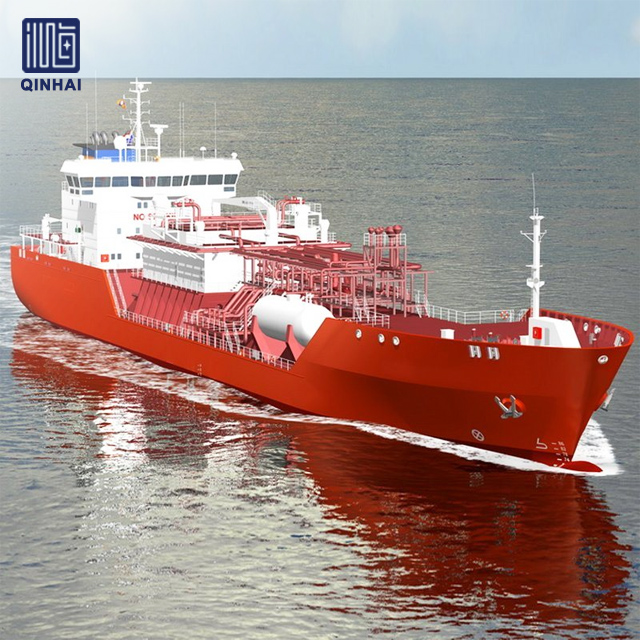
Evaluating the physical condition of a vessel requires a systematic breakdown into structural and mechanical zones. Relying solely on the seller's documentation or class certificates is a massive mistake. Buyers must hire an independent, accredited marine surveyor to conduct a comprehensive pre-purchase inspection. This physical validation identifies hidden defects, deferred maintenance, and potential structural failures that paper records often obscure.
The steel hull represents the most vital structural component of the vessel. Buyers must review the latest Ultrasonic Thickness Measurement (UTM) reports in detail. These reports quantify steel wastage and identify areas of localized corrosion. You need to look closely at the splash zone, ballast tanks, and underdeck plating. Extensive steel renewal requirements discovered after purchase will severely disrupt operational timelines and drain capital reserves.
Here is a checklist of critical structural areas surveyors must inspect:
For older tonnage approaching or exceeding 15 years of age, evaluating the Condition Assessment Programme (CAP) rating is mandatory. The CAP rating provides an independent evaluation of the vessel's structural fatigue, machinery condition, and remaining operational lifespan. A CAP 1 or CAP 2 rating is generally required by major charterers. The vessel's historical trading regions significantly impact long-term hull degradation. Vessels operating continuously in harsh ice-class environments or highly corrosive warm water trades exhibit different wear patterns.
The mechanical reliability of the main engine and auxiliary systems dictates the vessel's ability to maintain charter schedules. Surveyors must execute a strict checklist assessing the main engine, auxiliary generators, steering gear, and boiler systems. Reviewing maintenance logs, planned maintenance system (PMS) records, and recent overhaul reports provides insight into the crew's operational standards. High running hours without corresponding major overhauls indicate impending mechanical failures. Surveyors will physically inspect the crankcase for babbit metal shavings and review scavenge port inspection logs to determine cylinder liner wear.
You must assess the availability of OEM spare parts for the installed machinery. Purchasing a vessel with obsolete engine types or discontinued auxiliary equipment introduces severe operational risks. When critical components fail and spare parts are no longer readily available in the global supply chain, a seemingly affordable asset quickly turns into an unworkable liability. You will suffer from extended off-hire periods while waiting for custom-machined parts.
The efficiency of cargo operations directly impacts port turnaround times and voyage profitability. The pre-purchase inspection must rigorously evaluate cargo pumps, stripping systems, and manifold configurations. Surveyors check for seal leaks, abnormal vibration in pump bearings, and the integrity of the hydraulic or electric drive systems. Inefficient pumping systems lead to demurrage claims and dissatisfied charterers.
Cargo tank coatings demand equal scrutiny. The condition of epoxy or zinc silicate coatings determines the vessel's ability to carry specific grades of refined products without contamination. Surveyors use holiday detectors to find microscopic pinholes in the coating and visually inspect for blistering or flaking. Coating breakdowns necessitate complete tank blasting and recoating, a highly disruptive shipyard procedure. The Inert Gas System (IGS) must be fully operational and calibrated to ensure safe atmospheric control within the cargo tanks. This is a strict requirement for handling volatile crude and product grades.
Regulatory compliance extends far beyond basic legal requirements. In the maritime sector, compliance acts as the primary driver of a vessel's commercial viability. A technically sound vessel holds no commercial value if it fails to meet the strict vetting standards of major charterers or the environmental regulations enforced by international maritime authorities.
The Ship Inspection Report Programme (SIRE), administered by the Oil Companies International Marine Forum (OCIMF), governs charterer acceptance in the tanker market. A vessel's SIRE inspection history and its current approval status with major oil companies are critical evaluation metrics. Buyers must review past SIRE reports to identify recurring observations, crew competency issues, or systemic safety failures.
A history of severe observations or a recent vetting failure severely restricts the vessel's earning potential. Oil majors maintain strict risk matrices. If a vessel does not meet their vetting criteria, it is excluded from their supply chain. Rehabilitating a vessel's vetting record under new ownership requires significant time, rigorous crew training, and flawless subsequent inspections. You must factor this commercial downtime into your acquisition strategy.
International environmental regulations dictate the future trading lifespan of the global fleet. Buyers must assess the vessel's current compliance with the Energy Efficiency Existing Ship Index (EEXI) and its ongoing Carbon Intensity Indicator (CII) ratings. Vessels with poor CII ratings face mandatory operational restrictions. These include engine power limitations (EPL) or forced speed reductions, which negatively impact their commercial competitiveness.
Buyers must identify immediate retrofit liabilities. Purchasing a vessel that has not yet installed a compliant Ballast Water Treatment System (BWTS) requires immediate capital allocation and scheduled drydock time. You must determine if the vessel requires an ultraviolet (UV) or electro-chlorination system based on its ballast pump capacity. Understanding the vessel's compliance strategy regarding sulfur emissions is necessary for accurate voyage modeling. You need to know if the ship relies on exhaust gas cleaning systems (scrubbers) or low-sulfur fuel oil (VLSFO).
Classification Societies act as the regulatory backbone of vessel operations. Buyers must conduct a thorough audit of the vessel's Class records before committing to a purchase. This audit identifies any outstanding Conditions of Class (CoC) or memoranda. A CoC indicates a defect or non-compliance issue that the current owner has deferred. The new owner inherits these liabilities upon delivery.
The timing of the acquisition relative to the vessel's survey cycle significantly impacts initial capital requirements. Purchasing a vessel immediately prior to its 3rd or 4th Special Survey and Drydocking (SS/DD) guarantees heavy upcoming expenditures. These older surveys require extensive steel thickness measurements, major machinery overhauls, and mandatory drydocking. Buyers must negotiate the purchase price accordingly to offset these imminent regulatory expenses.
Evaluating an asset requires mapping the trade-offs between a lower upfront purchase price and the deferred capital expenditures required to bring the vessel up to optimal trading standards. A comprehensive financial assessment ensures that the buyer understands the true capital commitment required from the moment of delivery through the first operational cycle.
Current market timing and prevailing freight rates heavily influence acquisition strategies. When freight markets are strong, buying a used oil tanker for sale allows owners to capitalize on immediate earning opportunities, provided the asset is thoroughly vetted and ready to trade. Conversely, browsing various oil tankers for sale during market dips can yield favorable entry points for long-term fleet expansion.
Calculating the true initial cost of a secondhand vessel requires adding the baseline purchase price to all immediate required upgrades. Failing to account for these immediate capital expenditures results in severe cash flow disruptions during the first year of operation.
Common hidden capital expenditures include:
Initiating the acquisition process requires following standard maritime protocols. Whether working through specialized shipbrokers or communicating directly with shipyards, submitting a formal oil tanker price inquiry initiates the formal exchange of technical data. Buyers must present clear operational requirements and demonstrate readiness to proceed to the inspection phase.
During the inquiry phase, buyers must request specific mandatory documentation to conduct a preliminary desktop evaluation. Essential documents include the General Arrangement (GA) plan, the Capacity Plan, a recent Class printout detailing survey status, and the Q88 questionnaire. The Q88 provides a standardized summary of the vessel's particulars, vetting status, and technical specifications. This allows buyers to quickly determine if the asset warrants a physical inspection.
Acquiring a commercial tanker demands a rigorous, evidence-based approach where verified technical condition and strict regulatory compliance supersede baseline pricing. Overlooking structural defects or vetting histories leads to severe operational disruptions and commercial exclusion. You must systematically eliminate vessels with poor Class records, failing CAP ratings, or incompatible dimensions. Shortlisting should rely strictly on matching exact DWT, cargo handling equipment, and terminal restrictions to the intended trade route. Final acquisition decisions must always depend on the findings of an independent marine surveyor.
To finalize your acquisition strategy, execute the following steps:
A: A commercial tanker typically operates for 20 to 25 years. This lifespan depends heavily on the owner's maintenance standards, historical trading routes, and the vessel's ability to maintain favorable CAP ratings. Once a vessel exceeds 15 years, major oil companies enforce stricter vetting requirements, and Class surveys become significantly more demanding.
A: Product tankers carry refined petroleum products like diesel, gasoline, and jet fuel. They feature smaller, coated cargo tanks to prevent contamination and allow for easy cleaning between different cargo grades. Crude tankers are much larger, designed to carry unrefined crude oil in massive volumes. They typically have uncoated tanks and rely on extensive heating coil systems.
A: These classes are defined by their deadweight tonnage (DWT) and trade routes. Medium Range (MR) tankers range from 35,000 to 55,000 DWT and handle regional refined product distribution. Suezmax tankers range from 120,000 to 160,000 DWT, sized specifically to transit the Suez Canal. VLCCs range from 200,000 to 320,000 DWT and dominate long-haul crude trades.
A: An independent surveyor conducts a comprehensive physical inspection of the vessel's structural and mechanical condition. They evaluate hull integrity, review ultrasonic thickness measurements, inspect cargo tanks and coatings, test cargo pumps, and assess the main engine and auxiliary machinery. They also review maintenance logs and Class records to identify deferred maintenance.
A: SIRE vetting determines a vessel's commercial viability. Major oil companies use SIRE reports to assess risk before chartering a vessel. If a secondhand tanker has a history of severe SIRE observations or recent vetting failures, charterers will reject it. Rehabilitating a poor vetting record is difficult, leaving the vessel unemployable in the premium market.
A: Before advancing an inquiry, buyers should request the General Arrangement (GA) plan, the Capacity Plan, a recent Class printout, and the Q88 questionnaire. The Q88 is particularly important as it standardizes vessel particulars, vetting history, and technical specifications, allowing buyers to quickly assess if the vessel meets their operational and compliance requirements.


