
Views: 0 Author: Site Editor Publish Time: 2026-09-19 Origin: Site


An oil tanker’s profitability and navigational safety depend directly on its draft. This measurement fluctuates continuously based on cargo load, fuel levels, and ballast water. Understanding how oil tanker draft responds to these variables dictates safe operations. Vessel operators face a constant friction point. They must maximize cargo payload—Deadweight Tonnage (DWT)—without exceeding the maximum allowable draft of destination ports, canals, or inland waterways. Overloading introduces severe risks like grounding, hull damage, and regulatory penalties. Underloading compromises voyage economics, leaving revenue behind. Mitigating these risks requires aligning operational route constraints with precise oil tanker technical specifications during the procurement and design phase. By mastering the hydrostatic principles at play, operators select the right hull form and capacity to navigate specific routes profitably.
The relationship between a cargo load and the waterline is governed by Archimedes' principle of buoyancy. When you pump crude oil or refined petroleum into the cargo tanks, the downward force of that weight pushes the hull deeper into the water. The vessel must displace a volume of water equal to the exact weight of the loaded cargo to remain afloat. The rate at which the hull sinks is not a guessing game; it is a precise mathematical calculation dictated by the hull's geometry at the waterline.
Shipyards provide a comprehensive hydrostatic booklet for every constructed hull. The chief mate relies heavily on the Tons per Centimeter Immersion (TPC) curve within this booklet. TPC dictates exactly how many metric tons of weight you must load to sink the vessel by one single centimeter. Because a ship's hull is shaped with curves and flares rather than straight vertical walls, the waterplane area expands as the draft increases. Consequently, the TPC value changes depending on how deep the ship is already sitting. You cannot use the same TPC value for an empty ship as you would for a fully loaded one.
| Mean Draft (Meters) | Displacement (Metric Tons) | TPC (Tons per Centimeter) |
|---|---|---|
| 4.00 | 2,550 | 12.4 |
| 4.50 | 3,180 | 13.2 |
| 5.00 | 3,860 | 14.1 |
Draft management escalates in complexity during dynamic loading operations at high-volume pipeline terminals. When a vessel connects to a major inland hub or a Gulf Coast refinery network, the transfer rates are massive. Thousands of barrels per hour blast through the manifold into the cargo tanks. The displacement increases rapidly, and the hull sinks visibly by the minute. If the terminal berth has a shallow mudline or strict tidal windows, the margin for error drops to zero.
You cannot simply watch the water creep up the painted numbers on the hull. A strict, procedural approach to draft monitoring is required to prevent the keel from touching the seabed. Grounding during loading ruptures the hull plates and triggers catastrophic environmental spills.
Operators must separate the concept of Lightship weight from Deadweight Tonnage (DWT) to understand their actual earning capacity. Lightship weight is the dead iron. It includes the steel hull, the main engine, the piping systems, and permanent outfitting. It excludes all cargo, fuel, ballast water, and crew. The draft of the vessel in this completely empty state is the Lightship draft, representing the absolute minimum depth the vessel requires to float.
Deadweight Tonnage (DWT) is the money-maker. It represents the absolute maximum weight the ship can legally and safely carry. DWT includes the commercial cargo payload, but it also includes the heavy fuel oil (bunkers), fresh water, and provisions required for the voyage. The transition from the Lightship draft down to the Summer Load Line draft represents your total capacity. Every ton of excess bunker fuel or unnecessary ballast water you carry directly steals a ton of capacity from your paying cargo.
Draft calculations rely heavily on environmental variables, primarily water density. Saltwater is dense, typically measuring 1.025 metric tons per cubic meter. Freshwater is lighter, measuring 1.000 metric tons per cubic meter. Because saltwater provides more buoyancy, a vessel will sit higher in the open ocean than it will in an inland river port, even with the exact same cargo load.
When a fully loaded tanker navigates from a saltwater environment into a freshwater channel, it loses buoyancy and sinks deeper. Navigators must calculate the Freshwater Allowance (FWA) to predict this exact draft increase. Failing to apply the FWA means the vessel will likely drag its keel across the riverbed. Seasonal temperature variations also alter water density. Cold water is denser than warm water, which is why international regulations enforce different maximum draft marks for winter and tropical zones.
Selecting the correct hull requires matching the vessel's engineering to the physical realities of the operating environment. Different capacities utilize distinct hull forms and draft profiles to achieve their commercial goals.
The 1000 ton small oil tanker is built specifically for environments where water depth is the primary operational barrier. These vessels dominate coastal bunkering operations, inland waterway transport, and fuel delivery to remote island communities. Their operational success depends entirely on maintaining a maximum loaded draft under 4 to 5 meters. This shallow profile allows them to clear river sandbars and access secondary ports that larger ships cannot approach.
To maximize cargo capacity while keeping the draft minimal, naval architects design these tankers with a flat-bottom hull and a very high block coefficient. They resemble a steel box with a shaped bow. This geometry distributes the displacement over a massive surface area. Because these vessels frequently operate in tidal ports, they are equipped with high-capacity cargo pumps. They must discharge their payload rapidly and depart the berth before the tide drops and traps them in the mud.
The 3000 DWT oil tanker ship serves as the workhorse for regional distribution and short-sea shipping. It provides a strategic middle ground between commercial volume and navigational flexibility. These vessels carry a highly profitable payload while maintaining a draft profile that allows entry into the vast majority of regional commercial ports, bypassing the need for deep-water terminals.
Evaluation in this category focuses on the draft-to-cargo ratio. The hull lines on a 3000 DWT vessel are finer and more optimized than the blocky 1000-ton barges. This reduces hydrodynamic drag, saving significant fuel during continuous coastal transits. The structural integrity of the hull is heavily reinforced to withstand the dynamic stresses of the frequent loading and discharging cycles that define regional distribution routes.
For complex offshore operations, ship-to-ship (STS) transfers, or ports lacking shore-based infrastructure, a 5000 DWT custom oil tanker with crane delivers specialized capabilities. The inclusion of heavy deck machinery fundamentally alters the vessel's hydrostatic behavior and stability requirements.
The topside weight of a heavy-duty deck crane raises the vessel's center of gravity significantly. When the crane swings a heavy cargo hose or equipment over the side of the ship, it generates a massive heeling moment. To counteract this and maintain stability, the hull requires a wider beam. Furthermore, operators must employ highly precise ballast management. They must actively pump water between tanks to keep the vessel on an even keel during lifting operations, ensuring the draft remains within safe limits despite the asymmetrical load distribution.
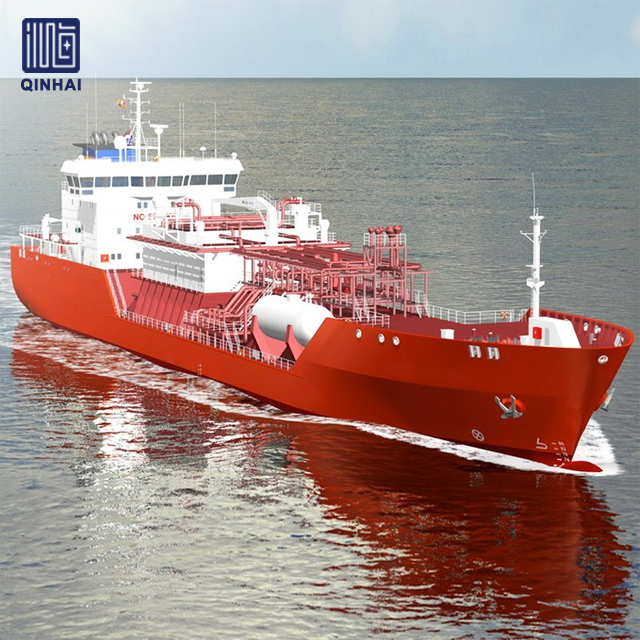
Procuring the right vessel starts with a ruthless assessment of your intended transit routes. You must map the maximum operational draft of the proposed vessel against the absolute shallowest points of your channels. This means analyzing river bars, canal locks, and low-tide port approaches. A ship that performs flawlessly in the open ocean is a liability if it cannot clear the sandbar at its primary discharge terminal.
This assessment must incorporate strict Under Keel Clearance (UKC) policies. UKC is the mandatory vertical distance between the lowest point of the ship's keel and the seabed. Maritime authorities enforce UKC margins to prevent grounding from tidal drops, wave action, or the squat effect—where a ship sinks deeper into the water as it moves forward. If a port has a depth of 10 meters and mandates a 10% UKC, your absolute maximum allowable draft is 9 meters. Your cargo load must be restricted to meet this exact limit.
Executing this procurement strategy requires partnering with a highly capable shipyard. When evaluating an oil tanker manufacturer in China, you must look past basic capacity metrics and focus on engineering execution. The yard must possess a proven track record of building vessels that comply with strict IACS (International Association of Classification Societies) standards, such as ABS, DNV, or Lloyd's Register. IACS compliance is mandatory for international operations and securing marine insurance.
The shipyard must demonstrate the ability to customize hull lines. If you require a shallow draft, they must prove they can engineer flat-bottom hulls without inducing structural warping during the welding process. Quality assurance is paramount. The yard must conduct rigorous inclining experiments before delivery to determine the exact center of gravity. If they provide inaccurate hydrostatic tables, your crew will calculate the draft incorrectly for the entire 25-year lifespan of the vessel.
Accurate draft measurement forms the foundation of safe cargo operations. Relying solely on visual draft mark readings introduces massive risk. Wave action, choppy waters, and poor terminal lighting make it nearly impossible to read the painted numbers accurately. A 10-centimeter reading error on a large hull means hundreds of tons of cargo are unaccounted for, leading to severe overloading.
Submerging the applicable Load Line, known as the Plimsoll mark, violates international maritime law. This mark dictates the maximum legal draft for various water densities and seasonal zones. If Port State Control finds a vessel overloaded, they will detain the ship immediately. This invalidates classification certificates and causes P&I clubs to drop insurance coverage, exposing operators to massive financial penalties.
Strict adherence to load planning software, commonly called a Loadicator, mitigates this risk. The chief officer feeds real-time tank sounding data into the Loadicator to simulate the entire loading sequence. The software calculates the exact draft, trim, and structural stresses at every stage of the voyage, accounting for the specific gravity of the cargo and the density of the water at the loading port.
Ballast water adjusts the vessel's draft, trim, and structural stresses when it is not fully loaded. Improper de-ballasting during cargo operations presents a severe hazard. If you load heavy crude oil faster than you pump out ballast water, the vessel's draft increases rapidly, risking grounding at the berth.
Incorrect distribution of ballast and cargo induces dangerous longitudinal stresses on the hull. Loading the middle tanks while leaving the ends empty causes sagging. Loading the ends while leaving the middle empty causes hogging. Tankers utilize automated ballast control systems synchronized with the cargo loading rates. The loading plan details exactly which ballast tanks to strip simultaneously with the filling of specific cargo tanks, keeping the hull straight and the draft within safe parameters.
Maximizing operational profitability requires balancing your cargo load against strict water density and vessel design limits. To execute a successful vessel procurement strategy based on your specific route constraints, follow these immediate steps:
A: You calculate draft changes using the Tons per Centimeter (TPC) immersion metric located in the vessel’s hydrostatic tables. Divide the total weight of the cargo being loaded by the TPC value at your current draft. This gives you the exact number of centimeters the hull will sink.
A: Displacement represents the total actual weight of the ship and everything inside it, matching the volume of water it displaces. Deadweight Tonnage (DWT) measures only the carrying capacity. DWT includes commercial cargo, fuel, ballast, and fresh water, but excludes the weight of the empty steel hull.
A: Freshwater has a lower density than saltwater, offering less buoyancy. When a tanker transitions from the ocean into a freshwater river, it sinks deeper into the water. Navigators apply the Freshwater Allowance (FWA) calculation to predict this exact draft increase and avoid bottoming out in shallow inland ports.
A: The Plimsoll Line is an internationally mandated set of steel markings welded midships on the hull. It dictates the maximum legal draft for the vessel. These marks provide different loading limits based on water density and specific seasonal geographic zones to ensure adequate freeboard and stability.
A: Yes. Naval architects reduce draft by modifying the hull geometry. Increasing the beam or maximizing the block coefficient creates a flatter, wider bottom. This distributes the vessel's displacement over a much larger surface area, allowing it to carry a 5000 DWT payload at a significantly shallower draft.
A: Buyers must provide exact operational parameters to the shipyard. You need to specify the target Deadweight Tonnage (DWT), the absolute maximum allowable draft for your routes, intended cargo types, specific environmental conditions, and the required International Association of Classification Societies (IACS) standards.


