
Views: 0 Author: Site Editor Publish Time: 2026-09-02 Origin: Site


Selecting a shipyard dictates the success or failure of your entire newbuild project. This single decision locks in your capital expenditure, delivery timeline, and the vessel's lifetime operational efficiency. Poor shipyard selection introduces severe systemic risks that owners cannot afford. You might face delayed delivery schedules, substandard steelwork, or the financial insolvency of a yard mid-build, which can completely freeze your asset on the slipway. Mitigating these risks requires a rigorous, evidence-based evaluation framework. You must move past baseline cost estimates and glossy brochures. Instead, assess technical specialization, financial health, project management infrastructure, and post-delivery support. A yard that builds excellent tugs might fail miserably at constructing a chemical tanker. This guide breaks down the exact steps to evaluate facilities, structure contracts, and protect your investment from keel laying to final delivery.
Before approaching any shipyard, you must establish strict success criteria. Finalize your vessel's operational profile. Determine exact capacity requirements. Select your target Classification Society early in the process. These baseline metrics filter out unqualified yards immediately. Never approach a yard with vague specifications. Ambiguity leads to inaccurate cost estimations. It gives the yard room to substitute inferior materials later during the build phase.
To establish a solid foundation, define these parameters before sending out any inquiries:
Evaluate whether your operational profile requires a bespoke custom design. Custom builds offer maximum operational flexibility. However, they introduce significant engineering risks. They require longer lead times for design approval and tank testing. Alternatively, consider a shipyard's existing pre-engineered platform. Adapting a proven series design saves time. It reduces engineering overhead and lowers overall construction costs. The yard already understands the fabrication sequence for their standard hulls.
| Build Strategy | Advantages | Disadvantages |
|---|---|---|
| Custom Design | Exact match to operational needs, optimized cargo capacity, owner retains intellectual property. | Longer engineering phase, higher tank testing costs, increased risk of fabrication delays. |
| Series/Platform Build | Proven hull form, faster delivery, pre-approved by Classification Societies. | Limited flexibility for modifications, potential compromises on specific operational needs. |
Design ownership presents another trade-off. Bringing a fully mature, independent design gives you total control. You own the intellectual property. You can tender the design to multiple yards for competitive bidding. Utilizing a shipyard's proprietary hull design binds you to that specific facility. It limits your leverage during contract negotiations. However, proprietary designs often carry pre-approval from major Classification Societies, accelerating the initial engineering phase.
You must also establish the financial threshold for a newbuild. Compare the projected build cost against existing assets. Sometimes, evaluating commercial vessels for sale on the secondhand market makes more sense. A newbuild requires a two-year capital lockup. Secondhand vessels offer immediate operational deployment. Only proceed with a newbuild when specific operational requirements cannot be met by existing tonnage.
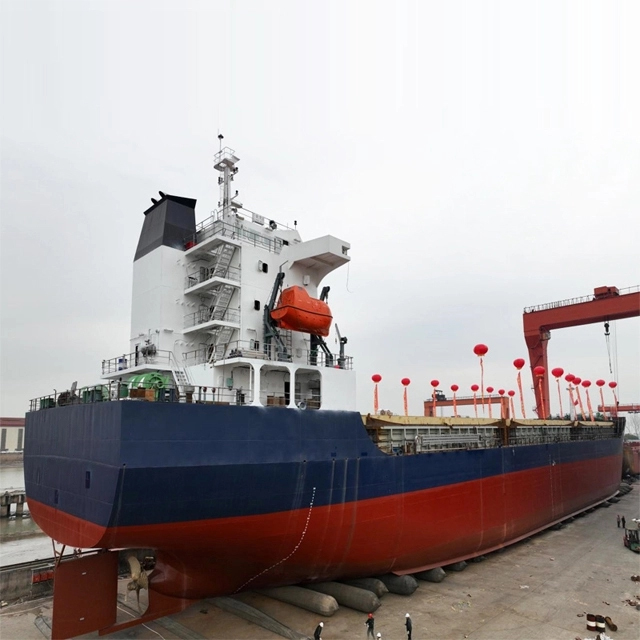
A shipyard's reference list requires intense scrutiny. Demand a list of vessels delivered within the last five years. These vessels must match your exact specifications. Generalist yards often claim they can build anything. This is a dangerous assumption. Specific vessel types require dedicated infrastructure and specialized engineering knowledge.
When evaluating yards for LCT cargo vessel types, focus on shallow draft hydrodynamics. Landing Craft Tanks operate in austere environments. The yard must demonstrate expertise in reinforced ramp construction. They must understand localized structural reinforcements. Heavy deck loads from tracked vehicles cause severe stress. The yard's welding procedures must account for these concentrated load paths. Ask for specific case studies of previous LCT deliveries. Check their experience with high-tensile steel in the ramp hinge areas.
Building large bulkers requires massive industrial scale. For bulk carrier vessel types, evaluate the yard's steel processing capacity. Look for automated panel lines and submerged arc welding capabilities. Precision is mandatory for long continuous welds. Verify large-scale drydock availability. Panamax or Capesize dimensions require massive basin infrastructure. The yard must also demonstrate proficiency in hatch cover fabrication and alignment. Poor hatch cover installation leads to water ingress and cargo damage. Inspect their block assembly areas to ensure they can handle 200-ton to 500-ton mega-blocks without distortion.
Tanker construction introduces severe regulatory and safety requirements. Yards building oil tanker ship types must handle complex piping systems. They need proven experience with hazardous area compliance. EX ratings for electrical equipment are non-negotiable. Scrutinize their advanced cargo tank coating applications. Epoxy and zinc coatings require strict climate-controlled application environments. The yard must also flawlessly integrate stringent inert gas systems (IGS) and deep-well pumps. Tanker builds leave zero room for fabrication errors. Review their Performance Standard for Protective Coatings (PSPC) compliance records.
Understanding how to choose a shipyard requires a deep dive into three main pillars. You must audit technical capacity, financial health, and quality assurance protocols.
Ensure the facility possesses a true newbuild DNA. Newbuilds rely on process, control, and predictable fabrication. Refit yards often attempt to take on complex newbuild projects to fill excess capacity. This rarely ends well. Refit yards lack the sequential manufacturing flow required for efficient block assembly. They struggle with the logistics of moving thousands of tons of steel through a structured production line.
Assess the facility's physical limitations. Verify drydock dimensions and slipway gradients. Check the maximum crane safe working loads (SWL). Crane capacity dictates the block-build strategy. If a yard can only lift 100-ton blocks, they must build more blocks. More blocks mean more welding, higher distortion risks, and longer assembly times. Evaluate their block turning capabilities to ensure downhand welding is maximized.
Identify potential production bottlenecks. Evaluate the yard's throughput capacity. Check their daily steel cutting rates and automated plasma cutting precision. Inspect the block assembly areas. Verify outfitting quay availability. A yard might build the hull quickly but stall during outfitting due to limited quay space. Ensure their infrastructure aligns with your proposed delivery timeline.
Yard insolvency is the greatest threat to your project. Conduct exhaustive financial due diligence. Audit the yard's balance sheet for the past three years. Analyze their order book depth. A yard with no other orders might struggle with cash flow. A yard with too many orders might delay your vessel. Review their current debt obligations and credit ratings.
Refund Guarantees (RGs) are absolutely mandatory. RGs protect your milestone payments if the yard defaults or goes bankrupt. These guarantees must be issued by internationally recognized Tier-1 banks. Never accept an RG from a local, unrated financial institution. If the yard fails, you need immediate, uncontested access to your capital to restart the project elsewhere.
Assess the yard's working relationship with major Classification Societies. Look for integration with IACS members like DNV, ABS, or Lloyd's Register. Review their history of passing class surveys. Yards with frequent major corrective actions pose a high risk. They will delay your delivery schedule.
Verify the yard's familiarity with your intended Flag State regulations. They must also demonstrate capacity to implement emerging environmental standards. Ask about their readiness for EEDI and EEXI compliance. Check their experience with alternative fuel integrations, such as LNG or methanol readiness.
Scrutinize internal QA/QC processes. Request their quality control manuals. Focus specifically on non-destructive testing (NDT) procedures. Radiographic Testing (RT) and Ultrasonic Testing (UT) must be rigorous and documented. Evaluate their dimensional control protocols during block assembly. Poor dimensional control leads to massive rework during hull erection on the slipway.
Location dictates supply chain efficiency and overall project risk. Partnering with a reputable China commercial vessel supplier offers distinct strategic advantages. Chinese shipyards provide massive economies of scale. They offer aggressive pricing structures. Most importantly, they possess deep integration with global marine equipment supply chains. This proximity reduces equipment transit times and accelerates build schedules.
However, you must evaluate regional risk factors regardless of location. Factor in import tariffs for owner-furnished equipment. Monitor currency fluctuations, which can drastically alter final costs if contracts are not hedged properly. Assess intellectual property protection laws in the host country. Calculate the logistical costs of stationing an owner's site team abroad for two years.
Communication and cultural alignment directly impact project success. Assess the yard's project management communication style. Verify language proficiency among their engineering teams. Demand transparent reporting mechanisms. Managing builds across different time zones requires clear, unambiguous daily communication. Misunderstandings lead to costly fabrication errors.
Maker's List flexibility is a major negotiation point. The Maker's List defines the approved manufacturers for onboard equipment. Shipyards often push for domestic equivalents to maximize their profit margins. You must retain the right to specify main machinery. Insist on your preferred brands for main engines, propulsion systems, and navigation electronics. Do not compromise on equipment that dictates vessel reliability.
Even with the right shipyard, execution risks remain. You must enforce strict contractual safeguards and deploy aggressive site supervision.
Standard shipbuilding contracts heavily favor the builder. You must amend SAJ or BIMCO forms to protect your interests. Structure milestone payments to maintain financial leverage throughout the build. A standard structure includes 20% at contract signing. Pay 20% at steel cutting. Pay 20% at keel laying. Pay 20% at launching. Reserve the final 20% for successful delivery. Never front-load payments.
Define and enforce strict liquidated damages. Penalize the yard for late delivery on a per-day basis. Enforce penalties for speed deficiencies discovered during sea trials. Apply deductions for fuel consumption excesses. Penalize deadweight shortfalls. These clauses force the yard to prioritize your vessel's performance metrics. Ensure force majeure clauses are tightly defined to prevent the yard from using generic excuses for delays. Specify a neutral arbitration venue, such as London or Singapore, for dispute resolution.
Deploy an experienced owner's representative team. This is an absolute necessity. Your on-site supervision team monitors daily progress. They approve workshop drawings. They witness tests and NDT inspections. A strong site team requires a dedicated hull inspector, a machinery inspector, and a specialized coating inspector. They prevent yards from cutting corners.
Establish a rigid change order management framework. Design modifications happen during any build. However, yards often use change orders to artificially inflate profit margins. They use them to justify extending delivery dates. Require written approval for all cost and schedule impacts before any modification begins.
Evaluate the yard's framework for post-delivery warranty support. The first year of operation always reveals minor defects. Assess their global service network. Verify their responsiveness to warranty claims. A yard that ignores post-delivery defects will severely impact your vessel's early operational availability.
Choosing a shipyard is fundamentally an exercise in risk management. You must constantly balance CapEx savings against technical execution capabilities. Financial security and lifecycle support must outweigh initial price tags. Follow a strict shortlisting logic. Define your exact vessel type first. Filter candidates by their proven track record with that specific hull form. Audit their financial health rigorously. Assess their physical infrastructure and production bottlenecks. Finally, negotiate strict contractual terms that protect your capital.
To move your newbuild project forward, execute the following steps:
A: The most important factors are financial stability, a specific vessel-type track record, and dedicated newbuild infrastructure. A yard must have proven experience building your exact vessel type within the last five years. Furthermore, they must possess the financial health to secure Refund Guarantees from Tier-1 banks.
A: You must conduct exhaustive financial due diligence. Demand audited financial statements from the past three years. Analyze their current order book depth and debt obligations. Most importantly, require the issuance of a Refund Guarantee from an internationally recognized Tier-1 bank to protect your milestone payments.
A: Yes, but it introduces engineering integration challenges. Custom independent designs give you total control and ownership. However, utilizing a shipyard's standard series design often saves time and reduces engineering risks. The yard already understands the fabrication sequence for their proprietary platforms.
A: A Maker's List is a contractual document defining the approved manufacturers for all onboard equipment and machinery. It prevents the shipyard from substituting inferior or unproven domestic equivalents for main systems like engines, generators, and navigation electronics.
A: Timelines vary by vessel complexity and shipyard capacity. Generally, a commercial vessel takes 18 to 36 months from contract signing to delivery. This timeline factors in design approval, steel cutting, block assembly, outfitting, and comprehensive sea trials.
A: If you secured a Refund Guarantee (RG) from a Tier-1 bank, your milestone payments are protected and refunded. Additionally, strong shipbuilding contracts include title transfer clauses, granting you ownership of the steel and equipment already fabricated or purchased for your vessel.


