
Views: 0 Author: Site Editor Publish Time: 2026-09-11 Origin: Site


The maritime industry abandoned single-hull vessels for a clear reason: environmental protection and structural survivability. Today, the double hull oil tanker is the mandatory standard for liquid bulk transport. Fleet operators and marine procurement officers face a specific challenge. You must meet strict international environmental regulations while managing capital expenditure, heavy maintenance schedules, and precise tonnage requirements for fleet expansion. Understanding the structural mechanics, regulatory mandates, and operational realities of these vessels is necessary. This knowledge lets you evaluate shipyard capabilities and define exact specifications for custom new builds. We will break down the engineering behind the hull-within-a-hull configuration, detail mandatory compliance requirements, and provide field-tested insights for sourcing the right vessel to match your operational routes.
Defining success criteria for tanker survivability requires analyzing how a vessel behaves during grounding or collision events. When a ship strikes a reef or collides with another vessel, the primary goal is to prevent the breach of the internal cargo containment system. The structural integrity of the hull must absorb massive amounts of kinetic energy without allowing the penetrating object to compromise the inner boundary.
The defining feature of this vessel class is the spatial buffer separating the outer steel shell from the inner cargo tank boundary. This void space typically measures between 1 to 3 meters wide. The exact width depends heavily on the vessel's overall dimensions and its designated deadweight tonnage. Naval architects design the outer shell plating to absorb the initial kinetic energy of a strike. As the outer steel deforms and fractures, the structural web frames within the void space buckle, dissipating the impact force.
This engineered crumple zone prevents the penetrating object from reaching the inner cargo boundary. We see this consistently in grounding incidents where the outer bottom plating tears across coral or rock, yet the inner bottom remains intact, containing the liquid bulk entirely. Statistical data from maritime casualty reports confirms this configuration is highly effective. It drastically reduces the number of spills and minimizes mean outflow values during low-to-medium energy grounding or collision incidents.
However, structural limitations remain. Catastrophic, high-energy impacts involving perpendicular strikes at high speeds can still breach both hull layers. Despite this, the double-hull design significantly mitigates the severity of the outflow compared to legacy single-hull configurations. The sequence of a low-energy impact demonstrates the design's effectiveness:
Naval architects utilize the expansive void space between the two hulls to house segregated ballast tanks (SBT). This dedicated space ensures that ballast water never mixes with cargo residue. It completely eliminates the need to pump oil-contaminated water into the ocean during de-ballasting operations, solving a major environmental issue of the past. The piping systems for the ballast and cargo are entirely separate, preventing any accidental cross-contamination during loading or discharge sequences.
This configuration fundamentally alters the vessel's center of gravity and overall stability profile. The distribution of ballast weight along the bottom and sides of the ship lowers the center of gravity, which improves intact stability during transit. Furthermore, damage stability profiles benefit immensely from this layout. If the outer hull breaches during a grounding, seawater floods the segregated ballast space rather than the cargo hold.
This controlled flooding helps maintain vessel buoyancy and prevents catastrophic listing. It gives the crew vital time to respond to the emergency, assess the damage, and initiate salvage operations. The double-hull design inherently provides a higher margin of safety regarding reserve buoyancy compared to older single-hull designs.
International maritime law dictates baseline oil tanker technical specifications to ensure uniform safety across global fleets. Operating a vessel that falls short of these standards results in denied port entries, uninsurable assets, and severe legal penalties.
The legislative push for enhanced maritime safety gained unstoppable momentum following the Exxon Valdez incident. The United States quickly enacted the Oil Pollution Act of 1990 (OPA 90), which mandated double hulls for all vessels operating within its territorial waters. Subsequently, the International Maritime Organization (IMO) adopted sweeping amendments to MARPOL Annex I in 1992 and 1995. These international regulations made double-hull construction mandatory for all new builds globally.
The IMO established a strict, timeline-driven phase-out program for existing single-hull tonnage, which has now concluded, making single hulls obsolete for international trade. The regulations specify precise dimensions for bottom and wing tanks based on the vessel's deadweight tonnage. For example, MARPOL Annex I Regulation 19 dictates specific mathematical formulas to calculate the minimum width of the wing tanks and the minimum height of the double bottom. These formulas ensure the protective buffer scales appropriately with the volume of hazardous cargo carried. Compliance with MARPOL Annex I is non-negotiable for any vessel engaged in international liquid bulk transport.
Constructing a compliant vessel requires rigorous, independent oversight. The International Association of Classification Societies (IACS) plays a pivotal role in verifying structural integrity from the initial design phase through to final delivery. Surveyors from societies like DNV, ABS, or Lloyd's Register monitor the entire construction process on the shipyard floor. They do not simply review paperwork; they conduct physical inspections of the steel fabrication.
Surveyors inspect steel grades to ensure adequate tensile strength, verifying the use of AH36 or DH36 high-tensile steel where specified in the blueprints. They verify welding standards using Non-Destructive Testing (NDT) methods, including ultrasonic testing (UT) and radiographic testing (RT), to detect subsurface flaws in the weld seams. They ensure the hull geometry matches the approved blueprints exactly. Achieving class certification is mandatory for securing maritime insurance and obtaining port state control clearances.
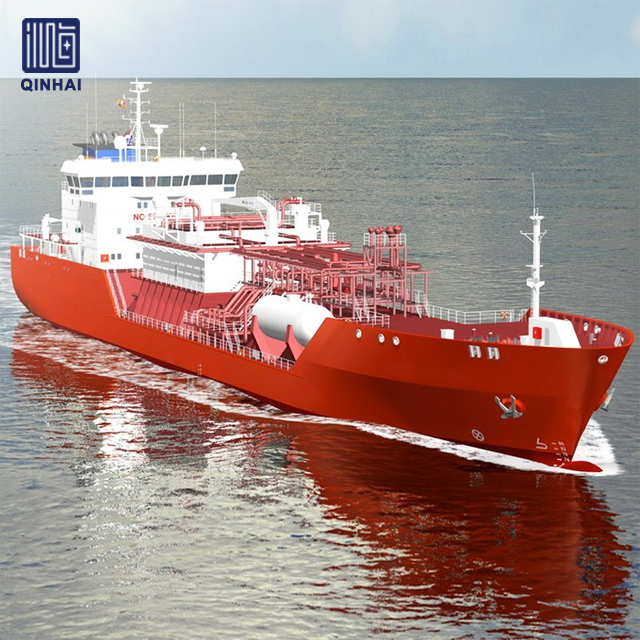
Fleet managers must balance environmental safety with maintenance overhead and operational efficiency. The double-hull configuration introduces specific advantages but also presents distinct lifecycle challenges that operators must manage proactively to ensure profitability.
A major operational advantage stems directly from the relocation of the vessel's structural framing. In legacy single-hull designs, internal frames, webs, and stiffeners protruded into the cargo space. In modern designs, all structural framing resides entirely within the double-hull ballast space. Consequently, the inner cargo tanks feature completely smooth surfaces, free from structural obstructions.
These smooth bulkheads facilitate much faster cargo discharge. They reduce oil residue buildup in corners and crevices, minimizing clingage. Internal cargo tank cleaning becomes significantly easier, requires fewer chemicals, and takes less time. Stripping pumps operate more efficiently on flat bottom plates, allowing the crew to pump out nearly all the cargo. This efficiency translates directly into faster port turnarounds, reduced time at the terminal, and improved overall vessel utilization rates. The smooth tanks also make it easier to switch between different grades of cargo with minimal cross-contamination risk.
The void space between the hulls creates a challenging micro-environment. High humidity, constant saltwater exposure during ballasting, and temperature differentials between the cold ocean and heated cargo accelerate steel degradation. Protecting this confined space from internal corrosion is critical for maintaining the vessel's structural integrity over its 20-to-25-year lifespan. If the steel thickness diminishes beyond class allowances, the vessel must undergo expensive steel renewal.
Shipyards apply high-grade Performance Standard for Protective Coatings (PSPC) systems to the ballast tanks. These specialized epoxy coatings form a dense, impermeable barrier against the corrosive environment. The application process requires strict climate control, surface preparation to Sa 2.5 standard, and precise dry film thickness (DFT) measurements. Additionally, engineers install sacrificial anodes throughout the void spaces. These zinc or aluminum blocks corrode preferentially. They draw oxidation away from the critical steel structure through galvanic action, preserving the hull plating and internal framing.
Navigating and inspecting the confined spaces of a double hull presents significant logistical challenges for crew and class surveyors. Personnel must crawl through narrow access hatches and negotiate complex framing structures to assess coating conditions and check for micro-fractures. The sheer surface area of steel inside the ballast tanks is massive, often double that of a single-hull vessel of the same size.
These rigorous maintenance requirements directly impact dry-docking schedules. Extended inspection times increase labor costs and extend off-hire periods. Before any inspection, the crew must perform extensive gas-freeing and ventilation procedures to ensure the atmosphere inside the ballast tanks is safe for human entry. Fleet operators must factor these lifecycle costs into their long-term financial planning. Proper maintenance of the ballast space coatings remains the single most critical factor in extending the vessel's operational lifespan and avoiding premature steel renewal during Special Surveys.
Double-hull requirements apply across various vessel classes, from massive Very Large Crude Carriers (VLCCs) to small coastal tankers. Operators must match the specific build size and equipment to their precise operational demands to maximize return on investment.
Regional operators frequently require vessels optimized for coastal transport, island supply routes, and short-sea shipping. A 3000 DWT oil tanker ship perfectly serves this specific use case. It navigates draft-restricted ports and narrow inland waterways with ease, accessing terminals that larger vessels cannot reach. This size balances payload capacity with the agility required for high-frequency port calls.
Key technical specifications for this class include a shallow draft double-hull design, typically operating at a draft between 4.5 and 5.5 meters. They require optimized, high-capacity pumping systems, such as twin screw pumps or deep-well centrifugal pumps, for rapid discharge at smaller terminals. Enhanced maneuverability features, such as powerful bow thrusters and high-lift rudders, are essential for navigating tight harbor confines without tug assistance. The propulsion system often utilizes medium-speed diesel engines optimized for frequent speed changes and maneuvering.
For more versatile operations, offshore platform support, and heavier regional transport, a larger platform is necessary. A 5000 DWT custom oil tanker with crane provides substantial cargo volume while adding critical operational flexibility. The integration of heavy-duty deck cranes facilitates hose handling, provisions loading, and offshore equipment transfer. This vessel type is highly sought after for operations in areas where shore-side infrastructure is limited, allowing the ship to load and discharge autonomously.
Naval architects carefully design the crane foundations to ensure they do not compromise the double-hull structural integrity. The reinforced deck plating, often utilizing thicker insert plates, transfers the dynamic lifting loads safely into the primary hull structure. The cranes typically feature a Safe Working Load (SWL) of 3 to 5 tons at an outreach of 15 meters, providing ample capacity for handling heavy cargo hoses and lifting supplies from supply boats.
Bunkering operations demand highly specialized equipment and precise vessel handling. A custom oil tanker refueling vessel executes ship-to-ship (STS) fuel transfers safely and efficiently in open water or busy anchorages. The double-hull design provides the necessary environmental protection during these high-risk transfer operations, where the vessels are moored alongside each other.
Specific design requirements include high-capacity Coriolis mass flow meters for accurate custody transfer of marine fuels, ensuring precise billing and inventory management. Advanced pneumatic fendering systems, such as Yokohama fenders, protect both vessels from impact damage during alongside operations. Specialized manifold configurations integrate directly into the double-hull framework. These manifolds ensure secure hose connections, accommodate various receiving ship layouts, and feature closed loading systems with vapor return lines to prevent harmful emissions during the transfer process.
Selecting the right shipyard mitigates implementation risks, prevents costly delays, and ensures the final vessel meets all regulatory and operational standards. A poorly constructed hull will plague the operator with maintenance issues for decades.
Asian shipyards dominate global tanker construction due to their vast infrastructure, economies of scale, and highly experienced workforce. When evaluating a China oil tanker supplier, operators must assess several critical factors beyond the initial bid price. You must look at their physical infrastructure and their quality control processes.
Review their historical track record with delivering IACS class vessels. Inspect their steel fabrication tolerances and their use of automated welding techniques, such as submerged arc welding (SAW) on panel lines, which provides superior weld consistency compared to manual welding. Evaluate their coating application facilities. Climate-controlled painting halls are absolutely essential for proper PSPC application, as humidity and temperature directly affect coating adhesion. Financial stability is also paramount to ensure the yard can procure materials and complete the project without halting production due to cash flow issues.
The construction timeline requires careful management and strict oversight. The process moves from initial design approval and steel cutting to keel laying, block assembly, launching, outfitting, and finally sea trials. Employing independent third-party surveyors during the construction of the double hull is crucial to protect your investment.
These inspectors represent the owner's interests on the shipyard floor. They verify that every weld, structural alignment, and coating application meets the strict specification compliance required by the classification society. Catching fabrication errors during block assembly is significantly cheaper and faster than attempting to rectify structural issues after the hull is fully welded on the slipway. A rigorous inspection protocol ensures the vessel matches the agreed specifications upon delivery.
| Construction Phase | Primary Activities | Key Inspection Points |
|---|---|---|
| Design & Plan Approval | Finalizing blueprints, structural calculations, equipment selection | Class society review of hull strength and stability data |
| Steel Cutting & Fabrication | CNC plasma cutting of steel plates, sub-assembly welding | Material traceability, edge preparation, initial weld quality |
| Block Assembly & Coating | Joining sub-assemblies into large blocks, blasting, painting | Dimensional control, NDT of welds, PSPC coating DFT checks |
| Keel Laying & Erection | Joining blocks on the slipway or drydock to form the hull | Block alignment, structural continuity, penetration checks |
| Launching & Outfitting | Floating the vessel, installing piping, pumps, and engines | Hydrostatic testing of tanks, machinery alignment, electrical checks |
| Sea Trials & Delivery | Testing vessel performance at sea under load | Speed tests, maneuverability, pump capacity verification |
The double-hull design is not merely a regulatory checkbox. It remains a fundamental engineering requirement that protects the marine environment and strictly limits the operator's financial liability in the event of an incident. Moving forward requires a systematic, data-driven approach to fleet expansion. You must align your technical specifications with your commercial goals.
Match the deadweight tonnage to your specific operational route and draft limitations. Verify the shipyard's class-approval track record and coating facilities before signing any contracts. Prioritize robust coating applications and maintenance access during the initial design phase to reduce long-term lifecycle costs. Compile your operational requirements, including cargo types, pumping capacities, and required deck machinery. Finally, request oil tanker quotation from vetted, high-quality shipbuilding partners to begin the technical dialogue and secure your next compliant vessel.
A: The primary purpose is the prevention of marine pollution. The design provides a protective spatial buffer between the ocean and the internal cargo tanks. This crumple zone absorbs impact energy, significantly reducing the likelihood of cargo breach and minimizing mean outflow during low-speed collisions or groundings.
A: While the external dimensions are larger to accommodate the void space, the internal cargo volume remains optimized. Furthermore, moving the structural framing into the ballast space creates smooth inner cargo walls. This smooth surface makes cargo discharge faster, reduces oil clingage, and makes tank cleaning much easier.
A: The main challenge is inspecting and maintaining the confined ballast spaces between the hulls. These areas face high humidity and saltwater exposure. Crews must rigorously monitor and maintain protective epoxy coatings and sacrificial anodes to prevent internal corrosion from compromising the steel structure.
A: Yes. Under IMO MARPOL Annex I regulations, all newly constructed oil tankers of 600 DWT and above must feature double-hull or equivalent structural protection. This follows a strict global phase-out program of single-hull tankers that began in 1995.
A: You must provide essential data including the desired Deadweight Tonnage (DWT), intended cargo types, operational routes, draft restrictions, and the required classification society. You should also list custom additions like deck cranes, specific bunkering manifolds, or specialized pumping systems.
A: A realistic timeframe is typically 12 to 18 months from contract signing to delivery. The exact duration depends heavily on current shipyard capacity, the complexity of the custom design, material procurement lead times, and the speed of classification society approvals.


