
Views: 0 Author: Site Editor Publish Time: 2026-09-28 Origin: Site


The global shipping industry relies heavily on massive, gearless mega-ships that depend entirely on advanced port infrastructure to load and discharge cargo. However, when routes involve underdeveloped terminals, remote industrial sites, or disaster zones, a container vessel with crane becomes a strategic necessity. Port infrastructure limitations, draft restrictions, and frequent equipment breakdowns often create severe logistical bottlenecks. Without ship-to-shore handling equipment, operators cannot service secondary ports efficiently. Evaluating whether to invest in a self-sustaining vessel requires balancing infrastructure independence against deadweight and maintenance penalties. We will break down how to assess operational scenarios, match vessel sizing to route demands, and navigate procurement strategies to optimize fleet expansion. You need practical frameworks to decide when onboard cargo handling equipment shifts the operational bottleneck from the port to the ship, unlocking faster berthing and turnover in congested regions.
Evaluating different container vessel ship types begins with establishing a clear technical baseline. Gearless vessels represent the vast majority of the modern global fleet. They rely entirely on shore-based Ship-to-Shore (STS) gantry cranes for cargo operations. This design maximizes deck space, reduces lightship weight, and optimizes payload capacity. Geared vessels take a fundamentally different engineering approach. They feature onboard cargo handling equipment, typically marine pedestal cranes, slewing jib cranes, or heavy-lift derricks. The inclusion of this machinery transforms the ship into a self-sustaining logistics platform capable of operating independently of shore facilities.
Onboard crane configurations vary significantly based on the intended cargo profile and vessel beam. Pedestal cranes are the most common installation on mid-sized geared ships. They offer a reliable balance of lifting capacity, rotational speed, and maintenance accessibility. These cranes utilize self-contained electro-hydraulic power units to drive the hoisting, luffing, and slewing motions. Slewing jib cranes provide excellent outreach, allowing operators to place containers directly onto waiting chassis positioned on the outer lanes of the quay. Heavy-lift derricks serve a different purpose entirely. They handle massive, non-standard project cargo. Installing these heavy-lift systems requires extensive deck reinforcement, often tying the crane pedestal directly into the ship's transverse bulkheads to safely transfer dynamic loads to the hull structure.
The global shipping market leans heavily toward gearless ships because economies of scale drive major trade loops. Massive mega-ships achieve lower per-container transportation costs and benefit from the rapid turnaround times provided by automated port gantry cranes. However, this creates distinct operational gaps in the market. Geared vessels fill these gaps by servicing regions where mega-ships cannot physically berth or where port infrastructure is non-existent. They provide a critical lifeline to developing markets, island nations, and niche coastal trade routes.
The primary advantage of a geared vessel is its self-sustainability. Onboard cargo handling equipment shifts the operational bottleneck from the port's capabilities to the ship's capabilities. This unlocks faster berthing in congested regions because the vessel does not have to wait for a shore crane to become available. The ship can berth at any structurally sound quay and immediately commence discharge operations. This autonomy provides fleet managers with immense scheduling flexibility and guarantees cargo delivery regardless of local equipment failures.
| Feature | Gearless Container Vessel | Geared Container Vessel |
|---|---|---|
| Cargo Handling | Relies entirely on shore-based STS cranes | Self-sustaining with onboard marine cranes |
| Payload Capacity | Maximized TEU slots and deadweight | Reduced due to crane weight and deck footprint |
| Port Flexibility | Limited to major, well-equipped terminals | Can operate at any structurally sound quay |
| Initial CapEx | Lower per TEU capacity | Higher due to crane procurement and hull reinforcement |
| Maintenance OpEx | Standard hull and machinery upkeep | Higher due to hydraulic and wire rope maintenance |
Secondary and tertiary ports frequently lack the infrastructure required to support gearless ships. These regional hubs might not possess ship-to-shore container cranes, or they may rely on aging mobile harbor cranes (MHCs) that suffer from frequent mechanical breakdowns. In these environments, a geared vessel is absolutely essential. The ship arrives, deploys its own cranes, and begins discharging cargo immediately. This bypasses local infrastructure failures entirely and ensures the supply chain remains uninterrupted. Operators running routes to West Africa, parts of Southeast Asia, or the Pacific Islands rely heavily on this capability.
Multi-purpose shipping frequently demands onboard lifting capabilities. Operators often need to load non-standard project cargo alongside standard TEUs to maximize voyage profitability. Project cargo includes items like heavy construction equipment, mining machinery, electrical transformers, or wind turbine blades. These items exceed standard container dimensions and weights. Heavy-lift marine cranes handle these awkward loads safely. The vessel can discharge a hold full of standard containers, then immediately lift an 80-ton transformer onto a specialized multi-axle trailer on the dock. This versatility allows operators to bid on lucrative project cargo contracts while maintaining base load container volumes.
Shore-side logistics integration requires careful planning when utilizing onboard cranes. The vessel's crane must interact smoothly with austere dockside equipment. The crane's outreach, hoisting speed, and the operator's skill directly impact the efficiency of the cargo hand-off.
Military logistics, offshore support, and disaster relief operations present unique challenges that mandate geared vessels. These environments often feature zero existing infrastructure. In disaster zones, existing port facilities are frequently damaged by earthquakes or hurricanes. Autonomous cargo discharge becomes the only viable option for delivering aid. Geared vessels can berth at damaged piers, assess the structural integrity of the dock, and carefully place relief supplies ashore without relying on local power grids or shore personnel. The self-sustaining nature of the ship accelerates recovery efforts when time is critical.
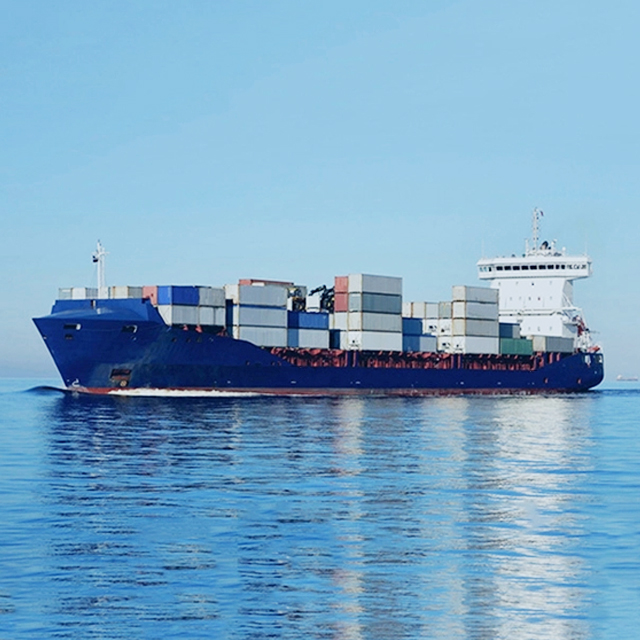
Coastal trading and river-sea navigation demand specific vessel profiles optimized for agility. A 5000 ton self unloading container vessel excels in these restrictive environments. Agility and a shallow draft are critical for navigating tight inland waterways, river estuaries, and coastal archipelagos. These smaller ships frequently engage in island-hopping routes where maneuverability allows them to access remote, poorly dredged docks safely. Rapid, autonomous discharge ensures they do not linger in vulnerable or congested anchorages. The onboard cranes allow for quick turnarounds, maximizing the number of port calls a vessel can complete in a single month. These vessels typically feature drafts under 6 meters, allowing them to cross river bars at high tide.
Mid-range regional trade requires a calculated balance of cargo capacity and operational flexibility. A 10000 ton cargo hold container vessel serves perfectly as a regional workhorse. These ships operate primarily in feeder services, connecting smaller, underequipped regional ports to major deep-water global hubs. They gather export cargo from secondary locations and deliver it to mega-ships waiting at central transshipment terminals. Their onboard cranes ensure they never rely on local port infrastructure during the collection phase, preventing delays that could cause cargo to miss the mainline vessel connection. These vessels typically operate with drafts between 7 and 8 meters and carry enough TEUs to make regional loops highly profitable.
Pushing the limits of geared efficiency involves larger tonnages designed for longer routes. A 20000 ton crane container vessel represents the upper tier of this specialized market. Assessing the viability of such a vessel requires careful naval engineering analysis. The weight of heavy-duty marine cranes severely impacts the ship's payload fraction. Massive steel reinforcements, including thickened deck plating and deep web frames, are required beneath the crane pedestals. This added deadweight reduces the total TEU capacity and negatively impacts overall fuel efficiency due to increased displacement. Operators must ensure the route's freight premiums justify these physical trade-offs. These vessels are typically deployed on routes connecting developed hubs to major emerging markets where cargo volumes are high, but destination port infrastructure remains unreliable.
| Vessel Class | Typical Draft | Primary Route Profile | Operational Focus |
|---|---|---|---|
| 5,000 DWT | 5.0m - 6.0m | River-sea, island hopping, coastal | Maximum agility, shallow water access, rapid discharge |
| 10,000 DWT | 7.0m - 8.0m | Regional feeder networks | Balancing TEU capacity with secondary port accessibility |
| 20,000 DWT | 9.0m - 10.5m | Emerging market mainline | High volume transport to infrastructure-constrained hubs |
The physical footprint of marine cranes introduces significant payload penalties that naval architects must mitigate during the design phase. Cranes require massive steel pedestals, extensive hydraulic machinery, and dedicated electrical switchboards. The deck structure beneath the cranes requires heavy reinforcement to handle the dynamic lifting stresses and overturning moments generated during cargo operations. This added steel increases the ship's lightship weight. Consequently, it reduces the total deadweight available for revenue-generating cargo. Furthermore, the physical space occupied by the crane housings and their jib rests eliminates several valuable deck slots. This directly reduces the maximum TEU carrying capacity of the vessel compared to a gearless ship of identical hull dimensions.
Unlocking throughput remains a primary operational challenge for geared vessels. Historically, onboard cranes operated by ship crews discharged cargo much slower than automated port gantry cranes. Modern marine crane systems mitigate this speed disadvantage through technological innovation and improved hydraulic response times. Newer systems utilize advanced spreaders capable of multi-container handling. These specialized spreaders can pick up two 20-foot containers simultaneously (twin-lift). This capability dramatically increases the discharge rate, helping to bridge the efficiency gap between ship-based and shore-based cargo handling. Anti-sway technology further improves cycle times by automatically dampening pendulum motions caused by wind or vessel roll.
Safety during ship-to-shore lifts requires strict protocols, rigorous training, and absolute crew competency. The operational realities of discharging cargo with onboard cranes are complex and hazardous. The crane operator often faces severe blind spots when lowering containers deep into the ship's hold or over the side onto the quay. The dockside signalman plays a critical role in these situations. The signalman stands in a visible location and advises the crane operator using standardized crane hand signals or UHF radios. This communication ensures stevedore safety on the dock and prevents catastrophic cargo damage during the lift. Standard signals for hoisting, lowering, slewing, and luffing must be universally understood by both the ship's crew and the local shore gangs.
Maintenance operational expenditures represent a significant hidden cost of operating geared vessels. The marine environment is incredibly harsh on complex electro-hydraulic machinery. Saltwater corrosion aggressively attacks hydraulic fittings, exposed cylinder rods, and electrical sensors. Geared vessels require rigorous crane maintenance schedules to ensure operational readiness and compliance with classification society rules.
Vetting shipyards is the most critical step in the procurement process for a newbuild geared vessel. Selecting a reliable China container vessel supplier requires extensive due diligence and technical auditing. Procurement teams must analyze the shipyard's historical track record specifically with heavy deck machinery installations. Steel quality, plate preparation, and welding standards must meet strict classification society rules, particularly around the highly stressed crane pedestal foundations. Submerged arc welding is typically required for these critical joints. Furthermore, the shipyard's partnerships with marine crane Original Equipment Manufacturers (OEMs) are vital. Collaborations with established manufacturers ensure the lifting equipment is reliable, well-integrated into the ship's power grid, and supported by a global spare parts network.
Specifying crane capabilities requires a detailed technical checklist tailored to the vessel's intended trade route. Operators must define the required Safe Working Load (SWL) based on their heaviest anticipated cargo. A standard container crane might require a 40-ton SWL, while a multi-purpose vessel might need 80-ton SWL cranes. Maximum outreach is critical to ensure the crane can reach the outermost container rows on the deck and land them safely on the dock, even when the vessel is breasted off from the quay. Multi-container lifting capabilities should be specified if high throughput is required. Buyers must also specify the operating environment; cranes destined for arctic routes require specialized steel and hydraulic fluid heaters, while tropical routes demand oversized hydraulic oil coolers.
Financial evaluation must balance higher initial capital expenditures against long-term operational gains. Geared vessels cost significantly more to build than gearless ships of the same size due to the cost of the cranes and the extra steel weight. The maintenance of the cranes adds continuous operational expenses. However, these costs are often offset by the ability to command premium freight rates on niche routes where competition is limited by infrastructure constraints. Furthermore, geared vessels frequently save money on port fees by avoiding expensive shore crane rental charges and bypassing congestion queues. A thorough financial model must account for all these variables to determine the true return on investment.
A geared container vessel is a highly specialized asset designed for complex logistical challenges. It provides a vital solution for infrastructure-constrained regions, multi-purpose shipping requirements, and remote project cargo deliveries where gearless ships simply cannot operate.
A: Major global trade routes rely on massive mega-ships and advanced port infrastructure. This combination maximizes speed and economies of scale. The deadweight penalty, lost deck space, and maintenance costs of onboard cranes make geared vessels economically unviable for standard, high-volume global loops.
A: Standard marine cranes on container vessels typically feature a Safe Working Load between 35 and 45 metric tons. This easily handles fully loaded standard containers. Specialized heavy-lift project cargo vessels may feature cranes capable of lifting well over 100 metric tons.
A: It bypasses port congestion entirely. The vessel does not need to wait for shore-based gantry cranes to become available. It can berth at smaller, underequipped ports and begin discharging cargo immediately using its own equipment, drastically reducing turnaround times.
A: Yes, modern marine cranes can achieve high throughput. When equipped with specialized multi-lift spreaders, these cranes have the capability to pick up two 20-foot containers simultaneously, significantly accelerating the discharge process and improving port efficiency.
A: Absolutely. Operating marine cranes requires certified personnel. A dockside signalman is critical for safety. They use standardized crane hand signals to guide the operator through blind lifts, protecting ground personnel and preventing cargo damage during operations.
A: Onboard cranes reduce capacity in two ways. First, the crane housings occupy physical deck space, eliminating container slots. Second, the heavy steel structure of the cranes and deck reinforcements increases the ship's lightship weight, reducing overall cargo deadweight capacity.
A: You must provide the desired deadweight tonnage and TEU capacity. You also need to specify the crane's Safe Working Load, maximum outreach, and multi-lift requirements. Finally, include intended trade routes, draft restrictions, and preferred engine specifications.


