
Views: 0 Author: Site Editor Publish Time: 2026-09-06 Origin: Site


Vessel grounding in shallow-water logistics triggers severe operational and financial consequences. These disruptions include immediate supply chain bottlenecks, catastrophic hull damage, and exorbitant salvage costs. Operators face an inherent conflict. You must maximize payload capacity, measured in Deadweight Tonnage (DWT). Simultaneously, you must maintain a shallow enough draft to navigate un-dredged ports, river estuaries, and remote island coastlines. Balancing these demands requires precision.
A rigorous technical evaluation of vessel specifications, hull design, and payload trade-offs is necessary. This evaluation ensures safe, profitable operations in draft-restricted environments. Understanding lct vessel draft serves as the foundation of successful shallow-water logistics. Without this knowledge, operators risk deploying the wrong asset into dangerous waters.
Draft represents the vertical distance between the waterline and the lowest point of the hull. Light draft refers to the vessel when it is completely empty, carrying only its own structural weight, machinery, and permanent fixtures. Loaded draft occurs when the vessel reaches its maximum DWT, including cargo, fuel, fresh water, and crew. Operators must understand this technical relationship to plan routes accurately across varying tidal conditions.
Maintaining a safe Under Keel Clearance (UKC) margin is absolutely mandatory. This safety margin accounts for unpredictable wave action, vessel heaving, and uncharted seabed anomalies like submerged logs or rock outcroppings. A standard UKC policy often requires a minimum of 10% of the vessel's maximum draft, though this varies based on the seabed composition.
| Seabed Type | Recommended Minimum UKC | Risk Factor on Impact |
|---|---|---|
| Soft Mud / Silt | 0.3 meters | Low structural risk; high risk of cooling system clogging. |
| Sand / Gravel | 0.5 meters | Moderate structural risk; high risk of paint abrasion and hull wear. |
| Hard Rock / Coral | 1.0 meters | Extreme structural risk; potential for hull breach and sinking. |
You must also calculate the "Squat Effect" during transit. This hydrodynamic phenomenon happens when a vessel moves rapidly through shallow water. The movement pushes water ahead of the bow, creating a localized area of low pressure under the hull. Consequently, the vessel sinks deeper into the water. This effectively increases its dynamic draft and reduces your UKC margin. A vessel moving at 10 knots in a shallow channel can easily squat an additional 0.5 meters. Ignoring the squat effect often leads to high-speed grounding incidents.
Landing Craft Tanks (LCTs) require precise trim management during operations. You must maintain a shallower forward draft compared to the aft draft. The aft section houses the heavy marine engines, fuel tanks, and superstructure, naturally causing it to sit deeper. This specific trim allows the bow to approach the shore safely without grounding prematurely.
The bow draft directly impacts the deployment angle of the Ro-Ro (Roll-on/Roll-off) ramp. When landing on un-dredged shores, this ramp angle dictates operational success. A steep ramp angle prevents heavy machinery from disembarking safely. If the forward draft is too deep, the ramp cannot reach the beach gradient properly, leaving a gap over the water.
Proper draft management ensures the ramp rests securely on the shoreline. This allows excavators, dump trucks, and tracked vehicles to roll off without tipping or losing traction. Operators use ballast tanks to adjust this trim dynamically, pumping water aft to raise the bow just before making contact with the beach.
Ignoring draft limits introduces severe physical risks to the vessel and crew. Grounding remains the most immediate and dangerous threat. It causes catastrophic damage to exposed propellers, bends propeller shafts, and tears rudders from their mountings. Mud ingestion into raw-water cooling systems destroys marine engines quickly by blocking heat exchangers and causing rapid overheating.
Furthermore, the hull endures massive structural stress when resting unevenly on a hard seabed. If a vessel grounds on a single rock outcropping while the tide recedes, the entire weight of the cargo concentrates on one point. This point-loading easily buckles steel plates and fractures internal framing.
The commercial risks are equally devastating to logistics companies. Delayed cargo delivery permanently damages client relationships and trust. Stranded assets halt entire supply chains, causing cascading financial losses across construction or mining projects. Insurance premiums rise significantly after any documented grounding incident. Operators may also face massive regulatory fines for causing environmental damage to sensitive seabeds or coral reefs.
A 1000 DWT LCT cargo barge operates with a highly restricted draft profile, typically drawing between 1.5 and 2.5 meters when fully loaded. This compact size is ideal for navigating extreme shallow waters. Typical use cases include inland river navigation, logging camp supply runs, and remote beach landings.
They excel in localized inter-island logistics where port infrastructure is entirely non-existent. The minimal draft allows operators to push deep into uncharted inland waterways. You can deliver heavy construction materials directly to undeveloped shorelines. This capability eliminates the need for secondary land transport, providing a massive logistical advantage in remote archipelago regions.
A 3500 DWT LCT cargo barge balances meaningful commercial payload with a manageable draft, usually ranging from 3.0 to 4.5 meters. It offers exceptional mid-range versatility for growing logistics fleets. This class effectively serves regional construction projects and heavy equipment transport.
It is highly efficient in mining material logistics across coastal routes, transporting nickel ore, coal, or aggregates. These vessels navigate coastal waters that are shallow but offer consistent bathymetry. The moderate draft supports profitable cargo volumes without requiring dredged deep-water ports.
Operators achieve an optimal balance between fuel efficiency, cargo capacity, and coastal accessibility. The structural framing on a 3500 DWT vessel is robust enough to handle open-water swells while maintaining the flat-bottom characteristics required for occasional beaching operations.
Operating a 20000 DWT LCT vessel with crane introduces deep-draft realities. Fully loaded, these massive vessels can draw over 5.0 meters of water. This heavy payload class cannot access extreme shallow zones safely. It is strictly restricted to deeper coastal waters, dredged shipping channels, and established industrial ports.
Operators often deploy them for offshore transshipment operations instead of direct beaching. Attempting to beach a 20,000 DWT vessel risks severe structural failure due to the immense weight pressing down on the hull plating.
Onboard cranes mitigate the lack of deep-water port infrastructure effectively. They allow efficient ship-to-barge transfers in sheltered anchorages. You can move bulk cargo from the 20,000 DWT vessel to smaller, shallow-draft barges for final coastal delivery. This dual-vessel strategy maximizes payload while respecting draft limitations.
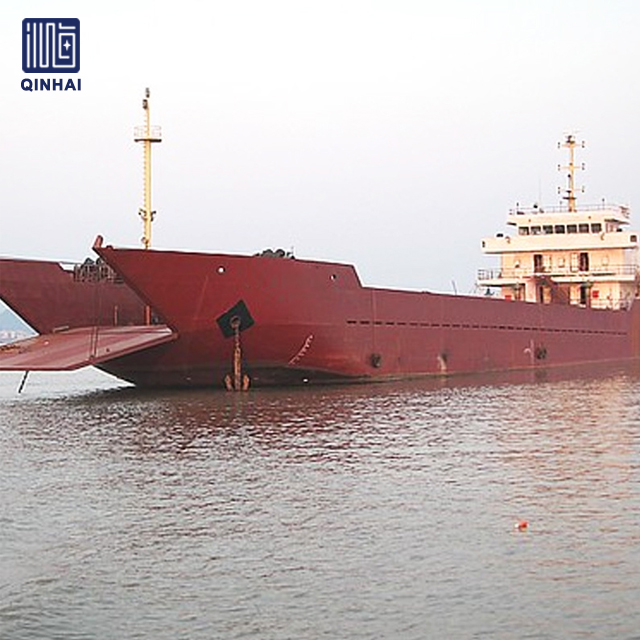
Flat-bottom designs distribute the vessel's weight over a much larger surface area. This architecture minimizes draft significantly compared to traditional V-hull vessels. Operators must evaluate LCT vessel technical specifications carefully before purchasing. The block coefficient (Cb) of an LCT is typically very high, often exceeding 0.85, meaning the hull shape closely resembles a rectangular block.
The TPC (Tonnes per Centimeter Immersion) metric is a mandatory operational calculation. It tells operators exactly how much cargo weight increases the vessel's draft by one centimeter. For example, if a vessel has a TPC of 15, loading 150 tonnes of cargo will push the hull 10 centimeters deeper into the water. Masters use TPC tables daily to ensure they do not exceed the safe draft limits of their destination port.
Flat-bottom designs do possess inherent operational trade-offs. They sacrifice open-ocean stability, top speed, and overall fuel efficiency. They tend to slam into waves during rough sea transits, causing discomfort for the crew and stress on the hull. You must balance these hydrodynamic compromises against the necessity of shallow-water accessibility.
Shallow-draft propulsion is necessary to prevent catastrophic seabed strikes. Standard exposed propellers are highly vulnerable in un-dredged waters. Viable options include pump jets, recessed propellers built into hull tunnels, or specialized Kort nozzles. Kort nozzles shroud the propeller in a steel ring, protecting the blades from debris while increasing low-speed thrust.
Bow thrusters are also critical for maintaining maneuverability. They help navigate low speeds safely in confined, shallow channels where traditional rudders lose effectiveness due to lack of water flow. When navigating a narrow river bend against a strong current, a bow thruster provides the lateral control needed to prevent grounding on the riverbanks.
Cooling systems require careful selection for shallow operations. Closed-loop keel cooling systems are vastly superior to raw-water intakes. Keel coolers consist of a network of pipes welded to the exterior of the hull below the waterline. Engine coolant circulates through these pipes, transferring heat to the surrounding seawater. They prevent silt, sand, and mud ingestion when operating with minimal UKC. This specialized system protects marine engines from overheating in muddy river estuaries.
Advanced, high-capacity ballast systems allow dynamic trim and draft adjustments. Operators can control the vessel's posture precisely during complex maneuvers. The standard operational procedure involves ballasting down for open-sea stability. Adding water weight lowers the center of gravity, reducing roll and pitch during rough transits.
Upon reaching the destination, operators rapidly de-ballast the tanks. This action reduces the draft for shallow beach landings. Proper ballast management ensures the Ro-Ro ramp deploys safely onto the shore. It prevents the vessel from getting stuck as the tide recedes.
Precise tidal planning is an absolute necessity for LCT operators. Neap tides present severe risks, often stranding vessels on beaches for days. Operators use the "Rule of Twelfths" to estimate water depth changes between high and low tides. Miscalculating the tidal window means the vessel will sit hard aground, unable to retract its ramp or reverse off the beach.
Shifting sandbars and rapid siltation in river estuaries alter charted depths overnight. Heavy rainfall upstream washes massive amounts of sediment into the river mouth, creating new shoals where deep water existed a week prior. You cannot rely solely on outdated nautical charts for safe navigation in these dynamic environments.
Mitigation strategies require active, continuous management. Utilize real-time bathymetric data and forward-looking sonar systems to map the seabed ahead of the vessel. Perform dynamic squat calculations before entering any shallow channel. Plan conservative payloads during dry seasons in unpredictable riverine routes to guarantee a safe UKC.
Classification societies enforce strict structural requirements for shallow-water vessels. IACS (International Association of Classification Societies) members mandate specific bottom plate thickness and reinforced skeg designs. Vessels intended for frequent beaching require high-tensile steel (such as AH36 grade) on the bottom plating to withstand constant abrasion.
Structural reinforcement is mandatory. Heavy longitudinal framing must support the hull when it rests on uneven ground. Without these reinforcements, the hull will buckle under its own weight on the sand, causing permanent deformation and compromising watertight integrity.
Environmental compliance is equally important in coastal zones. Operators must minimize sediment disruption and destructive wake wash. Seabed scarring in shallow, ecologically sensitive waters can trigger massive regulatory fines. Adhering to these structural and environmental standards ensures safe, legal operations while protecting marine habitats.
Evaluating a China LCT vessel supplier requires strict, evidence-based criteria. Focus entirely on their portfolio of shallow-draft specific builds. Verify their engineering expertise in Ro-Ro ramp design, ballast system capacity, and beaching reinforcements. Do not accept generic cargo ship experience as proof of competency, as deep-water vessels require entirely different engineering principles.
During the technical evaluation phase, demand specific engineering documentation. Request hydrostatic curves, TPC tables, and approved stability booklets. A reputable shipyard will provide these documents readily for review. These metrics prove the vessel can perform safely in your specific draft-restricted environments.
| Document Required | Purpose in Evaluation | Risk if Missing |
|---|---|---|
| Hydrostatic Curves | Shows draft at various displacements. | Inability to predict vessel behavior under load. |
| TPC Tables | Calculates draft increase per ton of cargo. | Overloading the vessel and grounding in port. |
| Stability Booklet | Proves safe center of gravity limits. | Vessel capsizing during loading or transit. |
Financial evaluation goes far beyond the initial purchase price. A cheaper vessel with a poorly optimized draft becomes a massive liability. If it cannot access a lucrative shallow port, it becomes a stranded asset, generating zero revenue while incurring daily crew and maintenance expenses. You must factor in long-term maintenance and repair costs.
Hull wear from repeated beaching requires frequent dry-dock inspections and steel plate replacements. Propulsion systems wear out faster in high-silt environments without proper protection like Kort nozzles or keel coolers. Investing in proper shallow-water modifications upfront reduces long-term operational expenses significantly and extends the lifespan of the vessel.
You must provide comprehensive operational data before you get LCT vessel price quote. Create a highly detailed RFP checklist for the shipyard. Include route bathymetry, absolute minimum water depths, and required maximum payload. Specify ramp loading requirements, expected beach gradients, and the heaviest single piece of machinery you intend to transport.
Vague specifications regarding draft and UKC lead to inaccurate pricing models. They result in improper hull design and ultimate operational failure. Clear, data-driven requirements ensure the shipyard builds exactly what your logistics route demands. Provide the shipyard with the exact tidal ranges of your primary operating ports.
LCT vessel draft is not a flexible metric; it is a hard operational boundary. It dictates the commercial viability, safety, and profitability of all shallow-water logistics. Buyers must prioritize technical specifications, specialized cooling systems, and shipyard engineering capabilities over raw DWT capacity. A massive vessel is useless if it cannot reach the shore.
A: It varies strictly by DWT and design. Small barges may have a draft under 2 meters. Heavy-lift vessels can exceed 5 meters. The intended operational environment dictates the final draft specification.
A: There is a linear relationship between added weight and increased submersion. Operators use the Tons per Centimeter Immersion (TPC) metric to calculate this. Every additional ton of cargo pushes the hull deeper into the water.
A: While LCTs are generally shallower than conventional bulkers, a 20,000 DWT vessel still requires significant depth. It is unsuitable for extreme shallow zones. Operators use them in dredged channels or for offshore transshipment.
A: The Squat Effect is a hydrodynamic phenomenon. As a vessel moves through shallow water, it creates low pressure under the hull. This causes the vessel to sink deeper, reducing the Under Keel Clearance dynamically.
A: Flat-bottom designs distribute the vessel's weight over a much larger surface area. This minimizes the overall draft compared to V-hull designs. It allows the vessel to navigate shallower waters and perform beach landings safely.
A: Shallow-draft vessels utilize closed-loop keel cooling systems instead of raw-water intakes. This prevents silt, mud, and debris from entering the engine cooling channels. It ensures reliable operation even with minimal Under Keel Clearance.


