
Views: 0 Author: Site Editor Publish Time: 2026-09-17 Origin: Site


Fleet operators face a constant strategic challenge when expanding their tonnage. You must balance economies of scale with port accessibility to maintain long-term profitability. Market demand is steadily increasing for highly versatile ships smaller than Panamax types. Over-tonnaging with Panamax vessels on restricted routes destroys profit margins through underutilization and dead freight. Conversely, relying on smaller coastal vessels results in lost revenue potential when global commodity demand scales up. You need an asset that maximizes cargo intake while maintaining navigational flexibility.
The 35000 DWT bulk carrier serves as the critical bridge between the Handysize and Handymax classes. This vessel size navigates shallow drafts while carrying substantial transoceanic payloads. Evaluating its technical specifications, route suitability, and financial viability is essential for strategic fleet expansion. Understanding these parameters ensures high utilization rates across volatile dry bulk markets.
Fleet managers must align vessel size with long-term charter demands. Port restrictions heavily dictate utilization rates in a volatile dry bulk market. Selecting the wrong tonnage class limits trading routes and reduces annual cargo cycles. The global fleet categorizes dry bulk vessels based on deadweight tonnage and physical dimensions. Understanding these classifications is the first step in asset selection. You must evaluate how a specific hull design interacts with your primary trade routes and the physical limitations of your destination ports.
The traditional Handysize range spans from 15,000 to 35,000 DWT. The transition into the Handymax class covers 35,000 to 50,000 DWT. Industry tiering provides more granular definitions for chartering purposes. The USDA classifications break this down into specific operational tiers. The Small Handy class covers 10,000 to 24,999 DWT. The Mid-size Handy spans 25,000 to 34,999 DWT. The Large Handy captures the 35,000 to 39,999 DWT segment.
The 35k DWT mark serves as the definitive Large Handy. It captures the navigational benefits of smaller ships while retaining the profitability associated with larger vessels. This specific tonnage threshold allows operators to bid on parcels that are too large for standard Handysize ships. It also allows entry into ports that restrict standard Handymax or Supramax vessels due to beam or draft limitations.
Operators must carefully compare bulk carrier capacity by DWT before committing capital. Contrasting the 35,000 DWT class with a standard 20000 ton bulk carrier reveals stark differences in operational capability. The 20k ton option offers significantly less economy of scale for transoceanic routes. It is generally confined to regional coastal trades. The fuel consumption per ton-mile is notably higher on the smaller vessel, making deep-sea voyages less competitive.
Comparing against specialized smaller vessels further highlights this versatility. A 5000 ton iron ore bulk carrier is strictly restricted to short-sea, coastal, or river-sea navigation. It cannot safely or profitably execute deep-sea ocean crossings. The 35k DWT vessel provides the structural integrity for unrestricted global trading while maintaining access to regional hubs.
| Vessel Class | Typical DWT | Primary Trading Route | Economy of Scale (Transoceanic) |
|---|---|---|---|
| Coastal / River-Sea | 5,000 Tons | Short-sea, inland waterways, coastal | Very Low |
| Small Handy | 20,000 Tons | Regional, intra-continent | Moderate |
| Large Handy | 35,000 Tons | Global, unrestricted ocean transit | High |
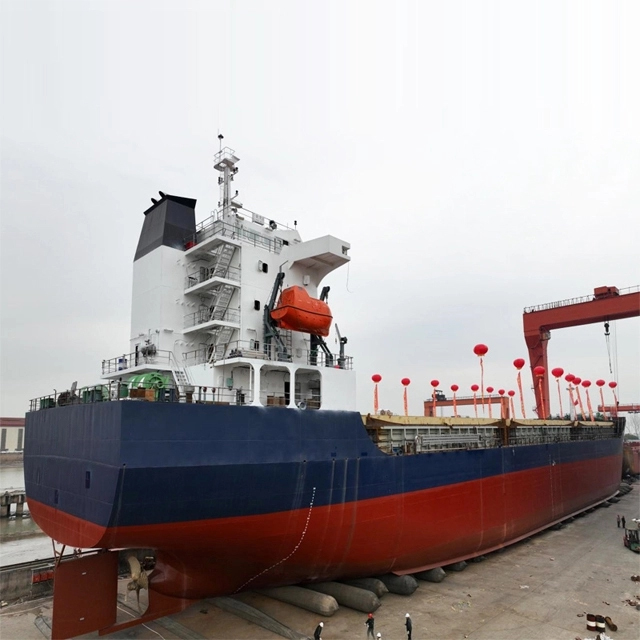
Assessing physical constraints and volumetric capabilities is mandatory. These engineering realities dictate operational limits and port compatibility. A vessel's dimensions determine which canals it can transit and which berths it can approach. Naval architects optimize these parameters to maximize cargo intake without exceeding draft restrictions. You must review the general arrangement plan to ensure the vessel meets your specific cargo handling requirements.
Industry-standard benchmark dimensions define this specific class. The length overall (LOA) typically measures 179.9 meters. Shipbuilders intentionally keep the LOA just under 180 meters to comply with strict berthing regulations in specific Japanese and European secondary ports. The beam spans 28.4 meters, ensuring excellent stability and compatibility with standard loading arms. The molded depth reaches 15.0 meters.
The shallow draft advantage is the primary selling point. A fully laden scantling draft typically ranges between 9.5 and 10.5 meters. This allows entry into restricted waterways and river ports. Secondary ports inaccessible to Panamax vessels become highly viable trading options. This draft flexibility reduces the need for costly lightering operations at anchorage, directly improving voyage profitability.
Standard cubic capacity benchmarks sit around 42,590 cubic meters. This volume accommodates a wide variety of stowage factors, from dense ores to light grains. Hold design usually features a 5-hold and 5-hatch configuration. This separation allows the carriage of multiple cargo grades simultaneously. It prevents cross-contamination between different agricultural or mineral parcels.
Structural reinforcement is required for high-density cargoes. Tank tops must withstand heavy point loads from steel coils or dense ores, typically rated for 20 to 25 tons per square meter. Heavy-duty folding hatch covers ensure watertight integrity during severe weather. Ballast capacity is engineered to ensure proper propeller immersion and forward draft during unladen voyages, preventing slamming damage in heavy seas.
Onboard deck cranes are necessary for unrestricted trading areas. Geared vessels operate autonomously during cargo operations. Typically, these ships feature four 30-ton electro-hydraulic cranes. These cranes are paired with mechanical grabs for handling loose bulk. Gearless vessels rely entirely on shore-based infrastructure, which severely limits their trading flexibility.
Maintaining these geared systems requires strict adherence to planned maintenance schedules. Shipboard engineers must execute the following routines to ensure crane reliability:
Mapping a vessel's technical specs to specific cargo types determines its profitability. The Large Handy class is renowned for its cargo flexibility. It handles parcels that are too small for Panamax ships but too voluminous for coastal freighters. This versatility ensures continuous employment across different seasonal trades. You can shift from grain exports in the Americas to steel imports in Asia without modifying the vessel.
Suitability for grains, soybeans, and fertilizers is exceptionally high. These cargoes require clean, dry holds and moderate volumetric capacity. Grains have a higher stowage factor, demanding more cubic space per ton. The 42,590 cbm capacity perfectly matches standard agricultural parcel sizes traded on spot markets. The self-trimming design of the cargo holds, featuring sloped topside and hopper tanks, minimizes manual labor during grain loading.
Hold cleaning is a critical factor for agricultural trades. The epoxy coatings in the cargo holds must facilitate rapid washdowns. This prevents contamination between fertilizer runs and subsequent grain voyages. Proper natural and mechanical ventilation systems prevent cargo sweating during transit through different climate zones, protecting the cargo from moisture damage.
Transporting minor bulks offers consistent chartering opportunities. Steel coils, logs, scrap metal, and bagged cement are staple cargoes for this class. The flat tank tops and wide hatch openings facilitate the safe stowage of breakbulk items. Heavy steel coils require specific dunnage and lashing points integrated into the hold design to prevent shifting during ocean transit.
The vessel adapts seamlessly to function as a specialized cement carrier. Pneumatic loading systems or reinforced tank tops handle high-density cement clinker. Transporting construction materials to developing regions is a highly lucrative route for geared Large Handy vessels. The dust generated by cement requires robust filtration systems for the engine room intakes to prevent machinery damage.
Carrying bauxite, alumina, or coal presents different structural challenges. Heavy loads demand reinforced double bottoms to prevent hull deformation. The vessel must comply with strict stability criteria when loading high-density ores. The center of gravity shifts significantly with dense cargoes, requiring precise ballast water management to maintain a safe metacentric height.
Compare this suitability to larger Capesize vessels. Capesize ships dominate the dedicated high-volume iron ore trades. The 35k DWT class handles smaller, specialized mineral parcels. It is often used for discharging ores at shallow-draft smelter facilities that larger ships cannot reach. Coal cargoes require continuous atmospheric monitoring inside the holds to detect methane buildup or spontaneous combustion risks.
Vessel deployment strategies rely on solving specific logistical bottlenecks in global supply chains. The physical dimensions of the ship dictate its geographical reach. Operators leverage the Large Handy class to access emerging markets and underdeveloped infrastructure. You must analyze the draft restrictions and terminal capabilities of your target trade routes before deploying tonnage.
Navigating shallow draft provides a massive strategic advantage. Regions like West Africa, Southeast Asia, and South America often feature limited port infrastructure. River ports in Argentina, such as those along the Parana River, demand vessels with drafts strictly under 10.5 meters. The 35k DWT vessel accesses these loading zones directly, maximizing cargo intake before transiting the shallow river bars.
Bypassing deep-water transshipment hubs reduces overall freight costs. Loading agricultural products directly from upriver silos eliminates barge transfer fees. This direct-to-market capability commands premium charter rates during peak harvest seasons. The vessel's high maneuverability, often aided by a bow thruster, allows safe navigation through narrow river bends without excessive tugboat assistance.
Unrestricted area operations require robust engineering and compliance. The vessel's structural integrity must withstand severe ocean conditions. Navigational equipment must meet international standards for global transit. Ocean crossings across the Pacific or Atlantic remain safe and highly efficient. The hull form is optimized to reduce wave resistance, maintaining service speeds of 13.5 to 14 knots even in moderate sea states.
Compliance with the International Association of Classification Societies (IACS) is mandatory. The hull design must minimize slamming in heavy seas. Ballast water management systems (BWMS) must comply with global environmental regulations to allow discharge in any international port. You must ensure the vessel holds valid certificates for all intended trading areas to avoid port state control detentions.
Terminal independence is a major operational asset. Geared capabilities allow navigation and operation in ports completely lacking shore-based loading infrastructure. Ships can load and unload using their own deck cranes and grabs. This drastically lowers port turnaround times and terminal handling costs. The electro-hydraulic cranes provide precise control, allowing safe cargo operations even with minor vessel rolling.
Discharging at anchorage is a common practice in congested regions. The vessel transfers cargo directly into local barges. This avoids lengthy queues for deep-water berths. Autonomous cargo handling ensures the vessel remains productive even in the most underdeveloped maritime regions. Fendering systems and strict mooring procedures are required to safely secure barges alongside during mid-stream operations.
Conceptual trade-offs exist between capital expenditure (CAPEX) and operational expenditure (OPEX). Fleet expansion requires rigorous financial modeling. The initial purchase price is only one component of the total asset lifecycle cost. Fuel efficiency, maintenance, and crewing dictate the actual return on investment. You must project these costs over a 15 to 20-year lifecycle to determine true profitability.
Evaluating a 35000 DWT bulk carrier for sale requires strict technical diligence. Acquiring secondhand tonnage offers immediate availability. It provides a known survey history and immediate entry into strong spot markets. However, older vessels often suffer from higher fuel consumption and impending drydocking costs. You must review the ultrasonic thickness measurement (UTM) reports to assess steel degradation in the cargo holds and ballast tanks.
Commissioning a newbuild allows tailoring the vessel to specific trade routes. Operators can specify engine types, crane capacities, and hold coatings. Newbuilds benefit from modern warranties and lower initial maintenance costs. The trade-off is the construction lead time, which can span 18 to 24 months. You must secure favorable payment terms with the shipyard to manage cash flow during the construction period.
Fuel efficiency and environmental compliance drive modern vessel valuations. The Energy Efficiency Design Index (EEDI) heavily impacts charterability. Vessels failing to meet strict emission baselines face operational restrictions. The Carbon Intensity Indicator (CII) rating affects long-term asset value and financing options. Charterers actively avoid vessels with poor CII ratings to meet their own corporate sustainability goals.
Evaluate dual-fuel readiness or eco-engine designs. Modern 35k DWT vessels prioritize lower fuel consumption through optimized hull lines and electronic engine controls. Installing energy-saving devices, such as wake equalizing ducts or propeller boss cap fins (PBCF), further reduces daily bunker consumption. Lower fuel burn directly increases daily time charter equivalent (TCE) earnings.
Operating Expenses (OPEX) require strict daily management. You must monitor these variables closely to protect your profit margins. The primary OPEX categories include:
Executing a vessel acquisition requires mitigating massive financial risks. Falling victim to shipyard delays, cost overruns, or compliance failures can cripple a fleet operator. A structured procurement process protects capital and ensures the final asset meets all operational requirements. You must establish a dedicated site team to oversee the entire construction phase.
Selecting a reliable custom bulk carrier supplier requires strict vetting. Check the shipyard's historical track record with Large Handy and Handymax vessels. Verify their classification society approvals and ISO certifications. Assess their financial stability to ensure they can secure the necessary refund guarantees from first-class international banks.
Review the yard's standard specification closely. Ensure the major equipment makers (engines, generators, cranes) are reputable global brands. Access to spare parts for these critical components must be guaranteed throughout the vessel's lifespan. Avoid yards that substitute tier-one equipment with unproven local alternatives, as this leads to severe operational downtime later.
Initiating a 35000 DWT bulk carrier price inquiry demands technical precision. Include exact specifications in your Request for Quotation (RFQ). Specify the 179.9m LOA, the 42,590m3 capacity, and the required draft limits. Define the crane capacity, outreach requirements, and grab specifications clearly.
Outline the commercial terms required for the shipbuilding contract. Specify the delivery timeline and the preferred classification society. Request detailed fuel consumption guarantees at various speeds and drafts. Include strict deadweight and speed penalty clauses in the contract. Accurate technical inputs yield accurate and binding pricing from the shipyard.
Mitigating delivery risks protects your capital investment. Hire independent marine surveyors to oversee the entire construction process. Site teams must inspect steel cutting, block assembly, and equipment installation. Establish clear milestone payments tied strictly to verified physical progress, such as keel laying, launching, and sea trials.
Enforce strict sea-trial acceptance criteria before final handover. The vessel must achieve the contracted speed and fuel consumption metrics. Cargo gear must be load-tested to its maximum safe working load. Any deficiencies discovered during sea trials must be rectified by the yard prior to final acceptance and delivery. You must verify all statutory certificates are issued without conditions before signing the protocol of delivery and acceptance.
The 35,000 DWT bulk carrier remains the optimal asset for versatile fleet operators. It maximizes transoceanic cargo volume without sacrificing crucial access to shallow-draft, under-equipped ports. This tonnage class bridges the gap between regional coasters and restricted Panamax vessels, offering unmatched trading flexibility. Choose this vessel size if your primary trade involves minor bulks, agricultural goods, or cement. It is the logical choice for routes terminating in regions with developing infrastructure. The geared configuration ensures autonomy, reducing reliance on congested shore-based terminals and lowering overall voyage costs.
A: A 35,000 DWT vessel offers better transoceanic economies of scale and falls into the Large Handy class. It safely executes deep-sea voyages with larger parcels. A 20,000 ton bulk carrier is a Small Handy, strictly better suited for regional coastal trades, short-sea routes, and smaller cargo parcels.
A: Yes, provided the tank tops and double bottoms are structurally reinforced to handle high point loads. However, they are generally optimized for minor bulks, grains, and cement rather than dedicated high-volume iron ore transport, which is typically handled by Capesize vessels.
A: Onboard cranes make the vessel geared, allowing it to load and discharge cargo autonomously. This is essential for operating in secondary ports or river anchorages that completely lack dedicated shore-based cargo handling infrastructure, thereby reducing port turnaround times and terminal fees.
A: The standard fully laden scantling draft ranges between 9.5 and 10.5 meters. This shallow draft allows the vessel to navigate restricted waterways, transit specific river systems, and enter smaller ports that remain physically inaccessible to larger Panamax or Capesize ships.
A: The Energy Efficiency Design Index (EEDI) mandates specific energy efficiency standards for new ships. Compliance ensures the vessel consumes less fuel and produces fewer emissions. This maintains higher charterability, ensures regulatory compliance, and protects the asset's resale value in the future market.
A: The industry standard is a 5-hold and 5-hatch configuration. This layout provides approximately 42,590 cubic meters of cargo space. It allows operators to segregate different cargo grades, preventing cross-contamination between agricultural products and fertilizers during the same voyage.


