


Moving high-tonnage vessels through confined waterways requires more than raw horsepower—it demands precision, control, and a deep understanding of physics. Massive container ships, VLCCs (Very Large Crude Carriers), and offshore platforms cannot safely maneuver using their main engines at low speeds. Without specialized assistance, they risk collisions, grounding, and structural damage.
Tug boats are purpose-built for these scenarios. Naval architects design them around extreme engine-to-size ratios, packing immense power into compact hulls. Every aspect, from propulsion systems to hull geometry, is optimized to translate engine output into controlled, effective movement. This article explores the mechanics behind tug boats, how operators leverage their capabilities, and the systems that make them indispensable in modern maritime operations. We will also examine how to identify reliable tug boats for sale from a trusted high performance tugboats manufacturer.
Mechanical Advantage: Tug boats utilize high-compression engines, optimized gearing, and hull leverage to overcome the inertia of massive vessels.
Propulsion and Agility: Modern systems such as Azimuthal Stern Drive (ASD) and cyclorotors provide omnidirectional thrust and superior maneuverability.
Bollard Pull (BP): The standardized metric for evaluating a tug boat's maximum static pull.
Operational Alignment: Effective tug boat use requires matching propulsion, BP, and hull design to the specific environment, from harbor navigation to offshore towing.
Tug boats are engineered to move objects far larger than themselves. With engines producing 3,000–6,000 horsepower in vessels weighing only 100–300 tons, the power-to-size ratio is exceptional. This concentrated force allows tugs to influence ships tens of times their mass. Unlike standard cargo ships, which allocate hull space to cargo, fuel, and crew, tug boats dedicate most of their volume to propulsion. At low speeds—typically 1 to 3 knots—the main challenge is not water resistance but overcoming the initial inertia of massive vessels.
To understand this better, imagine trying to push a fully loaded freight train from a standstill. The force required to start movement is far greater than what is needed to keep it moving. Similarly, tug boats act as "water tractors," digging into the water column to apply controlled leverage. This allows precise movement without snapping tow lines or destabilizing the tug itself. The design philosophy focuses on delivering maximum thrust at near-zero speeds, which is why tug boats have such distinctive, boxy hull shapes and oversized propeller systems.
Operators use three primary techniques to maneuver larger vessels. Each method requires precise positioning, operator skill, and tailored equipment.
Direct Towing: The tug pulls from a lead position using heavy-duty winches and steel wire ropes. This method is ideal for unpowered barges or disabled ships that need to be towed over longer distances. The towline is typically kept as short as practical to maintain control while allowing enough length to absorb shock loads from wave action.
Indirect Towing: The tug attaches to the stern or bow and angles its hull against water flow. Hydrodynamic drag helps pivot the larger vessel, especially in confined ports. This technique is highly effective when space is limited because it does not require the tug to be directly in front of or behind the assisted vessel. Instead, the tug uses its own hull as a rudder to generate lateral forces.
Pushing: Direct hull-to-hull contact uses reinforced pushing knees and fenders. This method is common during berthing operations, where the tug positions itself against the side of the larger ship and pushes it sideways toward the dock. Pushing requires robust hull protection on both vessels to prevent damage, which is why tug boats are equipped with heavy rubber fendering systems.
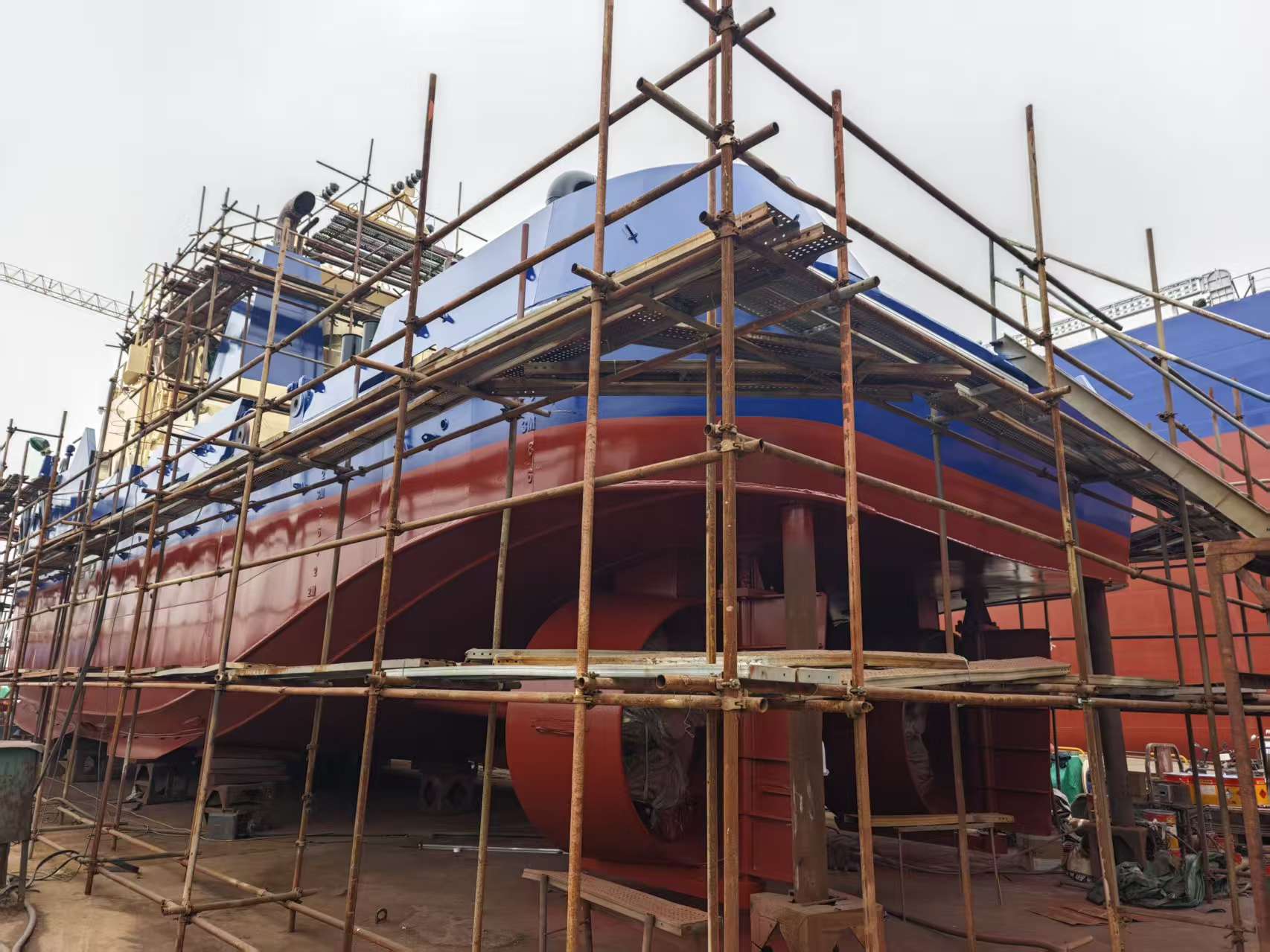
The choice of propulsion directly determines a tug boat's agility and effectiveness. Older conventional propellers provide straight-line pulling power but offer limited lateral maneuverability. This makes them suitable for open-water towing but problematic in crowded harbors.
Tractor tugs feature bow-mounted propulsion that allows 360-degree thrust. By pulling rather than pushing from the stern, tractor tugs significantly reduce capsizing risk and improve harbor maneuverability. The propeller faces forward, creating a pulling effect that stabilizes the vessel during high-speed turns.
Today, the industry standard is the Azimuthal Stern Drive (ASD), which enables omnidirectional thrust for precise port operations. ASD systems allow the propeller to rotate a full 360 degrees, giving the operator instant control over thrust direction. When you search for tug boats for sale, ASD-equipped vessels are often preferred for their versatility and safety.
Beyond the drive type, engineers use additional devices to amplify thrust without increasing engine size. Kort nozzles are cylindrical shrouds placed around propellers. They restrict outward water flow and force water straight back, increasing the thrust-to-power ratio by up to 90% at low speeds. This is particularly valuable for harbor tugs that spend most of their time operating below 5 knots.
Cyclorotors offer yet another advancement. These vertical rotors provide instantaneous pitch control, enabling rapid directional changes without adjusting engine orientation. Each blade can change its angle of attack independently, allowing the tug to generate thrust in any direction almost instantly. While more complex than conventional systems, cyclorotors excel in ice-breaking and highly dynamic environments.
Together, these systems allow tug boats to handle extreme loads while maintaining precise control, even in turbulent waters or confined basins.
Definition: Bollard Pull (BP) represents the maximum static pulling force a tug boat can exert. It is the definitive metric for procurement and operational evaluation. When comparing tug boats for sale, BP is often the first specification that operators examine.
Testing and Certification: Independent classification societies such as ABS, Lloyd's Register, or IRS supervise tests in deep water with calibrated load cells. The tug is tied to a fixed bollard on shore or to a specialized test barge, and the engines are run at maximum continuous power. The measured force, expressed in metric tonnes or kilonewtons, is then certified. This ensures that BP values are consistent and reliable across different manufacturers.
Operational Alignment: Matching BP to target vessel size, environmental conditions, and windage ensures safe and effective towing. Operators typically build a 15–20% margin into calculations for safety. For example, if theoretical calculations suggest a need for 50 tonnes of pull, a prudent operator would select a tug with at least 60 tonnes of certified BP. This margin accounts for sea state, current, and degradation of performance over time.
| Scenario | Vessel Type | BP Requirement |
|---|---|---|
| Harbor Berthing | Medium Cargo | 30–50 Tonnes |
| Container Port Escort | Neo-Panamax / VLCC | 65–85 Tonnes |
| Offshore Towing | Oil Platforms / Rigs | 100–150+ Tonnes |
| Emergency Salvage | Disabled Giants | 150–200+ Tonnes |
Tug boats are not one-size-fits-all. Their design varies significantly based on where they will operate.
Harbor and Escort Tugs: These are compact, wide-beam vessels optimized for agility. They typically feature ASD systems and may include hazardous cargo monitoring equipment when working with LNG or chemical carriers. Their shallow draft allows them to work alongside deep-draft vessels without risk of grounding.
Seagoing and Offshore Tugs: Designed for open-ocean stability, these tugs have deep V-hulls to cut through waves. They are equipped with heavy-duty winch systems capable of anchor handling or long-distance towing. Fuel capacity is larger to support extended voyages, and living quarters for crew are more spacious.
River and Shallow Water Tugs: These vessels have flat bows, shallow-draft propellers, and vertical pushing knees. They are optimized for inland navigation and barge handling on rivers like the Mississippi or the Yangtze. Their propulsion systems are protected from debris by robust screens, and their wheelhouses are often raised to provide better visibility over barges.
Selecting the right builder is as important as selecting the right vessel. A high performance tugboats manufacturer brings not only construction expertise but also design optimization and long-term support.
When evaluating a manufacturer, consider the following factors:
Custom Engineering Capabilities: Every port and waterway has unique characteristics. A capable manufacturer will work with you to adjust draft, beam, fendering layout, and winch placement. They should be able to run hydrodynamic simulations to prove that the proposed design will meet your BP and maneuverability targets.
Class Society Compliance: Ensure the manufacturer regularly delivers vessels certified by top-tier classification societies such as ABS, BV, CCS, or Lloyd's Register. This guarantees that the vessel meets international safety and construction standards, which is essential for insurance and port access.
Post-Sale Support: A reliable high performance tugboats manufacturer provides training for your crew, maintenance schedules, and spare parts availability. Some yards even offer remote diagnostic support for propulsion and control systems.
New-Build Focus: Qinhai Shipyard is a professional shipyard that builds only brand‑new vessels. When you search for tug boats for sale, working directly with a shipyard ensures that every component is fresh, fully warranted, and tailored to your operational profile. Unlike brokers or used equipment dealers, a shipyard controls the entire construction process, from steel cutting to sea trials.
By partnering with a dedicated shipyard, you gain transparency, customization, and a clear chain of responsibility. This is particularly important for operators who need vessels that will serve reliably for 20 years or more.
Tug boats operate at the intersection of physics, engineering, and skilled human operation. Their ability to control massive vessels relies on precise translation of engine power through advanced propulsion, hull leverage, and specialized techniques. Bollard Pull remains the definitive measure of capability, while modern thrust multipliers and ASD systems enhance maneuverability to levels that were unimaginable a generation ago.
Understanding these mechanisms is essential for safe and efficient maritime operations. Whether you are managing a busy container terminal, operating inland barges, or providing offshore support, selecting the right tug boats for sale from a high performance tugboats manufacturer will determine your operational success for decades. Qinhai Shipyard builds only new vessels, ensuring that every tug delivered meets the highest standards of quality and reliability. Partner with a shipyard that understands your environment and builds accordingly.
Q: How is Bollard Pull measured?
A: Verified by classification societies using a towline attached to a load cell at zero speed, in deep water conditions. The test typically runs for a sustained period (e.g., 10 minutes) to ensure the engines and propulsion system can maintain the rated pull without overheating.
Q: What is the typical lifespan of a commercial tug boat?
A: 25–35 years, dependent on maintenance, dry-docking, and engine overhaul schedules. With proper care, many tugs exceed 40 years of service, especially when major components are replaced or rebuilt mid-life.
Q: Why aren't Kort nozzles used on all tugs?
A: Kort nozzles are excellent for low-speed thrust but create drag at higher speeds, reducing lateral maneuverability. For tugs that operate primarily at very low speeds (e.g., harbor tugs), nozzles are ideal. For tugs that travel long distances at higher speeds, open propellers may be more efficient.
Q: Can harbor tugs perform offshore salvage?
A: Generally no. Harbor tugs lack deep V-hulls, heavy winches, and large towing cables needed for deep-sea operations. Using a harbor tug in rough offshore conditions can be dangerous. Operators should always match the tug type to the intended operating environment.


